

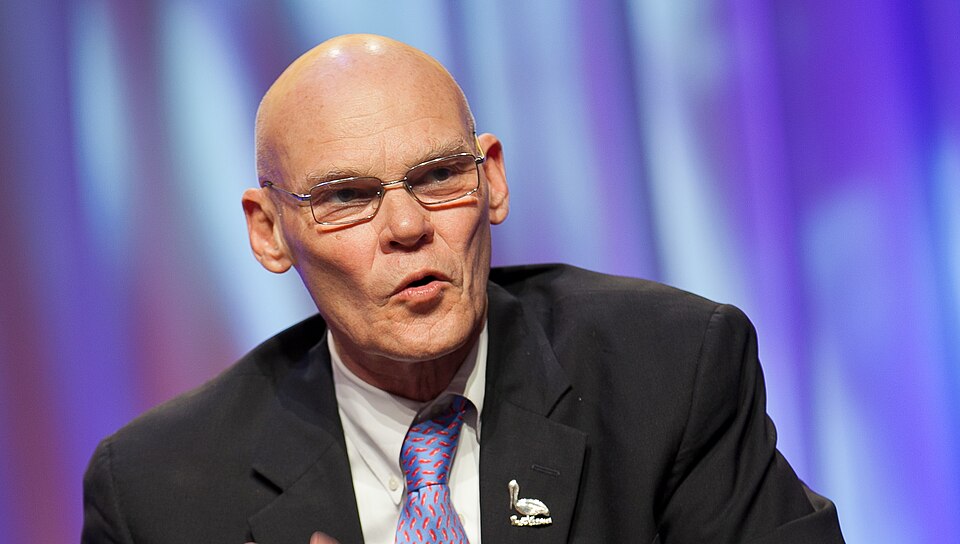
James Carville did not simply criticize President Donald Trump. He placed a date on his prediction, tied it to the 2026 midterms, and argued that the pressure of a major political rejection could push Trump to walk away from the presidency by Easter 2027.
That claim is not a fact. It is a political forecast from one of the Democratic Party’s most recognizable strategists. Still, the reason it is spreading is not only because Carville used dramatic language. It is spreading because it lands at a moment when Trump’s second term is already being judged by three interconnected problems: the cost of living, the war in the Middle East, and the looming fight for Congress.
We should read Carville’s prediction less as a crystal-ball moment and more as a sign of how Washington is preparing for a brutal midterm season. The presidency is not on the ballot in November 2026, but Trump’s power is. Every House seat is politically exposed, control of the Senate is in play, and Republicans are being forced to defend an administration facing weak approval on affordability.
Why Carville’s Trump Prediction Is Getting Attention Now

Carville’s argument rests on a simple idea: Trump, in his view, is not built for the kind of political humiliation that could follow a sweeping midterm defeat. He has made versions of this prediction before, but the latest version sharpened the timeline and pushed the phrase “walk away” into the center of the story.
The timing matters. The 2026 midterm elections are scheduled for November 3, and the outcome could determine whether Trump spends the final two years of his term working with a Republican Congress or fighting a Democratic House with subpoena power.
That is the real pressure point behind the prediction. If Democrats take the House, Trump would face a far more hostile Washington. Oversight hearings could intensify. Investigations could multiply. Cabinet officials, agency heads, and White House allies could be summoned before committees. Even if impeachment remains uncertain, the threat of formal accountability would become much more serious.
Carville’s theory depends on that possible chain reaction. A midterm backlash would not just be a bad news cycle. It could reshape the daily reality of the presidency.
The Midterms Are Becoming a Referendum on Trump’s Second Term
Midterm elections often become a public judgment on the president in power. That pattern is especially dangerous for a president whose brand dominates his party. In 2026, Republican candidates are not just running on local issues. Many are also running with Trump’s record attached to them.
For Republicans, that creates a difficult balance. They need Trump’s base, but they also need swing voters who are frustrated with prices, gas costs, and political chaos. They need turnout from loyal conservatives, but they cannot ignore independents who may decide control of Congress.
For Democrats, the strategy is equally clear. Their strongest argument is not just that Trump is controversial. It is that daily life has become too expensive and unstable under Republican control. That message is easy to understand because it begins at the grocery store, the gas station, the rent bill, and the insurance statement.
That is why Carville’s prediction has legs. It connects Trump’s personal style with a broader political environment that could punish Republicans if voters decide the country feels worse, not better.
The Cost of Living Is the Political Problem Trump Cannot Spin Away
