


The loudest empty seat at the Obama Presidential Center’s grand opening belonged to the man who was not asked to attend. President Donald Trump was not invited to the private Chicago celebration, even as the event brought together former presidents, political figures, celebrities, dignitaries, and supporters for one of the city’s most symbolic public moments in years.
The ceremony took place on Thursday at the new Obama Presidential Center on Chicago’s South Side, where Trump was not invited to the grand opening, according to comments from Obama Foundation CEO Valerie Jarrett.
The center, tied to former President Barack Obama’s legacy and public life, is located at 6001 S. Stony Island Ave. in Chicago’s Jackson Park.
The Missing Invite Became the Spark
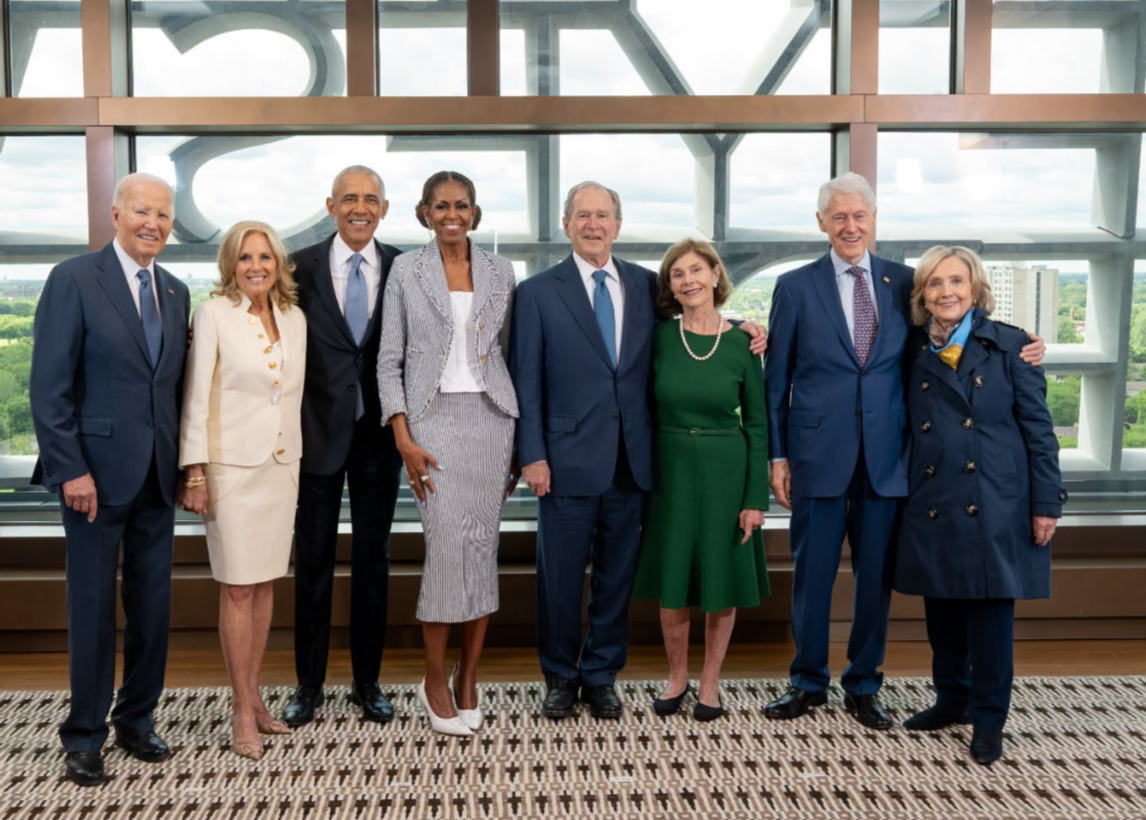
The decision not to invite Trump was not left unexplained. Jarrett said the choice reflected the ceremony’s focus on people who supported Obama and helped bring the center to life, highlighting the work behind the campus.
That explanation gives the story its sharper edge. Trump was not described as permanently unwelcome. Jarrett said that if Trump wanted to visit later, the foundation would be happy to show him the campus, and he could still tour the center’s offerings for residents and visitors.
Still, guest lists carry meaning in American politics. When one sitting president is left out while other former presidents appear, the image speaks loudly even before anyone gives a speech.
At least three former presidents attended the private celebration. George W. Bush, Bill Clinton, and Joe Biden were among those present as former presidents attended on Thursday to mark the center’s opening.
Obama’s Chicago Landmark Arrives With Symbolism
The Obama Presidential Center is not just another museum opening. It is a major civic campus built around the legacy of the first Black president of the United States, placed in the city where Obama’s political life began.
The campus has been described as sprawling and expensive, with an $850 million campus now standing on Chicago’s South Side. Its location matters because the South Side helped shape Obama’s public identity long before he became a national figure.
The opening also carried a strong message from Obama himself. During the ceremony, Obama warned against cynicism and division as the center opened.
That message landed in a country where many Americans feel tired of political fighting but unsure how to escape it. The irony was hard to miss. A center built around civic hope opened with a political absence that immediately stirred fresh debate.
The South Side Has More at Stake Than Politics
The national conversation may focus on Trump and Obama, but South Side residents will live with the center long after the political headlines fade. The Obama Presidential Center opens to the public on Friday, June 19, which is also Juneteenth, following the private celebration.
That timing adds another layer of meaning, connecting the public debut to a federal holiday marking freedom and the end of slavery in the United States. Public interest is already intense. Tickets for opening day and months afterward are sold out, with demand building around the new attraction.
That could bring a surge of visitors to nearby streets, restaurants, shops, and public spaces. For local businesses, the center may create new opportunities if visitors spend money beyond the campus. For residents, it could also mean more traffic, parking pressure, security restrictions, and crowded weekends.
A Celebration With Real Local Consequences
The opening was described as star-studded, drawing celebrities, political figures, dignitaries, and others, with big names attending on Thursday as the center formally opened. That kind of attention can be powerful for a neighborhood too often ignored or misrepresented in national coverage.
The South Side now has a destination that could bring visitors from around the world. That matters for Chicago’s image and for local pride. It gives students, families, and tourists a new reason to see the South Side as a place of history, ambition, and civic importance.
But celebration and concern can live in the same sentence. If visitors come but local residents do not benefit, the promise will feel incomplete.
The Bigger Story Is Just Beginning
Trump’s missing invitation gave the opening its flashpoint. The South Side gives it its meaning. The Obama Presidential Center now stands as a symbol of history, power, race, memory, politics, and public life.
It is also a new neighbor in a real community, where people care less about ceremonial seating charts than they do about rent, traffic, safety, business, access, and whether their children will feel welcome there. The empty chair may keep the political world arguing. But the streets around Jackson Park will tell the deeper story.
If the center brings opportunity, pride, visitors, and real community benefit, it could become one of Chicago’s most important civic landmarks. If it brings pressure without protection, the celebration will look different in hindsight.