

The cleaning products aisle is one of the most aggressively marketed spaces in any supermarket. Every bottle promises a spotless home with minimal effort. Every gadget claims to revolutionize the way you clean.
Most of them are selling you something you already own in a more expensive, less effective format. Here are 10 cleaning products quietly draining your budget, and what actually works instead.
Laundry Pods – Paying a Premium for Convenience You Don’t Need
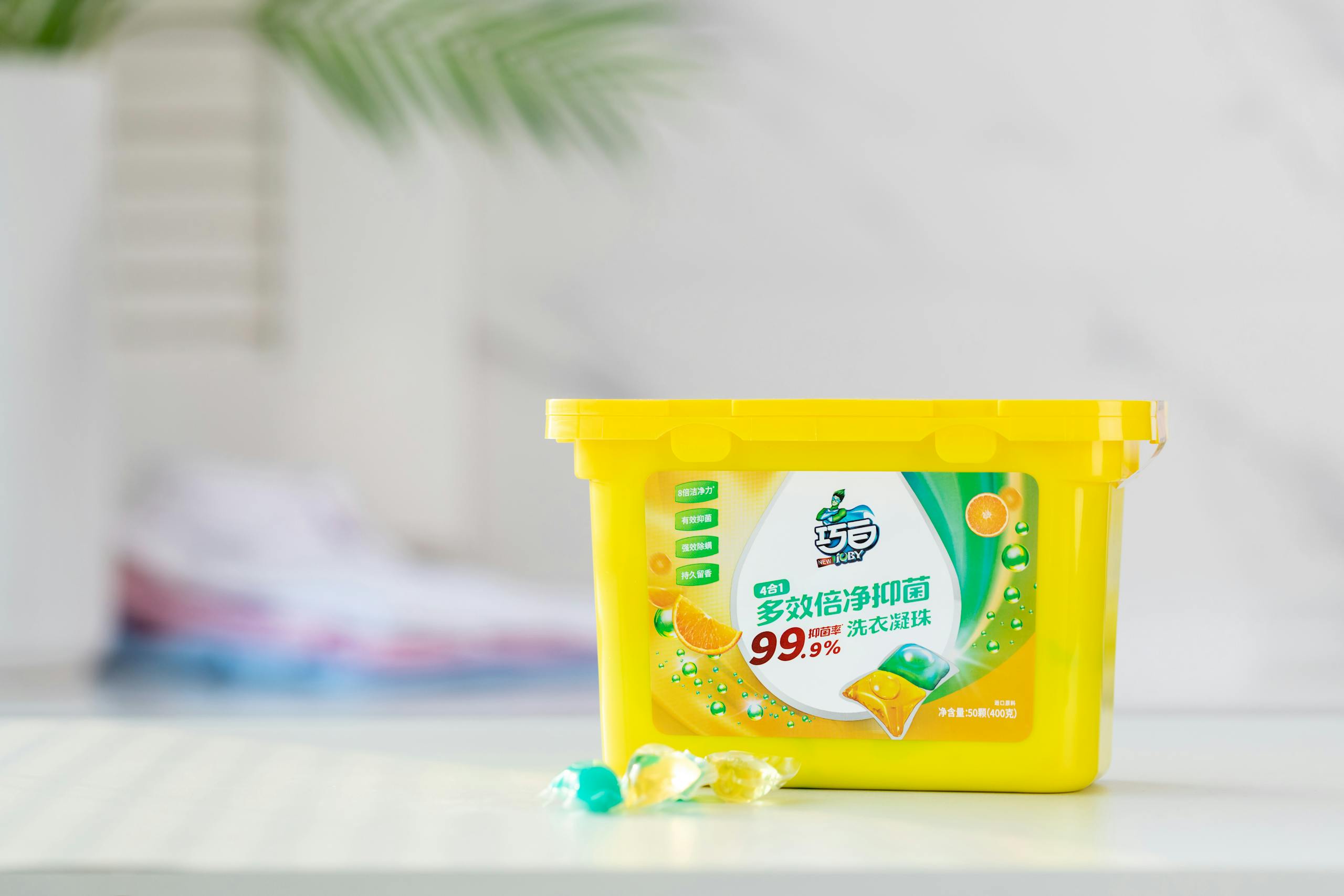
Laundry pods are genuinely convenient. They are also one of the most expensive ways to wash clothes, typically costing significantly more per load than liquid or powder detergent.
You are paying for the packaging, the pre-measured format, and the marketing, not for superior cleaning performance.
The pods also have a failure mode that liquid detergent doesn’t: they sometimes don’t fully dissolve, leaving a sticky residue on clothing or building up inside the washing machine drum.
Switch to a concentrated liquid detergent; store brands work as well as name brands in virtually every independent test, and measure based on your actual load size. You’ll spend less, get cleaner laundry, and stop finding gel smears on your dark shirts.
Disposable Sweeping Cloths – A Subscription You Never Signed Up For
The original disposable sweeping system was a genuine innovation when it launched. It was also the beginning of a business model designed to make you buy refills forever. The starter kit is cheap. The clothes are not, once you add them up across a year of regular use.
A microfiber mop does everything a disposable system does, costs less over any reasonable time horizon, and can be washed in the washing machine when it’s dirty.
A reusable dust mop handles dry debris on hard floors better than most disposable alternatives. The only thing you lose is the satisfying peel-and-stick ritual of attaching a fresh cloth, which is not worth hundreds of dollars a year.
Air Fresheners – Expensive Lies in a Spray Can
Air fresheners do not clean the air. They do not eliminate odors. They release a stronger scent that temporarily overwhelms your ability to detect the original smell, which then returns when the fragrance dissipates.
You are not solving a problem. You are renting a solution that expires in twenty minutes.
The actual fix for persistent household odors is almost always the same: find the source and address it. A bowl of baking soda absorbs odors passively and costs almost nothing. Activated charcoal does the same job more powerfully.
Opening windows when the weather permits does more for air quality than any plug-in or spray on the market. If the smell keeps coming back, the answer is cleaning, not fragrance.
Disinfecting Wipes – Convenience at a Steep and Ongoing Price

Disinfecting wipes became a household staple and a global shortage item simultaneously during the pandemic, which tells you something about how dependent people had become on them.
They are useful in specific situations, for instance, quick cleanup of a surface that genuinely needs disinfecting. As daily cleaning tools for counters and tables, they are extraordinarily expensive compared to alternatives.
A spray disinfectant and a stack of washable microfiber cloths does the same job at a fraction of the ongoing cost. The microfiber cloths go in the laundry. The spray bottle gets refilled.
Nothing gets thrown away after a single pass across a countertop. The cleaning performance is identical, and the annual savings are real.
Automatic Toilet Bowl Tablets – Saving You Work While Damaging Your Toilet
Drop-in toilet tablets promise effortless cleanliness, and they deliver on that in the short term. What they don’t advertise is the long-term effect on toilet components.
The bleach and chemical compounds released continuously into the tank accelerate the degradation of rubber seals, flappers, and gaskets, the parts that keep your toilet functioning correctly. Replacing those components costs considerably more than the tablets saved you.
Cleaning a toilet properly takes about three minutes with a brush, some vinegar, or a mild cleaner. Done a couple of times a week, it keeps the bowl clean without chemically aging your plumbing.
The tablet is a convenience that charges you twice, once at the store, and again when the toilet starts running constantly because the flapper has dissolved.
Laundry Scent Boosters – Paying for Something That Does Nothing
Laundry scent boosters are among the purest examples of products that exist solely because someone figured out people would buy them. They do not clean. They do not remove stains. They do not soften fabric. They make laundry smell a certain way, and that is the complete list of their functions.
If you want your laundry to smell good, which is a reasonable preference, choose a detergent whose scent you like. Add a couple of wool dryer balls with a few drops of essential oil for fragrance in the dryer.
Either option costs a fraction of what dedicated scent beads cost and does not require a separate product cluttering your laundry room shelf.
Feather Dusters – Redistributing Dust Is Not Cleaning

The feather duster is one of those products that looks like it’s working while, in fact, just moving the problem around. Feathers, and many synthetic equivalents, do not trap dust.
They agitate it, launching particles into the air where they circulate briefly before settling on a different surface. You have cleaned nothing. You have rearranged the dust.
Microfiber cloths work on an entirely different principle: the fibers carry a static charge that attracts and holds dust rather than pushing it away.
A damp microfiber cloth picks up dust, allergens, and surface grime, keeping them trapped until you wash the cloth. It costs a dollar or two per cloth and lasts for years. The feather duster costs more and performs worse by every measurable standard.
Chemical Drain Cleaners – Harsh on Clogs, Harsher on Your Pipes
Chemical drain cleaners are one of those products that work just well enough to keep people buying them while causing problems that only become visible years later.
The caustic chemicals that dissolve organic clogs do not distinguish between the clog and the pipe; older metal pipes, in particular, take cumulative damage from repeated chemical treatments, and even PVC can be affected by the heat generated by the reactions.
A drain snake, a flexible auger you thread into the drain to physically break up or retrieve the clog, costs about $20 and handles the vast majority of household blockages better than chemicals do.
A good plunger handles most of the rest. Neither approach involves pouring something corrosive into your plumbing and hoping for the best.
Paper Towels – The Most Normalized Waste in the Average Kitchen
Paper towels are so embedded in domestic cleaning culture that questioning them feels almost radical. They are also one of the most quietly expensive habits in the average household.
A family that uses paper towels freely for spills, surface cleaning, and general wiping can easily spend well over $100 a year on something that goes directly into the bin after a single use.
A set of microfiber cloths or repurposed old cotton t-shirts cut into rags does everything paper towels do: absorbs spil