


The United States Treasury Department is quietly preparing for the possibility that President Donald Trump’s portrait will appear on a brand-new $250 bill, a move that would shatter a tradition baked into federal law for more than a century.
Current statute is unambiguous: only deceased individuals may appear on U.S. currency. But with the country’s 250th birthday approaching on July 4, 2026, the Trump administration is betting that Congress will rewrite that rule before the celebrations begin.
Treasury Secretary Scott Bessent confirmed the preparations during a White House press briefing on Thursday, May 28, holding up a Washington Post report on the proposal. He maintained that the department was simply doing its due diligence ahead of potential legislation and would not move forward without a legal mandate from Capitol Hill.
The story, first broken by the Post, cited four current and former employees of the Bureau of Engraving and Printing who said administration officials had been pressing the agency to design a prototype.
If the bill passes and Trump’s face appears on currency, he would be the first living person to appear on U.S. currency since 1866. That year predates the modern statutory prohibition, which Congress later codified to prevent exactly this kind of move. Getting there still requires an act of Congress, and as of now, the legislation has been sitting largely idle since it was introduced more than a year ago.
The Bill Behind the Bill
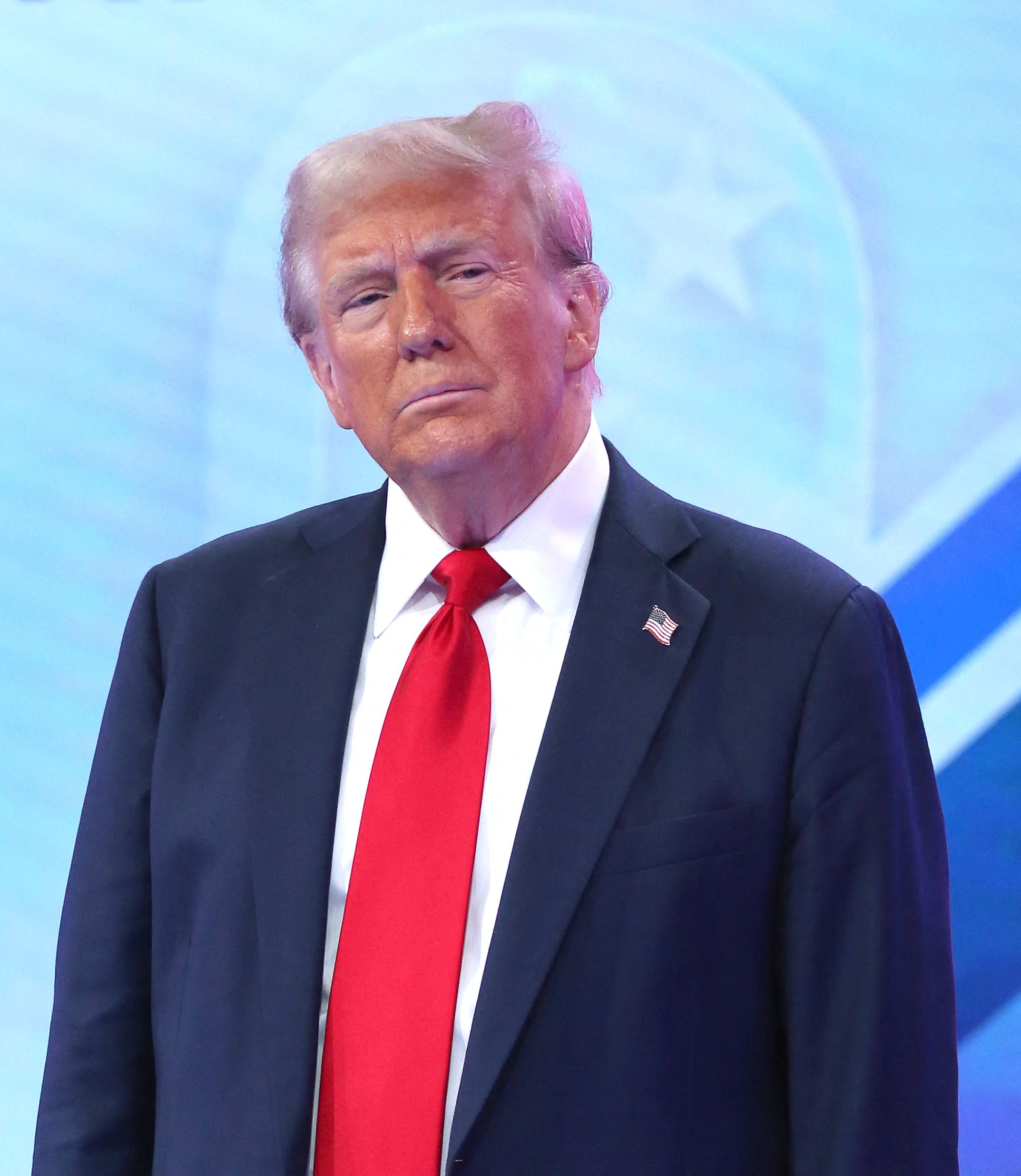
Rep. Joe Wilson, a Republican from South Carolina, introduced the Donald J. Trump $250 Bill Act in February 2025. The legislation would amend the Federal Reserve Act to require the Treasury Secretary to print $250 bills carrying a portrait of the president, framed as a symbolic recognition of his role as the sitting commander-in-chief during the nation’s semiquincentennial.
A separate section of the bill states it is the “sense of Congress” that such bills be printed to mark the anniversary.
Despite the fanfare around the proposal, the legislation has seen little movement. With fewer than six weeks left until the July 4 deadline, there is no confirmed timeline for a vote in either chamber. If it fails to pass before the 119th Congress adjourns, the bill dies, and Wilson or another member would have to reintroduce it in the 120th session.
Bessent, for his part, struck a measured tone. “At Treasury, we prepare things in advance, so we have prepared in advance if the legislation is passed, but we will stick to the law,” he said. He added that it was ultimately “up to” Capitol Hill whether the bill would become law, and he described his two standing mandates for U.S. currency: no living person on the money, and all bills must carry the phrase “In God We Trust.”
What the Proposed $250 Bill Would Look Like
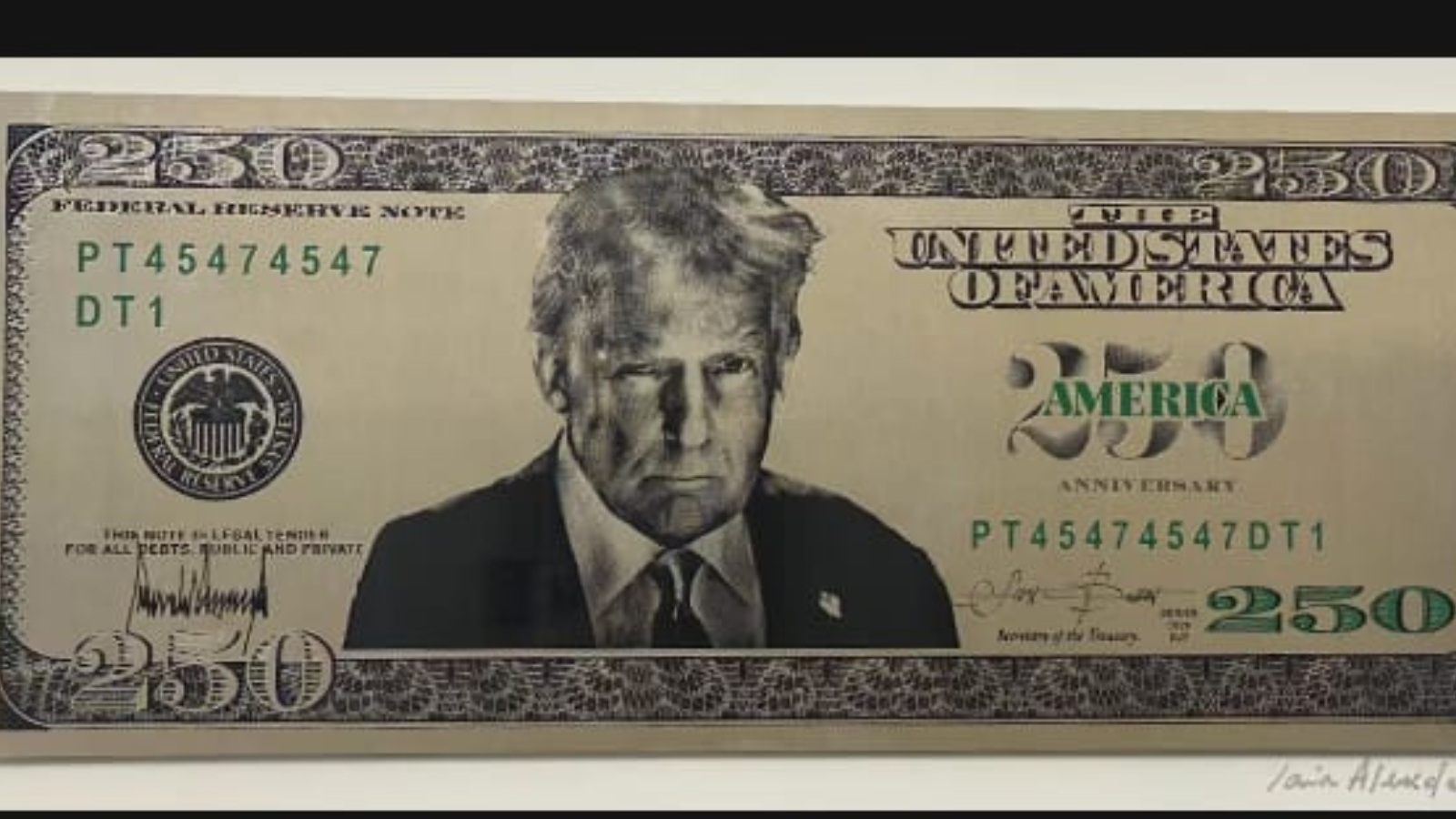
A mock-up design that administration officials provided to Bureau of Engraving and Printing staff in August was obtained and published by the Washington Post. The design reportedly resembles one that Republican Rep. Andy Barr of Kentucky posted on social media in January, featuring a stern portrait of Trump set against the colors of the American flag, the “250” anniversary logo, and the president’s signature.
That signature detail is significant on its own. Earlier this year, the Treasury Department announced that Trump’s signature would begin appearing on all newly printed U.S. currency, replacing the long-standing practice of carrying the signatures of the Treasury Secretary and the Treasurer. A Treasury spokesperson confirmed the change, citing a recommendation from U.S. Treasurer Brandon Beach.
The department also clarified that no taxpayer dollars would be used to produce the new note. The Bureau of Engraving and Printing finances its operations entirely through product sales and billings to the Federal Reserve, rather than congressional appropriations, making it self-sustaining and sidestepping some of the more politically fraught funding arguments.
Coins, Passports, and a Branding Push

The $250 bill is just one piece of a wider effort by the Trump administration to attach the president’s image to commemorative materials marking America’s 250th anniversary.
The Treasury announced in March that future currency would carry Trump’s signature, and the department has also been developing a $1 coin featuring the president’s image for circulation. A 24-karat gold commemorative coin bearing his likeness was unanimously approved by the U.S. Commission of Fine Arts, whose members Trump appointed earlier this year.
The administration has cited two legal statutes to justify the coins. Section 5112 of Chapter 31 of the U.S. Code gives the Treasury Secretary broad discretion over the specifications, designs, and denominations of certain gold coins. The Circulating Collectible Coin Redesign Act of 2020 also temporarily authorizes the Treasury Secretary to issue $1 coins with designs tied to the semiquincentennial of 2026.
Beyond currency, the State Department announced it would issue special edition passports featuring Trump’s portrait and signature in honor of the anniversary. In Washington, D.C., a banner bearing Trump’s likeness hangs over the Justice Department.
His name has also been added to the Kennedy Center for the Performing Arts and the U.S. Institute of Peace, rounding out what critics and supporters alike have noted is an unusually aggressive branding effort tied to a national milestone.
Pushback and the Monarchy Comparisons
The proposal has drawn criticism from several quarters, including from members of the Citizens Coinage Advisory Committee, a federal advisory body, who objected to the commemorative coins.
More broadly, opponents of the currency push have argued that placing a sitting president’s face on money mirrors the traditions of monarchies and authoritarian governments, where leaders routinely stamp their image on the national currency as a symbol of personal power.
The timing has also drawn scrutiny. The push is unfolding against the backdrop of a growing affordability crisis that economists have linked in part to economic and energy shocks stemming from the U.S. and Israel’s ongoing conflict with Iran.
Some critics have questioned whether the priorities signaled by a commemorative $250 bill are well aligned with the current financial climate facing American households.
Bessent pushed back on that framing directly. He argued that the 250th anniversary celebrations are “bifurcated” from broader economic concerns and that there was nothing inappropriate about recognizing the sitting president on a commemorative note. “I don’t think that there’s anything untoward about having the President of the United States, the person who was president of the United States on the 250th anniversary bill,” he said.
What Happens Next

The ball is firmly in Congress’s court. Without legislation amending the Federal Reserve Act, the $250 bill featuring Trump’s portrait cannot legally enter circulation. The Wilson bill remains the only vehicle on the table, and with the semiquincentennial fewer than six weeks away, its window is narrow. There is currently no public evidence of the votes needed to push it through both chambers before July 4.
The Treasury, for now, is treating the preparations as contingency planning rather than a done deal. Whether those plans translate into actual printed notes will depend on whether Republican leadership prioritizes the legislation during the remaining days of the current congressional calendar. The administration has made clear it wants the currency ready to go the moment a legal pathway opens.
For Trump, the broader pattern is already established regardless of how the vote goes. His signature is on the money. His face is on commemorative coins. His name adorns federal buildings and cultural institutions. The $250 bill would be a capstone, but the rebranding of American public life in his image has already begun in many respects.


