


The post 9 Things in Your Entryway Every Visitor Notices and Quietly Judges first appeared on Crafting Your Home.
A guest standing in your doorway with a coat, a bag, and nowhere to put either doesn’t need another decorative vase. They need a little space and a clear invitation to come inside.
That is a useful way to assess your entryway before company arrives. Designers and professional cleaners point to clutter, lighting, storage, and furniture placement as details worth addressing. Their recommendations aren’t proof that visitors are secretly grading your home. They offer something more practical: ways to make arriving feel comfortable without buying new furniture or turning your entrance into a showroom.
The Shoe Pile Beside the Door
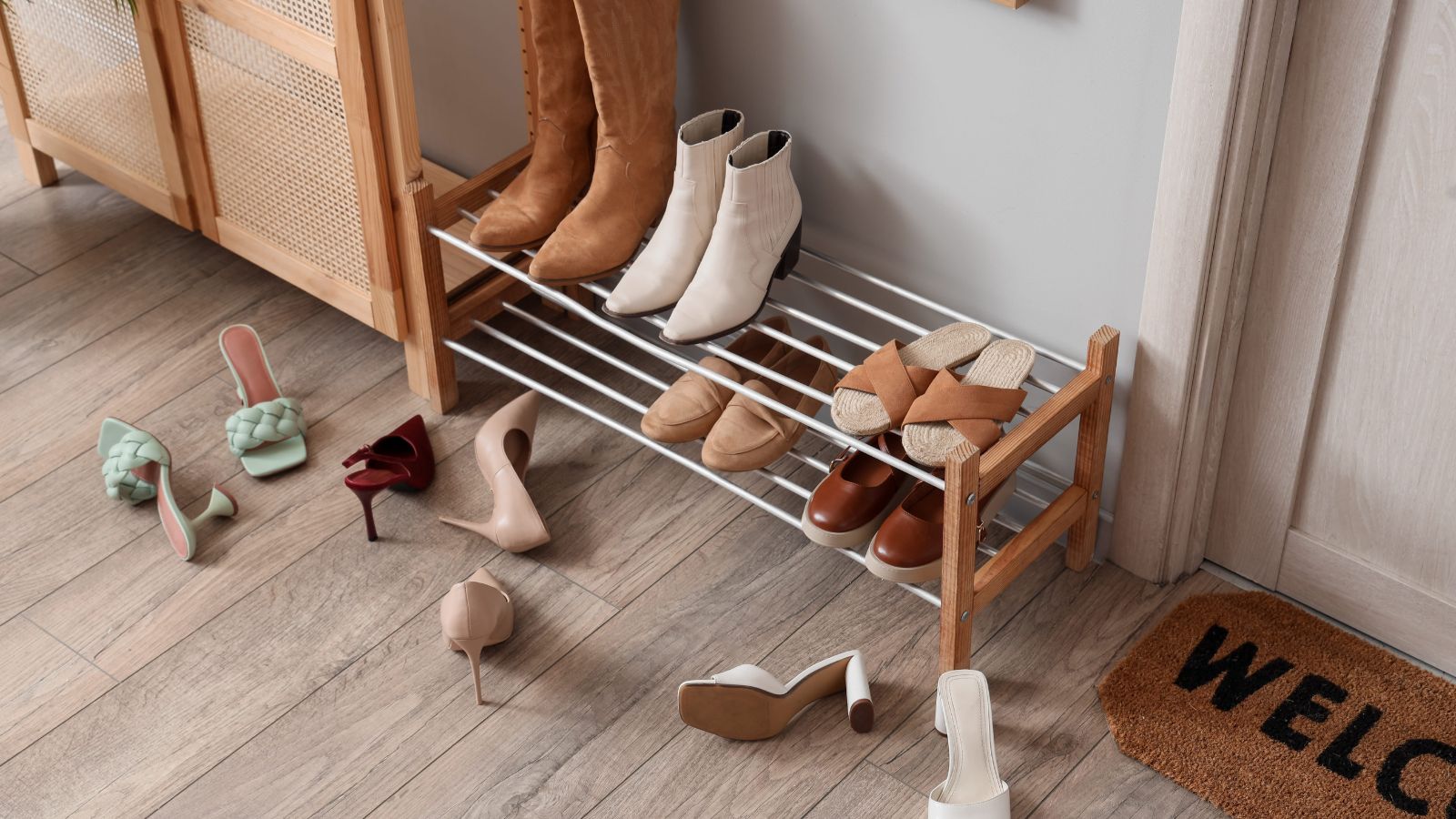
Shoes belong near an entrance when that is where your household uses them. The trouble starts when everyday storage becomes an overflow area.
Professional organizer Katrina Teeple, founder of Operation Organization, told Real Simple that keeping lots of shoes by the door can make footwear the entrance’s main visual feature.
Before visitors arrive, move seldom-used pairs elsewhere and gather the current ones neatly. Leave room for guests’ footwear, too. A functional entrance can accommodate daily life without requiring someone to step around the household’s entire shoe collection.
Lighting That Leaves Guests Guessing
A cozy entrance should still let someone see where they are going.
Designers interviewed by Real Simple identified inadequate lighting as a common entryway problem. It is worth checking the practical basics before considering whether the fixture makes a statement.
Make sure existing bulbs work and switch on enough light when guests arrive. Look at the floor, the place for belongings, and the route farther inside. If those are difficult to see, decorative mood lighting hasn’t finished the job.
A Strong Smell at the Entrance
Adding a scented candle isn’t always the most useful first move when something smells unpleasant.
Real Simple’s reporting identifies household odors and overpowering fragrance as details guests may notice. Even a scent you enjoy can become too much when it dominates the arrival experience.
Check likely sources, such as trash, damp belongings, or items needing cleaning, before adding fragrance. Keep the goal simple: address what needs attention rather than trying to perfume over it. There is no need to make the doorway smell like a candle display.
Related: 10 Simple Ways to Make Your Home Feel Fresher and More Inviting
Furniture That Interrupts the Walk Inside
A console can look beautiful and still be inconveniently placed.
Designer Cara Velten, partner at Gale Sitomer Design, told Real Simple that furniture arrangement is among the first things people experience when entering a room.
Try opening the front door fully and walking inside while carrying a bag. This is a simple usability check: does a bench, basket, or plant make you turn sideways or take an awkward route? Move whatever gets in the way. The entrance needs to work as a passage before it works as a display.
Nowhere Clear for Belongings
An available hook can do more for the welcome than another accessory.
Design experts in Real Simple’s entryway coverage recommend storage for coats and shoes. You can apply that advice by clearing part of an existing closet or freeing a few hooks.
Then tell guests where their things can go. That matters especially when someone arrives with coats, boots, or wet-weather belongings. GoCleanCo founder Sarah McAllister explains the value of clearing household items in Real Simple: “It creates space for their things and instantly makes the house feel more open.”
A Shoes-Off Request Without Somewhere to Sit
A shoes-off household can be welcoming. Give visitors an easy way to follow the request.
The designers in Real Simple’s reporting recommend somewhere to sit while removing or putting on footwear.
Offer a stable chair or seat where there is room. If the entrance is narrow, direct guests to a nearby seat instead of squeezing in a bench that blocks the walkway. The useful feature is a comfortable place to handle shoes, wherever it reasonably fits.
Related: 10 Habits That Make Apartment Neighbors Quietly Dislike You