


This article was originally published on Crafting Your Home. A human contributor also wrote and edited the post.
This post, 8 TV Theme Songs Every Boomer Can Still Sing by Heart first appeared on Crafting Your Home.
Before anyone could skip an intro, the opening theme was the whole ritual. Families settled onto the couch, the first few notes played, and everyone in the room already knew exactly how the next thirty seconds would go.
For a generation raised in front of three channels and a TV Guide, these songs are not just nostalgic; they are practically muscle memory.
What makes this particular list endure is how many of these songs did real narrative work, explaining who the characters were and how they got there before a single joke landed.
Here are eight themes boomers still know note for note, and the stories behind how each one came to be.
“The Ballad of Gilligan’s Isle” (Gilligan’s Island)

Series creator Sherwood Schwartz needed to sell CBS executives on the idea that a castaway comedy could open every episode with a song explaining how seven people ended up stranded together, and according to one account of the show’s history, he performed the tune himself on the fly in a pitch meeting.
Once the network bit, Schwartz teamed with George Wyle, who had also written the holiday standard “It’s the Most Wonderful Time of the Year,” to shape the music into what Wyle called a sea chantey.
The theme song is considered one of the most quoted in television history, and it had to be revised after season one, once the writers decided the Professor and Mary Ann deserved more than being lumped together as “and the rest.”
“The Ballad of Jed Clampett” (The Beverly Hillbillies)
One of television’s very first explain-the-premise theme songs, the jaunty tune was written by producer Paul Henning and performed by bluegrass legends Lester Flatt and Earl Scruggs, with vocals by Jerry Scoggins.
It worked so well as a piece of music on its own terms that it entered the Billboard charts in late 1962 and climbed into the top 50.
The show itself backed up the song’s staying power, ranking among the top 20 most-watched programs on American television for eight of its nine seasons, so an entire country was humming along before the opening scene even started.
“Theme from The Brady Bunch” (The Brady Bunch)
Schwartz leaned on the same storytelling formula again a few years later, this time with composer Frank De Vol, to introduce a blended family of six kids in under a minute of music.
The approach worked so well that the song and its split-screen opening credits became, as one retrospective puts it, embedded into the DNA of American baby boomers.
The cast’s own voices eventually became part of the charm too, since the Brady kids took over the singing duties by the third season, splitting verses between the boys and girls before joining together for the finale.
“Those Were the Days” (All in the Family)
Few theme songs carry as much irony baked into their lyrics as this one, performed at an on-screen piano by stars Carroll O’Connor and Jean Stapleton as Archie and Edith Bunker.
Broadway songwriters Lee Adams and Charles Strouse, fresh off writing “Bye Bye Birdie,” originally envisioned the song performed by a full studio orchestra, but budget constraints pushed producer Norman Lear to have the two leads sing it themselves at the piano instead, which ended up giving the opening a kitchen-sink realism no orchestra could have matched.
The gamble paid off commercially too. The song entered Billboard’s Hot 100 in December 1971 and eventually climbed into the top 50, a rare feat for a sitcom theme openly mocking its own main character’s worldview.
The Andy Griffith Show Theme
Composer Earle Hagen struggled all summer to write a theme for the new CBS sitcom before the answer came to him almost by accident.
By his own account, he simply started whistling a tune while walking down the street, and that unplanned whistling became the finished theme heard at the start of every episode, with Hagen himself providing the whistle on the recording.
It became so recognizable that Ron Howard, who played Opie on the show, later recalled classmates teasing him by whistling it while he tried to shoot free throws in high school basketball games, decades after the show stopped filming.
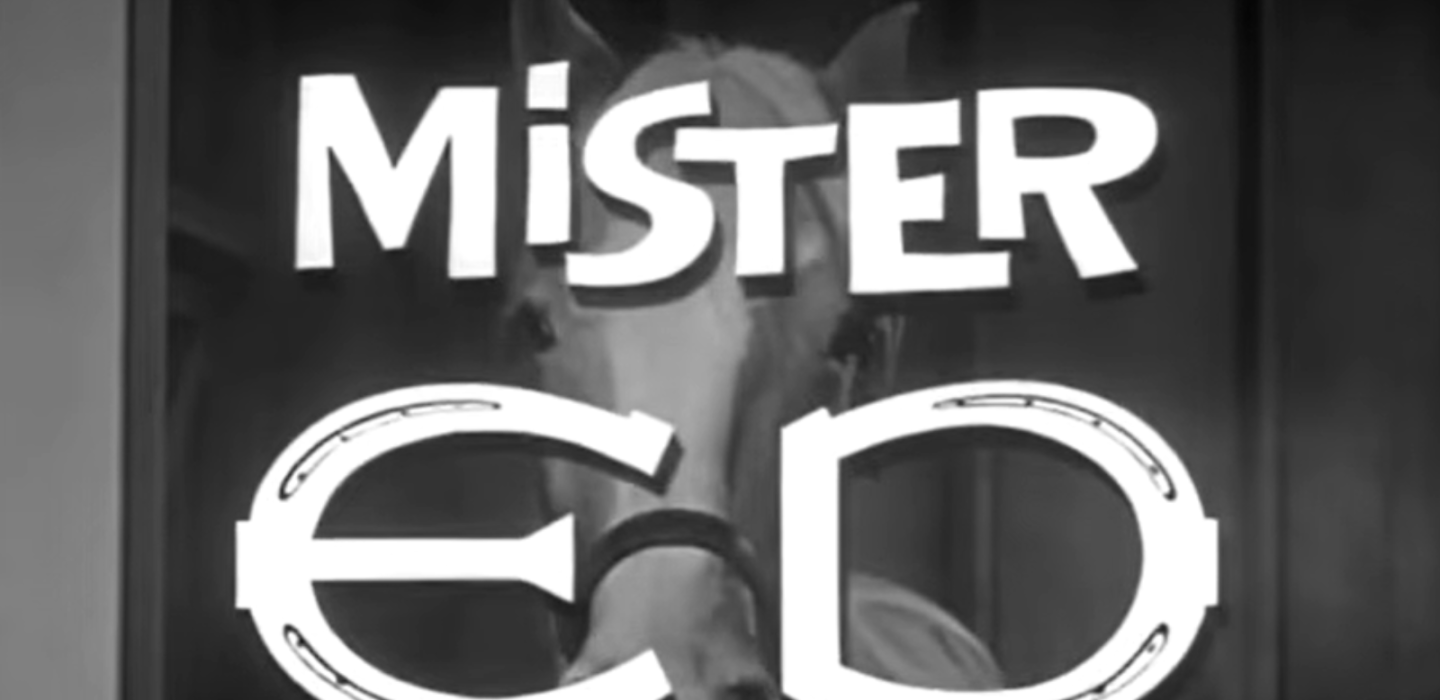
The Mister Ed Theme
Few theme songs manage to be funny and faintly unsettling at the same time, and the tune introducing television’s talking horse pulled off exactly that combination for six seasons.
One ranking of the all-time best TV themes describes it as even eerier than the theme from Twin Peaks, which is a strange kind of compliment for a lighthearted sitcom about a horse who could talk to one person and nobody else.
The novelty of the premise and the catchiness of the melody worked together so well that the song has outlived the show by decades in reruns and clip compilations.
“Movin’ On Up” (The Jeffersons)
A spinoff of All in the Family, this sitcom opened with a gospel-infused anthem about a Black family’s rise to a Manhattan high-rise, and the song’s energy carried well beyond its original show.
Its staying power is hard to overstate, since Beyoncé covered the gospel-tinged title song during her Mrs. Carter Show World Tour in 2013, introducing the decades-old theme to an audience who had likely never seen a single episode of the series it came from.
The Beverly Hillbillies’ sister theme, “The Ballad of New Granite City” (Green Acres)

Born directly out of The Beverly Hillbillies’ success, this companion show flipped the formula, sending a wealthy Manhattan couple to a run-down farm instead of bringing hillbillies to the big city, and Paul Henning once again enlisted Flatt and Scruggs to perform the title music.
The reversed premise made it a natural companion piece to the Clampetts’ theme, and together the two songs turned Henning’s bluegrass sound into something close to a genre of its own on 1960s television.
Conclusion
What ties these eight songs together is not just nostalgia; it is craftsmanship. Writers like Sherwood Schwartz and Paul Henning treated the first thirty seconds of a show as real storytelling, not filler, and composers like Earle Hagen understood that sometimes a whistle says more than a verse ever could. Six decades later, boomers do not just remember these shows.
They can still hum the theme from the first note, a kind of staying power almost no modern opening credits sequence has matched.
Other Stories You Might Like
- 8 Traditions Grandparents Say They Wish Families Still Kept on Sundays
- 9 Dog Breeds That Suit Older Adults, According to the AKC
- 8 Traditions Grandparents Say They Wish Families Still Kept on Sundays
If you like what you just read, then subscribe to our newsletter and follow us on social media.


