



The post 8 Things You Probably Remember If You Visited a School Library in the 1970s first appeared on Crafting Your Home.
Walking into a school library in the 1970s felt like entering a different world. Wooden drawers filled with tiny cards, shelves lined with heavy encyclopedias, and librarians who could tell you exactly where to find almost anything defined the experience.
Finding information required patience. You couldn’t simply type a question into a computer and receive an answer. Instead, you searched through cards, followed classification numbers, and flipped through pages until you found what you needed.
For Baby Boomers and older Gen X readers, these familiar sights bring back memories of school assignments, childhood friendships, and afternoons spent discovering new books.
Although school libraries have changed considerably, many of the objects that once filled their shelves and desks remain unforgettable.
Here are eight things you might remember from a 1970s school library.
Wooden Card Catalog Cabinets
Remember those large wooden cabinets filled with dozens of tiny drawers? Before computerized catalogs became common, they were essential tools for finding books.
Each drawer held alphabetically arranged cards containing information about library materials. Students could search by author, title, or subject, then write down the call number to locate a book on the shelves.
The Library of Congress began developing its modern card catalog in 1898. By 1980, its collection contained more than 22 million cards spread across approximately 22,000 drawers.
School libraries operated on a much smaller scale, but the basic idea was familiar.
For many students, opening those drawers and flipping through the cards was an adventure of its own. The wooden handles, neatly arranged cards, and quiet search for the right title made finding a book feel like a small accomplishment.
Heavy Encyclopedia Sets

Long before online searches became part of everyday life, encyclopedias were among the most useful reference materials in school libraries.
Many libraries kept matching sets of large reference books arranged neatly on shelves. Students searching for information about a particular subject had to locate the appropriate volume and look through its entries.
World Book and other general encyclopedias were familiar names in school reference collections.
Unlike today’s online resources, printed encyclopedias couldn’t update themselves whenever new information became available.
Researching a subject also required more than finding the correct volume. Students had to read through entries, identify relevant information, and record useful details in their notebooks.
If you remember balancing a heavy encyclopedia on a library table while working on an assignment, you’re certainly familiar with this part of school life.
Library Book Pockets and Borrowing Cards
Opening a library book sometimes revealed a small paper pocket attached to the inside cover.
Inside was a borrowing card that helped librarians track books. Depending on the library’s system, these cards could contain information about previous borrowers or identifying numbers.
The American Library Association documents the long history of card-based borrowing systems. By 1932, Gaylord Brothers had introduced an electrically operated book-charging machine.
But many traditional checkout routines remained familiar to students for years afterward.
Those little paper pockets were easy to overlook, yet they played an important role in keeping library collections organized.
For some students, seeing their name on a borrowing card added a personal touch to the experience. It was a reminder that the book had passed through other hands before reaching theirs.
Dewey Decimal Classification Guides
Finding a book in the nonfiction section required more than recognizing its title.
Students often had to understand the Dewey Decimal Classification system, which organized books into numbered subject categories.
First published in 1876, the system divided knowledge into major subject areas. For example, the 500s covered science, while the 900s covered history and geography.
Library lessons frequently introduced students to the relationship between those numbers and the books arranged on the shelves.
Once you found the right number, the next challenge was locating the corresponding book.
It might seem like an unnecessary amount of work to younger readers accustomed to digital searches. However, the process helped students become familiar with the library’s organization.
For many former students, those numbers remain closely connected to memories of early research assignments.
Related Post: 10 Things People Who Grew Up in the 1970s Still Remember
Rubber Date Stamps at the Checkout Desk
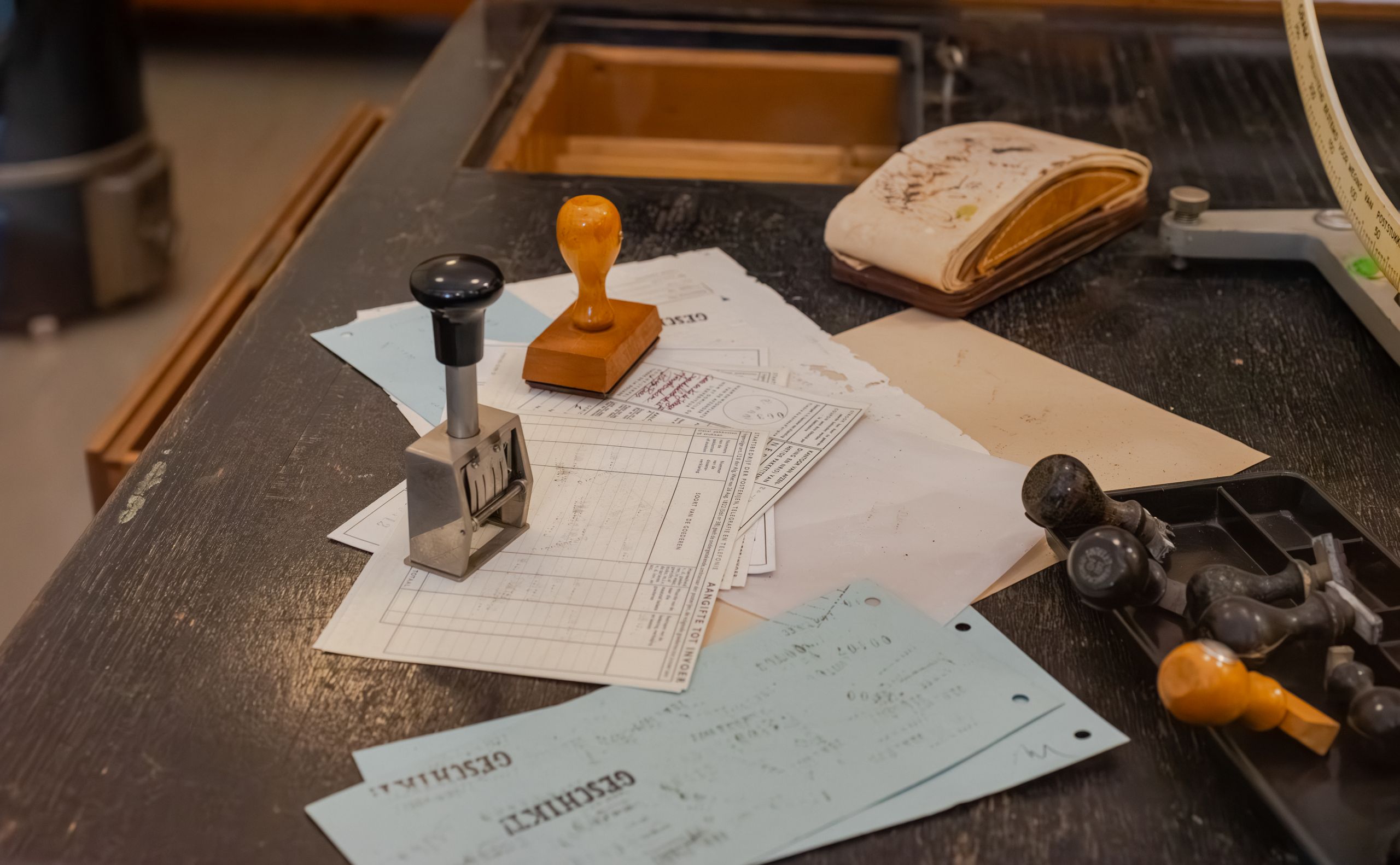
Few sounds were as closely associated with an old-fashioned library as the thump of a rubber date stamp.
Before digital borrowing reminders, librarians commonly stamped slips to show when books were due.
The process was straightforward. A student selected a book, brought it to the checkout desk, and received a due date.
That small stamped date became an important reminder, especially when someone borrowed several books at once.
Borrowing cards and due-date slips weren’t necessarily the same thing. One helped the library track circulation, while the other reminded readers when to return their books.
Today, reminders may arrive electronically, but a physical date printed inside a book still feels memorable.
Do you remember checking that little slip and realizing a book was already due?
Racks Filled With Children’s Magazines
School libraries weren’t only places for textbooks, encyclopedias, and serious research.
Many also offered magazines filled with stories, photographs, puzzles, and interesting subjects that students could explore during reading time.
Recognizable titles include Highlights and Ranger Rick.
Unlike a large reference book, a magazine offered smaller pieces of content that students could enjoy without committing to an entire novel.
Finding a favorite magazine could become one of the most enjoyable parts of a library visit.
Sometimes, the biggest disappointment was discovering that someone else had already picked up the issue you wanted.
For readers who grew up visiting school libraries, those colorful magazine racks may bring back memories just as vividly as the books themselves.
Children’s Books With Gold Award Seals
Some of the most recognizable books on school library shelves carried shiny award seals on their covers.
These markings indicated that a book had received literary recognition, often drawing attention from teachers, librarians, and young readers.
The Newbery Medal, first awarded in 1922, became one of the familiar honors associated with children’s literature.
In 1971, the terminology for recognized runners-up changed to Honor Books.
Titles such as Charlotte’s Web, Sounder, and Mrs. Frisby and the Rats of NIMH are examples of books associated with Newbery Medal or Honor recognition.
For some students, a gold or silver seal made a book especially appealing. For others, it was a familiar sight on books recommended for school assignments.
Either way, those little seals became a recognizable part of the school library experience.
Related Post: If You Grew Up in the 1970s, You Probably Remember These 8 Things Every Dad Kept in His Workshop