A 1960s childhood was basically a trust fall with society. Parents trusted the neighborhood. Kids trusted rusty playground equipment. Everybody trusted that a station wagon full of loose children would somehow arrive safely because Dad said, “Hold on,” two seconds before turning left.
To younger generations, this all sounds like a deleted scene from a safety-training video. Yet for many ’60s kids, it was just Tuesday. They grew up before smartphones, bike helmets, GPS, filtered water bottles, soft playground flooring, caller ID, and the modern parenting command center known as the family group chat. These eight childhood memories would confuse anyone born later, mostly because each one seems to begin with, “You were allowed to do what?”
Riding in Cars Like Human Groceries
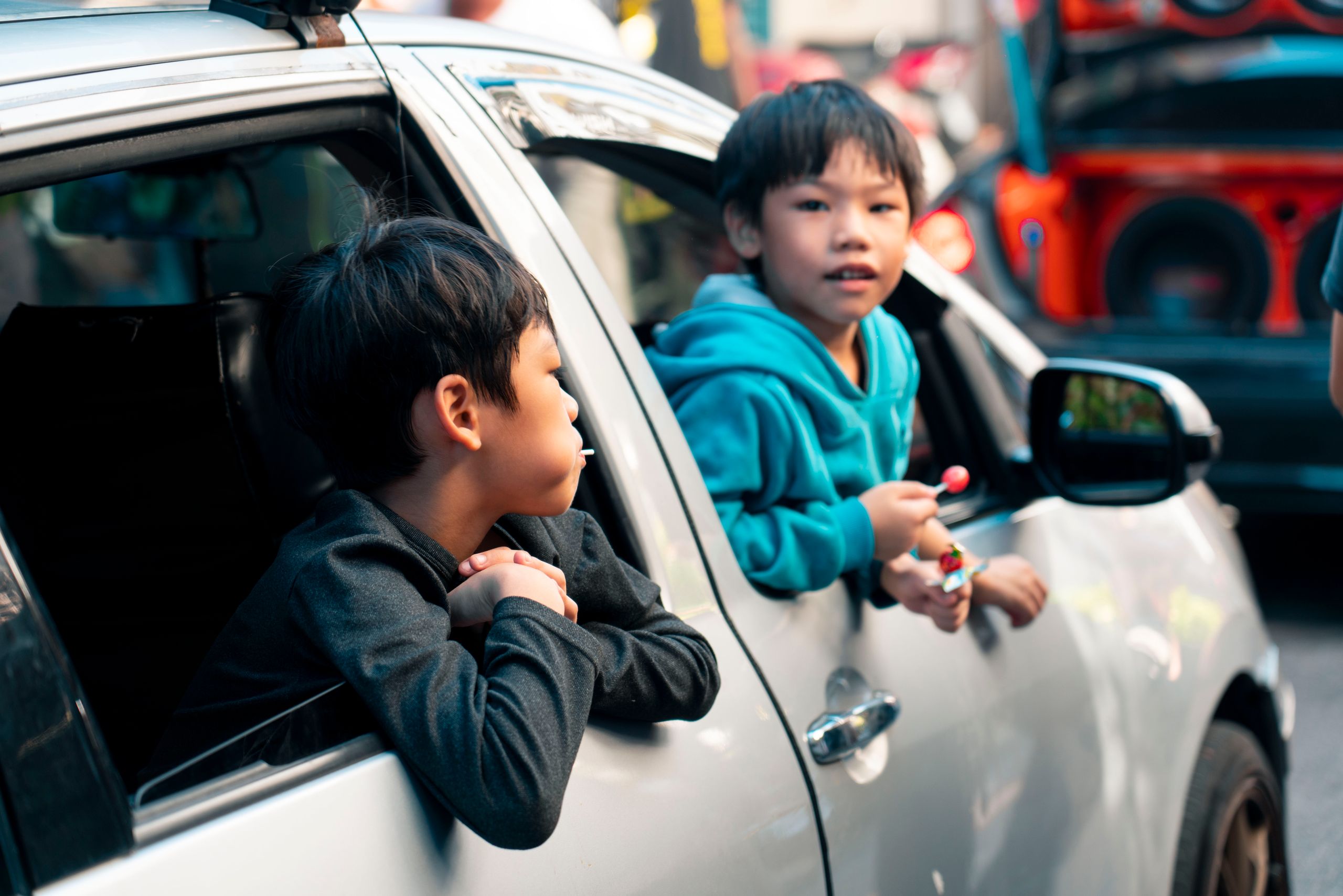
Today, a parent can spend 40 minutes researching the safest car seat, another 20 minutes adjusting the straps, and still panic because the chest clip looks half an inch too low. In the 1960s, many kids rode in cars as if they were part of the luggage system. They stretched across the back seat, sat in a sibling’s lap, leaned over the front bench seat, or fought for the strange honor of standing behind Dad’s shoulder like a tiny road-trip supervisor.
The wild part is that this did not feel rebellious at the time. It felt normal because seat belt culture had not fully arrived. Some cars had belts, some did not, and many families treated them like decorative straps installed by people with trust issues. A sudden stop could turn the back seat into a physics lesson, but most kids remember the freedom more than the danger. Today’s kids would see that scene and immediately ask which adult was about to lose custody.
Bike Helmets Were for Other Planets
A ’60s kid on a bicycle did not look like a child ready for safe recreation. They looked like a neighborhood courier delivering chaos. There was no helmet, no knee pads, no reflective vest, no blinking light, and sometimes no working brakes. The bike might have been handed down from a cousin, repaired with questionable tools, and decorated with playing cards in the spokes because every child deserved to sound like a lawn mower.
Falling was part of the sport. Knees got scraped, elbows got gravel tattoos, and somebody always had a story about flying over the handlebars with the confidence of Evel Knievel and the landing strategy of a wet towel. Modern kids are raised with far better head-injury awareness, which is good, but it also means the old helmet-free bike gang now looks terrifying. Back then, the safety plan was simple. Don’t crash. If you crash, don’t cry too loudly. If you cry, make sure your friends do not rename you for life.
The Streetlights Were the Family Tracking App

Before phones lived in everyone’s pocket, the streetlight was the original location service. A child could leave the house after breakfast, vanish into the neighborhood, and reappear when the sky turned orange. Parents did not receive live updates. They did not check a map. They did not ask for a selfie in the park. They just assumed the child was somewhere between “fine” and “needs a Band-Aid.”
This kind of freedom would stun many younger people today. A modern parent may want to know exactly where their child is, who they are with, what road they crossed, and whether the snack situation is emotionally stable. A ’60s kid often learned judgment by wandering, negotiating, getting lost, solving arguments, and finding their way home before dinner. It built independence, but it also required a level of community trust that feels almost antique now.
Playgrounds Were Metal, Hot, and Slightly Personal
Modern playgrounds often have soft surfaces, rounded edges, shade structures, and equipment designed by people who understand gravity has consequences. In the 1960s, playgrounds seemed designed by blacksmiths with a sense of humor. There were metal slides that could fry the back of your legs in July, towering jungle gyms, heavy seesaws, spinning merry-go-rounds, and swings that could launch a child into next Thursday.
The equipment did not apologize. If you fell, the ground was often dirt, grass, asphalt, or whatever surface nature and city budgets had agreed on. A scraped knee was considered character development. A blister from a hot slide was a seasonal event. Today’s kids might look at those playgrounds and wonder why the town installed a children’s obstacle course sponsored by tetanus. Yet ’60s kids remember them with real affection because those playgrounds were loud, risky, social, and unforgettable.
Cigarette Smoke Was Basically Indoor Weather
One of the most baffling parts of the 1960s for younger generations is how ordinary cigarette smoke was. Restaurants had smoking sections that were separated from nonsmoking sections by nothing more powerful than optimism. Adults smoked in cars, offices, living rooms, bowling alleys, airports, and sometimes around children without anyone acting as if the room had become a chimney.
Kids grew up knowing the smell of smoke the way today’s kids know the sound of a phone notification. It clung to clothes, curtains, hair, and car interiors. A child could go to dinner and come home smelling like they had spent the evening inside a barbecue pit with wallpaper. Modern smoke-free rules make that hard to imagine, which is exactly the point. What once passed as normal adult behavior now feels like a public health jump scare with a side of mashed potatoes.
Homework Required a Library Expedition

A modern student can type a question into a search bar and receive more answers than any reasonable person could ask for. A ’60s kid had to work for information. Homework meant encyclopedias, library shelves, card catalogs, index cards, sharpened pencils, and the deep emotional pain of discovering that Volume M was missing right when you needed “Mesopotamia.”
This slowed research, but it also made it strangely physical. You had to walk to knowledge. You had to flip pages. You had to ask a librarian, who often had the quiet power of a detective and the patience of a saint. There was no “copy and paste,” no instant fact-check, and no late-night rescue from a search engine. If you forgot the assignment until bedtime, your options were panic, prayer, or creative handwriting. Today’s kids may call that inefficient. ’60s kids call it the reason they still remember how to use an index.
Dangerous Toys Came With No Apology
Some childhood toys from earlier decades now feel like they were developed during a board meeting titled “What If Fun Had Sharp Edges?” Lawn darts are the perfect example. These were not cute foam toys. They were large weighted darts meant to be thrown across a yard toward a target. The game sounded innocent until someone noticed that the product combined children, gravity, metal tips, and aim in a way best described as “emotionally hopeful.”
That was not the only risky play pattern. Kids climbed trees without spotters, built ramps from scrap wood, made questionable go-karts, played with chemistry sets that felt suspiciously serious, and handled pocketknives with the casual confidence of tiny park rangers. Many survived with good stories and bad scars. Younger generations may find that shocking, but for ’60s kids, the backyard was part playground, part workshop, part emergency room.
Houses Had Hazards Hiding in Plain Sight

A 1960s home could feel cozy, but it was not always as harmless as nostalgia makes it look. Many children lived in homes with old paint, older pipes, questionable insulation, and household items that would make modern safety experts clutch a clipboard. Kids touched peeling paint, played near garages full of mystery chemicals, and watched adults fix things with products nobody read twice because warnings were not yet the national hobby they are today.
The biggest difference is awareness. Today, parents are far more alert to lead exposure, fumes, sharp objects, choking hazards, and indoor air quality. In the 1960s, families often did not know what they did not know. That does not make parents careless. It means the information landscape was completely different. A lot of ’60s kids grew up in homes full of warmth, noise, and love, but also a few hidden hazards that would now trigger inspections, warning labels, and a very concerned pediatrician.
Why These Memories Still Hit So Hard
The funny thing about 1960s childhood is that it can sound reckless and magical at the same time. It was freer, louder, less monitored, and often less safe. Kids learned independence because no one was tracking their every move. They learned patience because entertainment arrived on a schedule. They learned problem-solving because tutorials were not waiting in a pocket.
That does not mean everything was better back then. Some changes genuinely saved lives and protected children from risks adults once underestimated. Still, ’60s kids carry memories that younger generations can barely picture: the hot sting of a metal slide, the smell of library books, the thrill of biking too fast with no helmet, and the universal law that you had better be home when the streetlights came on.
Today’s childhood has more safety, more information, and more supervision. The 1960s had more mystery, more freedom, and more moments that make modern parents whisper, “Absolutely not.” Maybe that is why these stories still work. They remind us that childhood has changed, but every generation grows up thinking its own weird version of normal makes perfect sense.