


The Post: 7 Things Flight Attendants Wish Passengers Would Stop Doing first appeared on Crafting Your Home
From ignoring safety instructions to turning the aisle into a packing station, some passenger habits create more than just frustration for flight crews. Here are seven things travelers should rethink before their next flight.
Flying can bring out all kinds of passenger habits; some harmless, some inconvenient, and a few that can affect safety. Flight attendants are not just there to serve drinks or answer questions; they are trained safety professionals responsible for helping protect passengers during a flight.
While some crew complaints focus on courtesy and smoother operations, others involve rules designed to keep everyone safe. Here are seven behaviors flight attendants wish passengers would leave behind.
1. Ignoring the safety briefing and crew instructions
Frequent flyers tune out the safety demonstration because they have heard it dozens of times. But flight attendants say those few minutes matter.
The aircraft, route, and situation can vary from flight to flight, and safety procedures may differ. The Federal Aviation Administration (FAA) advises passengers to pay attention to safety briefings and review the aircraft’s safety card before departure.
Law also requires passengers to follow crew instructions. Federal aviation rules prohibit passengers from assaulting, threatening, intimidating, or interfering with crewmembers performing their duties.
Refusing a flight attendant’s safety instruction could be considered interference with crew responsibilities.
The message from crews is simple: even experienced travelers should look up when the briefing begins.
2. Standing up or unbuckling while the seat-belt sign is on
That urge to grab a bag, stretch your legs, or head to the restroom can be tempting, especially on a long flight. But when the seat-belt sign is illuminated, passengers are expected to remain seated unless they have a legitimate need to get up.
The FAA requires seat-belt signs to be used during important phases of flight, including taxi, takeoff, and landing, and whenever the captain determines it is necessary.
The agency also recommends keeping seat belts fastened while seated even when the sign is off because unexpected turbulence can happen at any time.
For flight attendants, this is not about being strict. It is about reducing the chance of injuries caused by sudden movement.
3. Treating the overhead bin like a personal storage locker
Overhead compartments are shared spaces, not private closets. Flight attendants often see passengers trying to squeeze oversized bags into bins, stack items improperly, or place heavy belongings where they could fall.
The FAA advises travelers to pack carefully, avoid placing heavy items overhead when possible, and keep straps or loose objects from creating hazards. Small personal items may also need to go under the seat depending on the aircraft and airline’s rules.
A smoother boarding experience starts with a simple habit: place your larger carry-on where allowed, keep your personal item under the seat if required, and avoid taking more space than necessary.
4. Blocking the aisle while organizing bags
Boarding is a carefully timed process, and a single passenger stopping in the aisle can slow everyone behind them.
Flight attendants frequently mention passengers who stand in the aisle searching for headphones, rearranging belongings, or unpacking their bags after reaching their row.
While this is usually an etiquette issue rather than a federal safety violation, it can create unnecessary delays and make it harder for crew members to complete their preflight duties.
A better approach is to prepare before boarding. Keep items you will need during the flight, such as headphones, a book, or a small personal item- easy to access before you board.
5. Touching, poking, or grabbing crew members for attention
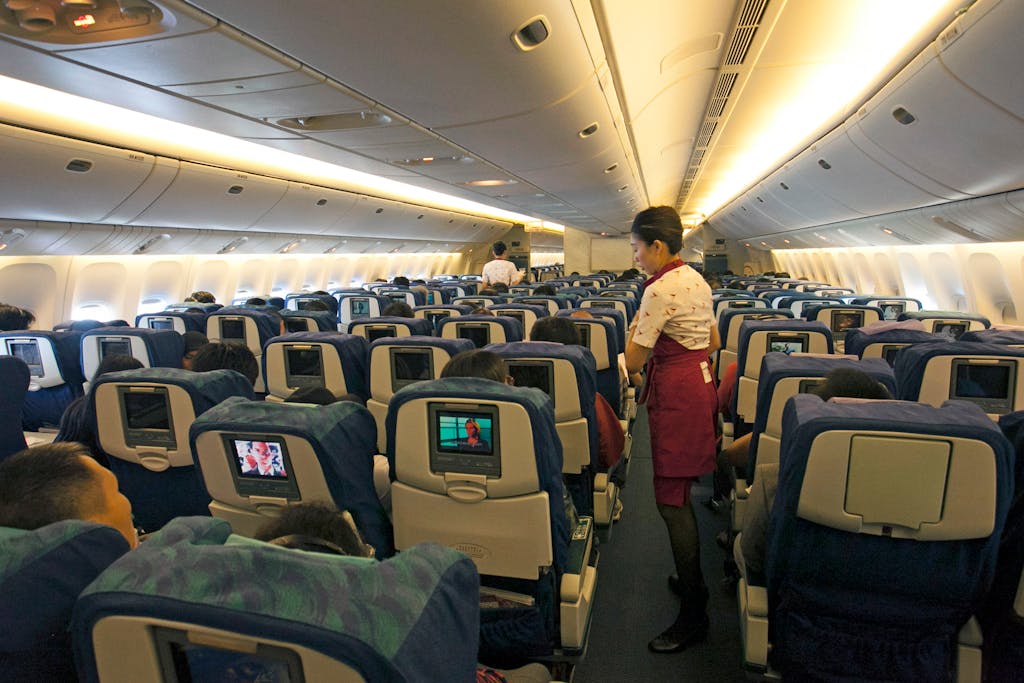
Flight attendants understand passengers need assistance, but physically tapping or grabbing a crew member is widely considered poor behavior.
Crew members may be moving through the cabin while handling safety checks, service tasks, or other responsibilities. Instead of touching someone to get attention, passengers can use the call button when appropriate, make eye contact, or wait until a crew member is available.
Federal rules address more serious situations involving threats, intimidation, assault, or interference with crew duties. Not every unwanted touch is treated as a federal offense, but respecting personal boundaries helps keep interactions professional and safe.
6. Keeping headphones on or playing audio without consideration
Headphones are part of modern travel, but they can create problems when passengers cannot hear crew members or ignore requests during service.
Flight attendants often say they have to repeat themselves when passengers remain focused on music, videos, or phone calls. Playing entertainment aloud can also disturb nearby travelers.
The FAA advises passengers to follow airline rules regarding electronic devices and to pay attention during safety announcements.
Airlines may have their own device-use policies, so travelers should follow crew instructions throughout the flight.
A small courtesy: pausing your audio when a crew member approaches can help everyone get served faster.
Related: 13 Travel Mistakes That Can Turn Your Dream Trip Into a Stressful Mess
7. Arguing with crew or drinking personal alcohol onboard
This is one area where frustration can quickly become a serious issue. Flight attendants deal with situations involving disruptive behavior, and airlines and regulators have strict rules about onboard conduct.
The FAA states that passengers may not consume alcohol onboard unless a flight attendant serves it. Airlines also have rules regarding intoxicated passengers and their ability to board or remain on a flight.
The FAA has a zero-tolerance policy toward unruly passenger behavior and may pursue enforcement actions in serious cases. In 2024, the agency reported 2,102 unruly passenger incidents, highlighting why airlines continue emphasizing respectful behavior and compliance with crew instructions.
That does not mean every disagreement or bad habit becomes a legal matter. But following crew directions and keeping interactions respectful helps prevent escalation.
A little courtesy makes flying easier for everyone.
Many passenger frustrations come down to awareness. Flight attendants are balancing safety responsibilities, schedules, and hundreds of passenger needs at once.
The next time you fly, small choices- listening during announcements, keeping the aisle clear, respecting personal space, and following instructions- can make the journey smoother for passengers and crew alike.
Other Posts You Might Like
- 10 Things You Should Never Do on a Flight
- Airport Security Rules That Have Changed Since You Last Flew
- World’s Top 10 Safest Airlines to Fly in 2026
If you like what you just read, then subscribe to our newsletter and follow us on social media.


