7 Powerful Lessons Your Parents Were Right About
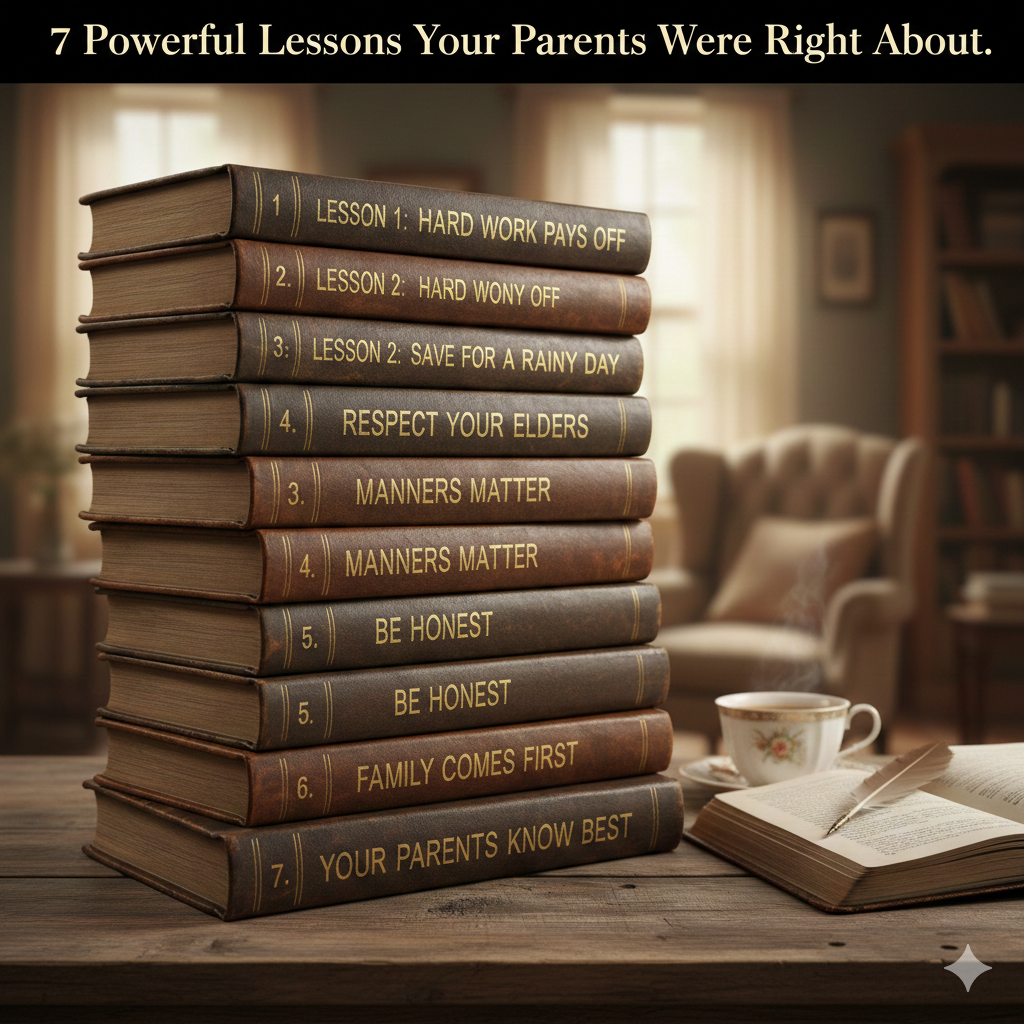
I used to tune out parental advice, dismissing it as well-meaning background noise. But after experiencing life’s bumps, I’ve realized something: much of what my parents said wasn’t just old wisdom but was foundational to living well. Their lessons now show up everywhere in my life, from my calendar to my friendships and peace of mind, and form the core toolkit for building a steady, capable, and joyful life.
The Moment I Finally Admitted the Things Parents Got Right
When did I first realize the things parents got right weren’t clichés, but survival tools? It wasn’t a single lightning-bolt moment. It was more like a slow sunrise: a series of small awakenings that brightened my perspective until denial felt silly.
Do parents know best? Sometimes. Not always. But their advice often covered unglamorous fundamentals: sleep, money, boundaries, reputation, health, and the discipline to do what’s needed even when I’m not motivated. It sounded like nagging because it arrived before I had the context to appreciate it.
I once believed freedom meant doing whatever I wanted, whenever I wanted. Now I see freedom is choosing well and handling the consequences. That’s something parents got right: real independence isn’t loud, but competent, a calm way to handle problems and recover from mistakes.
Here’s a question I wish I’d asked sooner: Why do certain rules repeat across generations? Because they work. Most things parents got right are patterns that cut down regret. And regret is a harsh teacher.
I also learned that parental advice is often coded in shorthand. “Don’t waste your time” doesn’t literally mean never relax; it means protect your attention like it’s money. “Watch who you hang out with” isn’t snobbery; it’s a warning about influence. “Be home at a decent hour” isn’t about control, it’s about safety and stamina.
Sleep, Routine, and the Quiet Power of Boring Habits

If I had to name the single most underestimated category of the things parents got right, it’s the “boring” stuff: bedtime, regular meals, tidy spaces, and a routine that doesn’t depend on mood. I used to think structure was a cage. Now I see it as scaffolding, something that holds me up while I build.
In summary: Prioritizing sleep creates stability and better choices. One of the things parents got right is that staying up late ‘for fun’ often steals tomorrow’s clarity.
Routine has a reputation problem. People’s “routine” and imagine monotony. But routine is the hidden engine behind creativity and confidence. With consistent wake times, simple exercise, and predictable meals, I free up mental energy for decisions that matter. That’s one thing parents got right: discipline is relief, not punishment.
Money Rules I Rolled My Eyes At and Now Live By
Money advice can sound painfully conservative when you’re young. It’s easy to dismiss “save your money” as fear-based. But many of the things parents got right about finances aren’t about being stingy; they’re about staying untrapped.
Do I really need an emergency fund? Yes. An emergency fund is not pessimism; it’s dignity. It’s the ability to say “no” to a bad job, a bad deal, or a bad relationship because you’re not financially cornered. That’s one of the things parents got right: security expands choices.
I also used to scoff at “don’t buy what you can’t afford.” It sounded preachy. Now it sounds like a strategy. Debt is sometimes useful, but casual debt, debt used to soothe boredom or impress strangers, has a way of turning into stress. One of the things parents got right is that peace is expensive if you finance your lifestyle with anxiety.
Then there’s the classic: “It’s not what you make; it’s what you keep.” That isn’t just a slogan. It’s a reminder that financial stability grows from habits, not windfalls. Budgeting isn’t glamorous, but neither is scrambling. The things parents got right often point to consistency because consistency works.
Friends, Boundaries, and Reputation

Few things parents got right are as universally true, and as frequently ignored, as the social ones. I used to interpret boundaries as harshness and reputation as vanity. Now I see both as forms of protection.
Does it matter who I spend time with? Yes. Not because people are “good” or “bad” in a simplistic way, but because humans are contagious. Attitudes spread. Habits spread. Standards spread. One of the things parents got right is that I become more like the people I normalize with.
And boundaries? Boundaries aren’t walls; they’re doors with locks. They let the right people in and keep the wrong behavior out. When I learned to say “I can’t” without over-explaining, I stopped living in a constant state of obligation. That’s one of the things parents got right: politeness is not the same as surrender.
In summary: Reliability and trust build reputation. The things parents got right here are almost boringly practical: show up on time, keep promises, apologize promptly, and don’t speak carelessly about others.
Health, Food, and Movement

Health advice is often the first thing people call “annoying” and the last thing they wish they’d ignored. Among the things parents got right, caring for the body is one of the most consistently rewarding, because the return shows up every single day.
Is it really worth it to exercise if I’m busy? Yes. Movement is not a cosmetic project; it’s a mental health, energy, and longevity tool. When I move regularly, even modestly, I think more clearly and react less dramatically. That’s one of the things parents got right: the body and mind are not separate departments.
In summary, eating mostly healthy foods supports resilience. The things parents got right often aim for ‘mostly healthy, most of the time,’ because that’s sustainable.
Hydration, too, deserves its boring crown. It’s astonishing how many headaches, mood dips, and fatigue spells improve when I drink water and eat consistently. One of the things parents got right is that self-care isn’t a luxury routine; it’s maintenance.
Work Ethic, Learning, and the Power of Showing Up

Is motivation required to be productive? No. Motivation is fickle. Systems work better. One of the things parents got right is that waiting to “feel like it” is a losing strategy. Doing the task, especially the small, annoying first step, often creates the feeling.
Finishing what I start is not about perfection; it’s about integrity. It teaches me to tolerate discomfort and build trust in myself. Every time I complete something I said I would, I strengthen a quiet confidence that can’t be faked. That’s one of the things parents got right: self-trust is built in private.
Learning also ages well. Parents who pushed reading, curiosity, and skill-building weren’t trying to make life “serious.” They were offering leverage. Knowledge compounds. Skills travel. Education isn’t only formal; it’s the habit of staying teachable. Among the things parents got right, “never stop learning” is one of the most future-proof.
Attention, Technology, and Privacy in a World That Never Stops Talking
If my parents were raising kids today, they’d be navigating a world that monetizes distraction. And yet, many things parents got right translate perfectly: limit screen time, be careful what you share, and don’t let the loudest voices define you.
Is screen time really a problem, or is it just modern life? It can be both. Technology is useful, but attention is finite. When I let apps dictate my day, I feel scattered. When I choose deliberately, when I decide what deserves my focus, I feel steady. That’s one of the things parents got right: attention shapes identity.
Privacy is another modern battlefield. Parents who warned, “The internet is forever,” were not being dramatic. Digital footprints affect careers, relationships, and mental health. One of the things parents got right is that sharing less often increases safety and reduces regret.
There’s also the old advice “Don’t believe everything you hear.” In today’s world, it becomes: verify before you amplify. Not every headline deserves my outrage. Not every argument deserves my participation. The things parents got right here are about discernment, choosing what to consume, what to ignore, and what to question.
Conclusion
I don’t adopt the things parents got right by becoming rigid or nostalgic. I adopt them the way I adopt any good principle: I test them, refine them, and apply them in context. The goal isn’t to live like it’s decades ago. The goal is to live well now, steadily, intentionally, and with fewer avoidable messes.
If I could summarize the things parents got right in one sentence, it would be this: take care of the basics before chasing the extras. Sleep before the hustle. Savings before splurging. Boundaries before people-pleasing. Health before aesthetics. Learning before shortcuts. Presence before performance.
Does following the things parents got right mean I never have fun? Not at all. It means I have a kind of fun that doesn’t punish me later. It means enjoyment without chaos. It means freedom without fallout. There’s a difference between spontaneity and self-sabotage, and the things parents got right quietly guide me toward the former.
I also hold space for nuance. Some advice needs updating. Some rules were shaped by fear, culture, or circumstances that don’t apply to my life. But even then, I try to listen for the principle underneath. Often, the principle is care: safety, stability, dignity, and long-term well-being. Those values age beautifully.
Perhaps the most surprising part is this: accepting the things parents got right doesn’t erase my individuality, it strengthens it. When I’m rested, financially stable, socially grounded, healthy, disciplined, and attentive, I’m not less myself. I’m more myself. I’m calmer. Clearer. More capable. Less reactive. More hopeful.
And yes, admitting the things parents got right can feel a bit like swallowing pride. But pride is overrated. Peace is better. If I can trade a little ego for a lot more stability, I’ll take that deal every time,no hesitation, no drama, no backtracking.
Because in the end, the things parents got right aren’t about winning arguments from the past. They’re about building a life I don’t need to escape from.
Read the Original Article on Crafting Your Home