7 Creative DIY Water Toys Kids Will Love This Summer
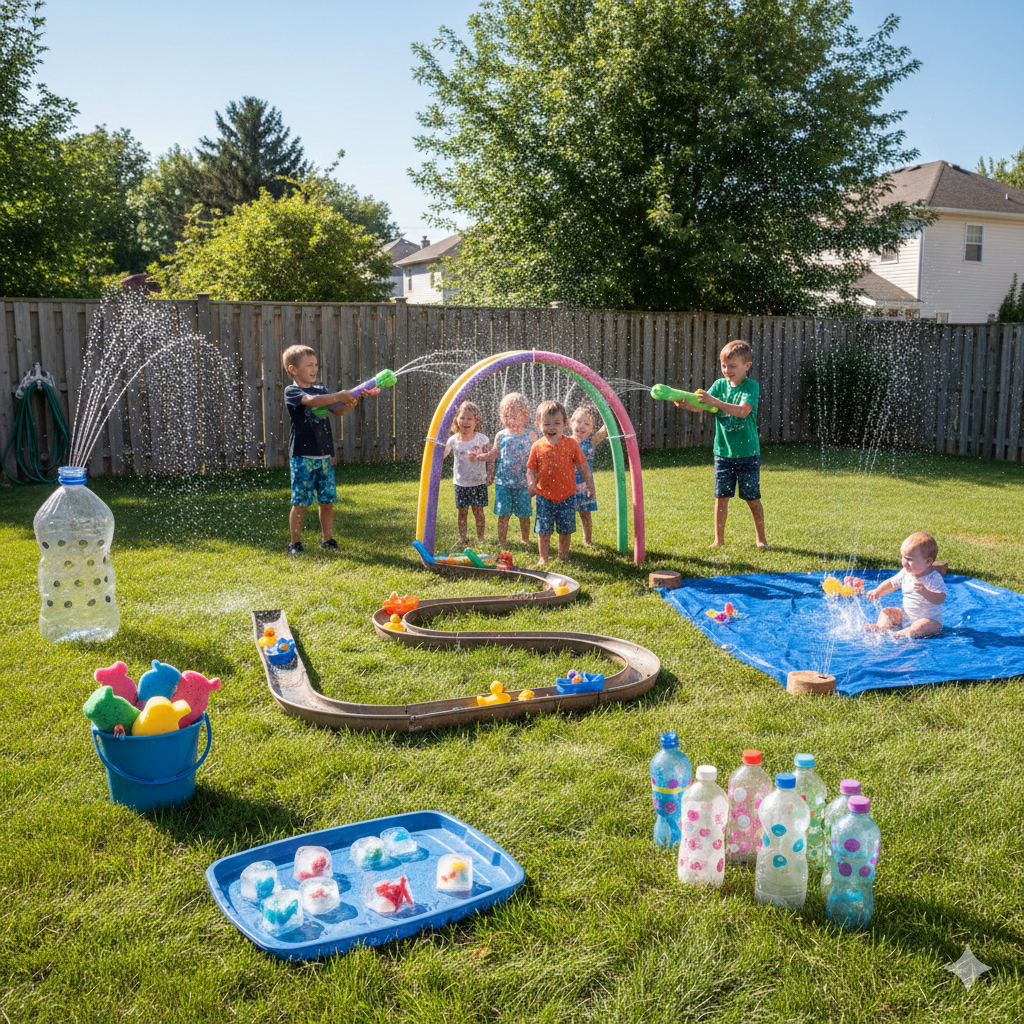
Summer heat has a way of turning backyards into endurance tests. Shade helps, popsicles help, but nothing resets the mood like water play that actually keeps everyone engaged. The most successful DIY water toys aren’t complicated or pricey, they’re practical builds with high replay value, made from familiar materials like pool noodles, PVC, sponges, buckets, and a basic garden hose.
Better still, the right set of DIY water toys can cover every age group: toddlers who love pouring and splashing, grade-school kids who thrive on challenges, and older kids who want fast-paced games that don’t feel “little.”
Water-play essentials that make DIY water toys safer, cleaner, and more fun
A great water-play day is built on more than clever toys. The difference between “fun” and “frantic” usually comes down to three essentials: supervision, footing, and water hygiene. Even shallow water deserves attention, and shared water can become unpleasant quickly if basic habits are ignored. The goal is not to overcomplicate the experience, just to keep the environment predictable, comfortable, and safe enough that play can stay uninterrupted.
The first essential is active supervision. Water play can shift quickly from giggling to chaos, especially when multiple games happen at once. Inflatables, foam items, and splash toys should never be treated as flotation safety equipment; they’re play objects. Any setup near a pool or deeper water should include real safety practices (appropriate life jackets when needed, clear pool rules, and constant supervision).
The second essential is traction. Summer water play creates slick spots almost immediately. A designated water-play area on grass can work well, but it may become muddy. Patios and decks need non-slip mats in high-spray zones. Simple rule-setting helps: no running through the wettest corridor, and no pushing near water sources.
PVC water walls
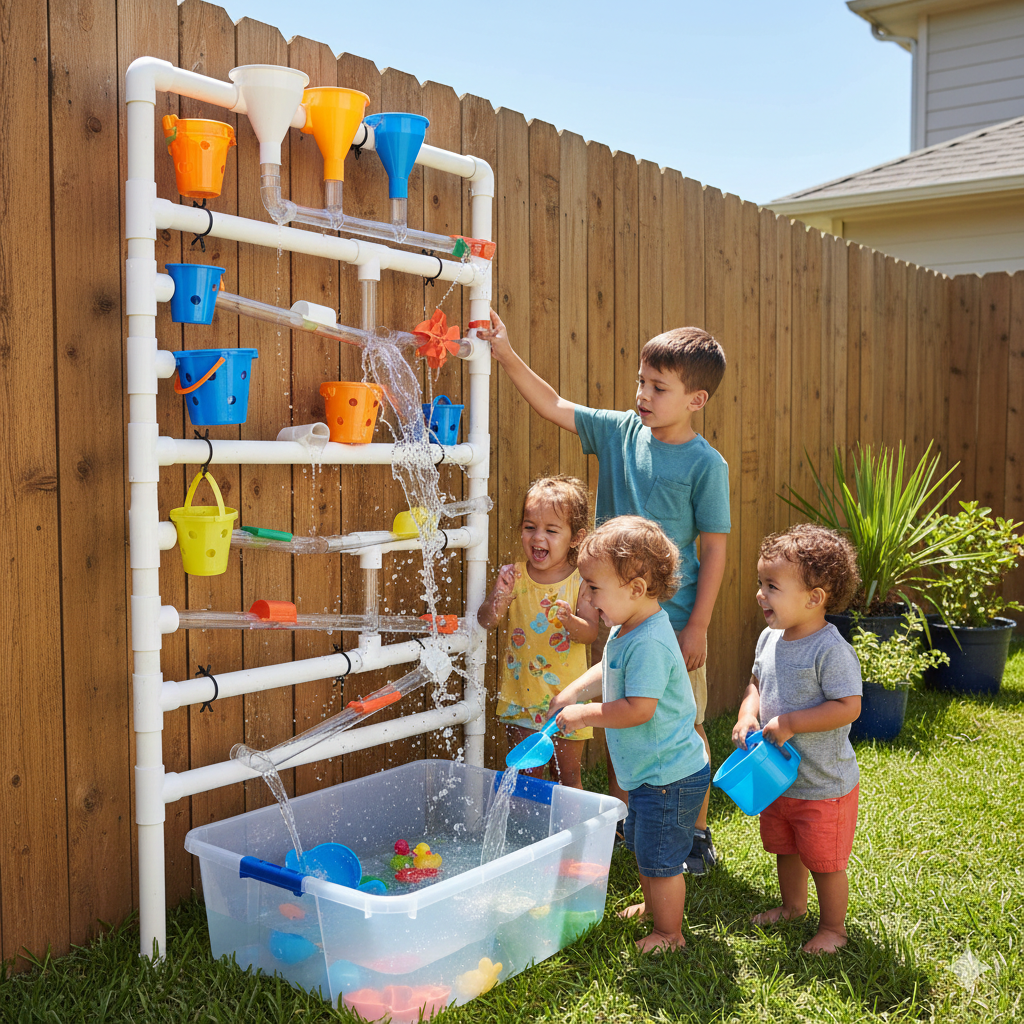
A PVC water wall is one of the most engaging DIY water toys because it turns water into an interactive system instead of a one-and-done splash. The concept is simple: a vertical maze of tubes and channels routes water downward through elbows, T-joints, funnels, and spouts. The result is part sensory play, part “backyard science,” and part open-ended creativity, children can experiment endlessly with what happens when water enters at different points.
This project succeeds because it invites curiosity without requiring complicated rules. Younger kids naturally love the act of pouring: scoop water, dump it in, watch it travel, repeat. Older kids tend to transform the wall into challenges: send water through a specific route, split the stream evenly between two exits, or hit a target cup placed at the bottom. The more adjustable the wall, the longer interest lasts.
- PVC pipes in mixed lengths
- Elbows and T-joints for branching paths
- Zip ties, clamps, or hooks to mount to a fence or freestanding frame
- Funnels or cut plastic bottles as entry points
- A catch bin at the base to collect runoff
- Optional: a hose adapter for continuous flow (or a simple bucket-and-pitcher system)
- Smooth any rough edges on cut PVC so hands aren’t scraped.
- Use removable segments so the layout can be changed without rebuilding.
- Add at least one outward-facing spout that “aims” into a bucket for a satisfying waterfall effect.
- Create a “recycle loop” by collecting water in a tub at the bottom and letting players scoop it back up.
The recycle loop is especially useful for conserving water and keeping play going without constant hose use. It also makes the wall feel like a complete “station,” not just a toy attached to a fence. For hygiene, the catch bin should be emptied and refreshed if it becomes visibly dirty, particularly during group play where toys are dropped, stepped on, and repeatedly handled.
They combine pouring play, cause-and-effect learning, and endlessly reconfigurable routes, without expensive parts.
Pool noodle blasters and sprinklers
Pool noodle water blasters
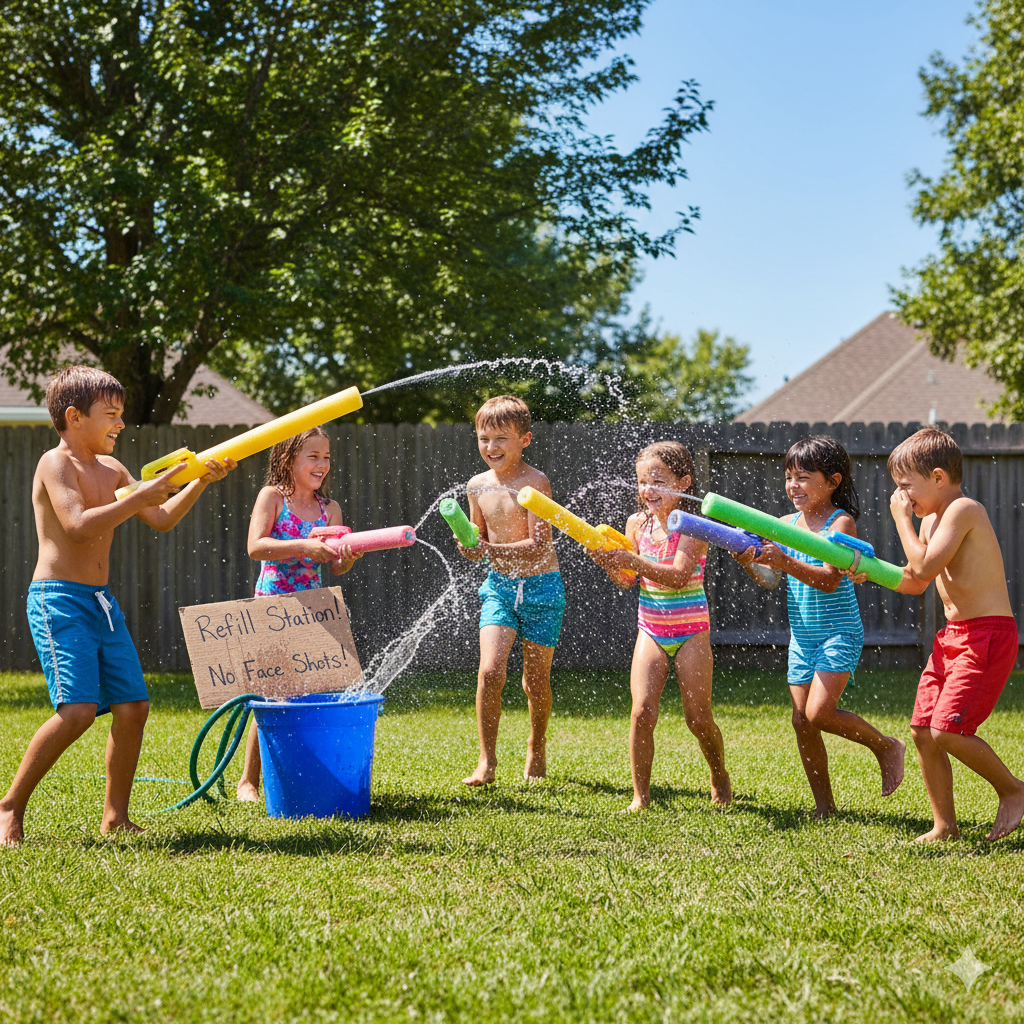
These are gentle sprayers designed for fun, not for high-pressure blasting. A noodle can hold and release water in a satisfying way, especially when combined with a simple nozzle-style connector. The appeal comes from movement: running, aiming, dodging, refilling, and repeating. Games naturally emerge, tag, capture-the-flag, boundary defense, or relay races where players must “fill the bucket” using only blaster spray.
- Cut the noodle to a comfortable length so it’s easy to aim.
- Round corners and edges so nothing scratches skin.
- Keep rules clear: never aim at faces, and never spray directly into ears.
- Designate a refill station so kids aren’t fighting over the same bucket.
Pool noodle sprinklers
A noodle sprinkler turns a hose into a playful spray runway. By poking evenly spaced holes along the noodle and attaching it to a hose, a simple line of mist and jets can run across the lawn. This is ideal for kids who love running through water but dislike direct spraying from a handheld hose.
- Space holes evenly to distribute pressure rather than blasting one section.
- Reinforce the hose connection so it doesn’t pop off mid-play.
- Place it on grass or a textured mat instead of slick concrete.
Featured snippet-style question: What are the easiest DIY water toys made from pool noodles?
Pool noodle sprinklers and soft water blasters, quick builds that suit a wide range of ages.
Reusable sponge bombs
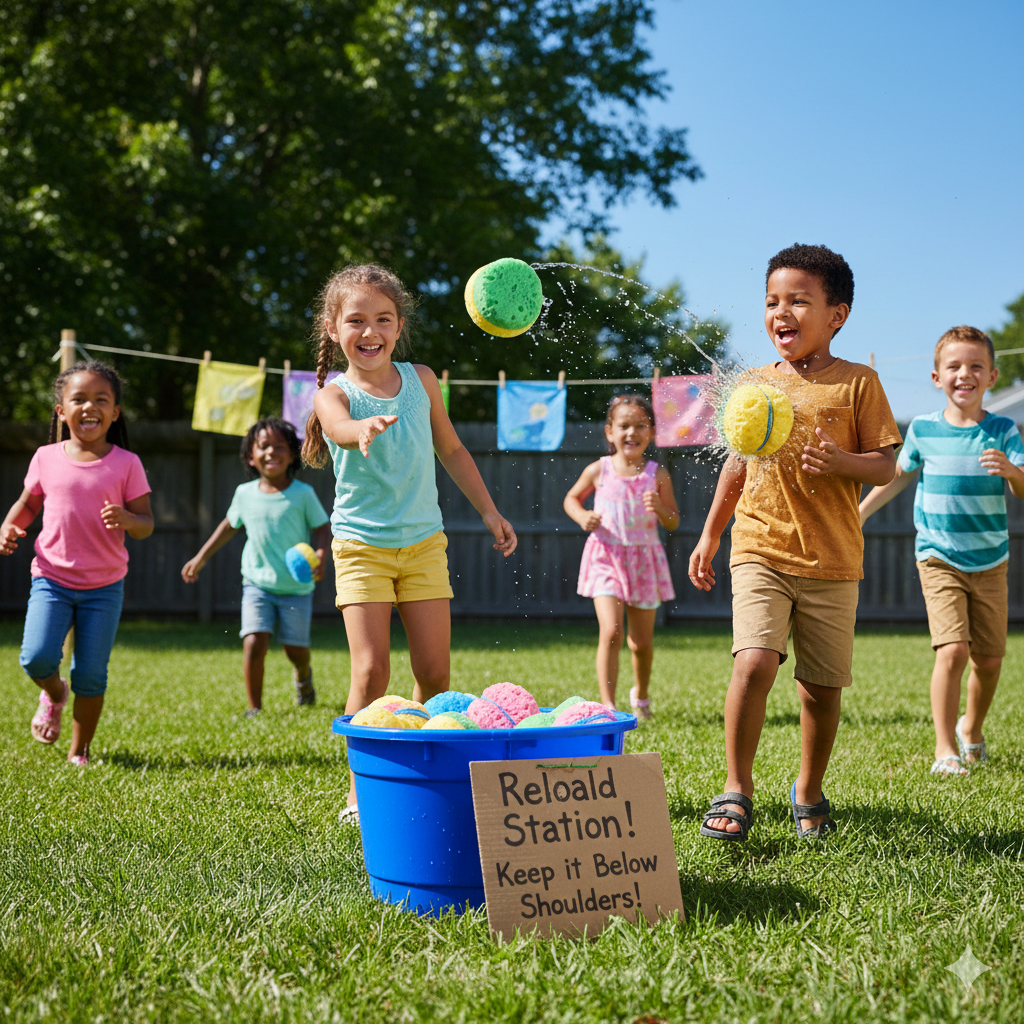
Water balloons are thrilling until the aftermath. Tiny fragments scatter across the yard, cleanup drags on, and the mess can be a hazard for small children and pets. Reusable sponge bombs solve the problem while keeping the best part: the satisfying splash on impact. Among DIY water toys, sponge bombs are a standout because they’re simple, reusable, and easy to produce in bulk for group play.
- Soft impact for safer play in mixed-age groups
- Fast refill: dunk, squeeze once, throw again
- Low waste: no latex fragments, no scattered trash
- Easy “team colors” by choosing different sponge shades
- A reload station with one bucket for clean water and one bucket for used bombs waiting to be dunked.
- Clear boundaries using cones, chalk lines, or towels.
- Short timed rounds to keep energy high and arguments low.
- A strict “below shoulders” throwing rule to discourage face hits.
Storage and hygiene are the difference between sponge bombs that last a season and sponge bombs that become unpleasant after one day.
After play, rinse thoroughly, squeeze out water, and dry completely in sunlight before storing. That one habit prevents odor and keeps these DIY water toys ready for repeat use.
Sponge water bombs, fast to make, easy to refill, and far less messy than balloons.
Pool-friendly DIY water toys
Floating targets
- 1 point for landing inside the ring
- 2 points for landing in the center bowl
- Bonus points for distance shots
DIY dive treasures
- Smooth, large, and easy to see
- Heavy enough to sink safely
- Free of sharp edges or tiny detachable parts
Challenge games
- Treasure relay: one item retrieved per turn
- Ring chase: toss a ring, swim to retrieve before it drifts
- Obstacle lane: noodles across the pool to weave through or duck under
Floating target rings, dive treasures, and relay challenges, easy to reset and great for groups.
Backyard party layout
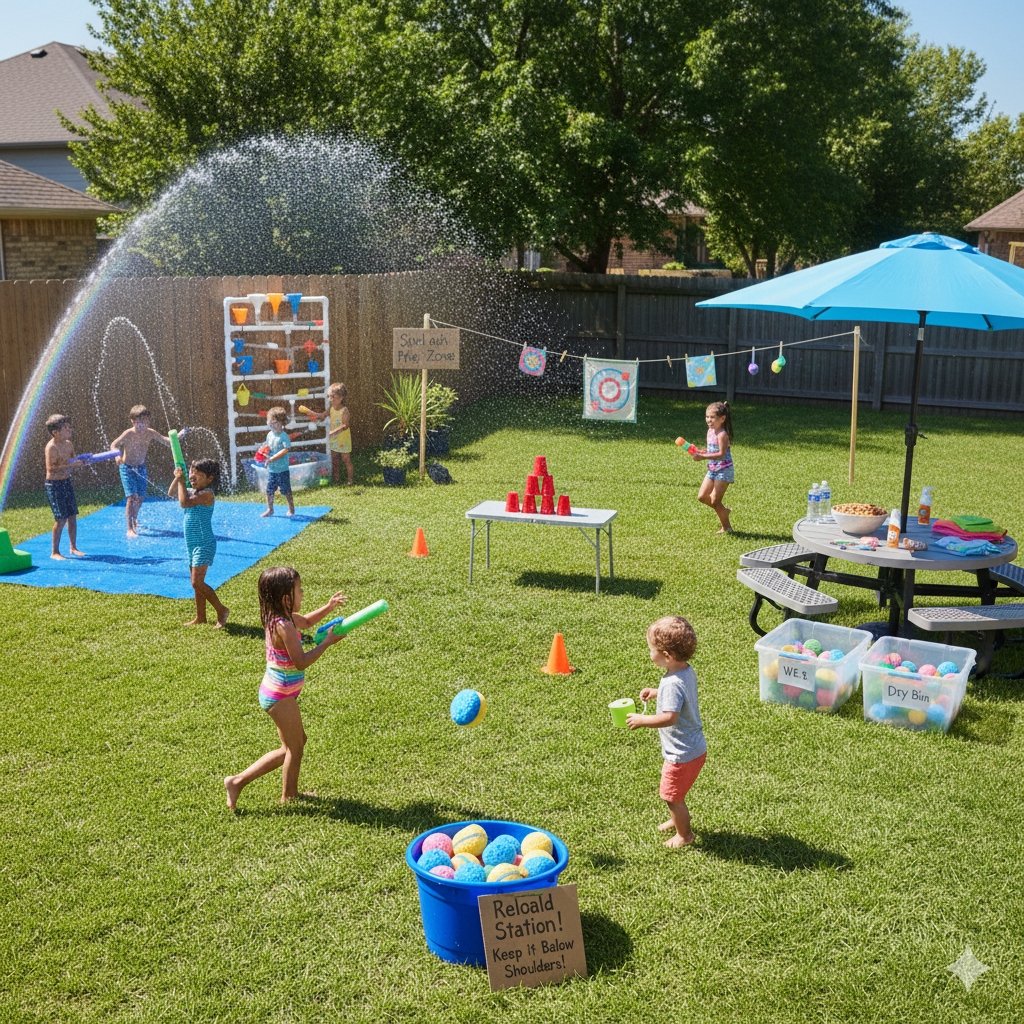
Create zones that make sense
- Noodle sprinklers
- Blaster games
- Running routes
Use non-slip mats and keep this zone away from doors and snack areas.
- PVC water wall
- Funnels, pitchers, scoops
- Catch tub for recycling water
Perfect for younger children and calmer play.
- Sponge bomb buckets
- Cup stacking splash challenges
- Toss-and-score competitions
This zone keeps competitive energy focused.
- Towels, sunscreen, water bottles
- Shade (umbrella or canopy)
- Snacks safely away from spray
This prevents constant interruptions and soggy supplies.
Make cleanup automatic
- Wet bin: everything goes here immediately after play
- Dry bin: items move here only once fully dried
PVC should be drained and shaken out. Noodles should be stored out of intense heat to reduce warping. Sponges should be rinsed and sun-dried. With this system, DIY water toys stay usable all season instead of becoming a one-weekend pile of mildew and mystery grime.
Use zones (splash, pour, target, dry) and store toys using a wet-to-dry bin system for fast cleanup.
Conclusion
The best summer play isn’t about owning more, it’s about making the backyard feel like the place everyone wants to be. DIY water toys accomplish that with simple builds that deliver real payoff: movement, laughter, and relief from the heat. A PVC water wall keeps kids absorbed in pouring, routing, and experimenting, turning water into an endlessly renewable “game system.”
Pool noodle blasters and sprinklers add energetic running play without complicated equipment. Reusable sponge bombs provide the thrill of a water battle without the cleanup nightmare of balloon fragments. Pool-friendly targets and treasure challenges transform swimming time into structured games that stay interesting longer than aimless floating.
And a zone-based layout makes the entire day run smoother, fewer arguments over resources, fewer soaked snacks, fewer slippery accidents, and far less end-of-day cleanup fatigue.
What makes these DIY water toys especially valuable is how well they repeat. They aren’t single-use party tricks; they’re reusable setups that can be adapted, expanded, and recombined all season. A target ring can become a relay checkpoint.
Sponge bombs can become “ammo” for a scoring challenge instead of a free-for-all. A water wall can shift from toddler sensory station to older-kid competition course with a few simple rule changes. That flexibility turns one weekend of building into a whole summer of play.
Just as important, well-planned water play feels better for everyone. A safer surface, clear boundaries, clean water habits, and a dry-zone for rest keep the experience enjoyable and sustainable.
With those basics in place, DIY water toys deliver the real prize: a backyard that feels alive, active, and unmistakably summer, without requiring expensive gear or constant supervision chaos. The result is the kind of summer day that ends with tired smiles, warm towels, and the inevitable request: “Same thing tomorrow?”
Read the Original Article on Crafting Your Home