



The post 11 Classic TV Dads Who Were Actually Terrible Husbands first appeared on Crafting Your Home.
American television makes bad husbands lovable. The man who lies to his wife gets a laugh, the father who avoids housework becomes a familiar sitcom personality, and the husband who cheats sometimes gets another chance because his family still needs him. After years of reruns, these characters can look more charming than their actual behavior deserves.
The domestic division of labor offers an interesting lens for revisiting those old television households. The U.S. Bureau of Labor Statistics reported in June 2026 that women spent an average of 2.38 hours per day on household activities in 2025, compared with 1.58 hours for men. The figures cover the broader population, not just married couples, but the gap helps explain why a television wife’s endless household responsibilities can feel familiar to American viewers.
Pew Research Center’s April 2023 analysis of American marriages found that wives continued to spend more time on housework and caregiving, even when spouses earned similar amounts. Against that backdrop, revisiting television’s famous husbands reveals a recurring problem: many of the men we remember as entertaining family figures depended on their wives to absorb the consequences of their behavior.
Ricky Ricardo

Ricky Ricardo helped establish an enduring television marriage in I Love Lucy, but his treatment of Lucy’s professional ambitions deserves another look. The 1951 pilot established Ricky’s expectation that Lucy would concentrate on domestic responsibilities, including cooking and raising their children, while her desire to perform remained a source of conflict. Ricky could pursue his career as a bandleader, while Lucy repeatedly had to scheme for her own opportunities.
The audience numbers make the arrangement especially significant. I Love Lucy never fell outside the top three programs in weekly ratings throughout its six-season run, according to Smithsonian Magazine. Millions of American viewers followed a marriage in which a wife’s professional aspirations often became an obstacle for her husband. Ricky could be affectionate and entertaining, yet Lucy’s ambitions repeatedly required negotiation with a man who enjoyed considerably more freedom to pursue his own.
Archie Bunker
Archie Bunker is remembered as one of television’s most recognizable curmudgeons, but his marriage to Edith often made her the target of his hostility. Archie was the bigoted centerpiece of All in the Family, with his conflicts exposing social tensions involving racism, prejudice and women’s liberation. Edith’s patience and generosity frequently served as the emotional counterweight to his behavior.
The uncomfortable part is how easily his treatment of Edith could disappear into the comedy. She was expected to tolerate his bad moods, his condescension and his willingness to humiliate her in ordinary domestic situations. The marriage survived partly because Edith repeatedly made room for Archie’s personality. He had moments of genuine affection, but those moments do little to erase the burden placed on a wife who was routinely expected to keep the peace.
Archie’s appeal also illustrates a weakness in the old sitcom formula. A husband could be written as deeply unpleasant while his wife’s patience became evidence of her goodness. Edith’s emotional endurance made the household function, allowing Archie to remain the loudest personality in the room.
Fred Flintstone
Fred Flintstone helped bring adult-oriented animation into American prime time when The Flintstones premiered in 1960. The Television Academy’s historical account describes the program as an animated situation comedy built around the problems of contemporary working-class life. Its familiar domestic arrangement gave Fred an outside job while Wilma managed much of the home and family routine.
Fred’s recurring schemes exposed the selfishness beneath his ordinary-guy charm. He would fixate on an idea, keep his plans from Wilma, and expect the household to survive whatever happened when his shortcut failed. A historical episode guide from Cartoon Databank identifies Fred’s irresponsible schemes, often designed around activities Wilma would disapprove of, as a regular source of the show’s domestic trouble.
His marriage repeatedly returned to normal after he regretted his latest mistake. That convenient reset kept the comedy moving, but it also meant Wilma regularly had to forgive behavior that Fred could have avoided by treating her as a partner in the first place. He wanted the security of family life without consistently accepting the responsibilities that came with it.
George Jefferson
George Jefferson had money, a thriving dry-cleaning business and a luxurious Manhattan apartment. He was also frequently rude, stubborn and quick to anger. The Jeffersons depicts Louise as a long-suffering wife who often apologized for her husband’s behavior, while the family’s housekeeper, Florence, regularly challenged his outbursts.
George’s professional achievements make the marriage all the more revealing. He worked hard to escape financial limitations and built a successful business, yet he often carried his sense of personal importance into the home. Louise was expected to manage the consequences of his temper while remaining a source of stability for the family.
The character deserves historical context. The Jeffersons gave a successful Black family a prominent place in American television and explored experiences that prime-time comedy had often overlooked. George’s flaws contributed to the show’s humor, but Louise’s patience also made his behavior easier for the household to accommodate. His success never guaranteed that he would be an equally generous husband.
Al Bundy
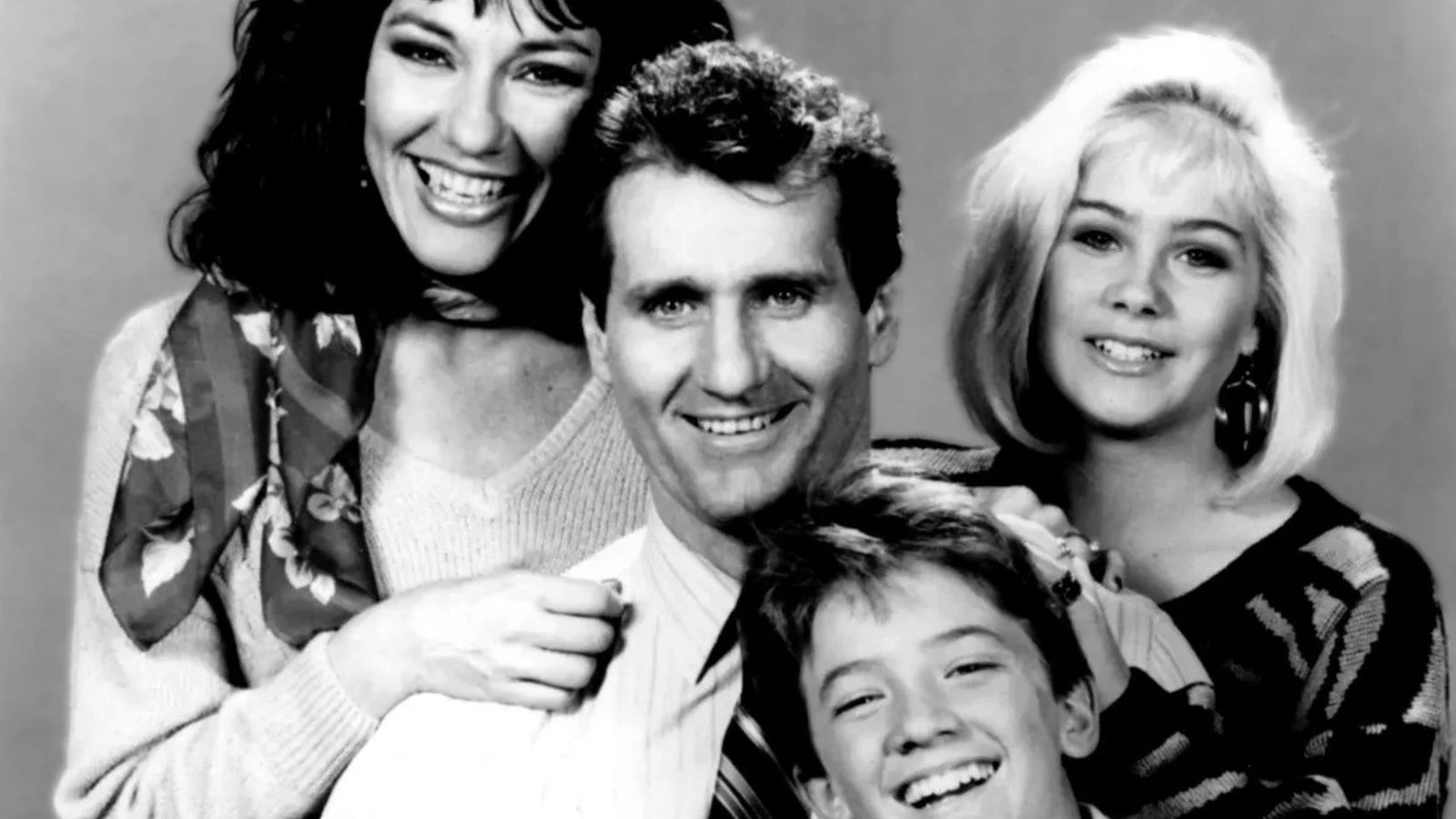
Al Bundy of Married… with Children was built as a rejection of the polished television father who always knew what to do. He worked as a shoe salesman, resented his domestic circumstances and regularly treated his wife, Peggy, with contempt. Sony Pictures’ own description characterizes the Bundys as a deeply dysfunctional family whose humor comes from their departure from the idealized households of earlier television comedies.
Peggy also draws fair criticism. The show’s official description emphasizes her spending habits and Al’s frustration with the family’s finances, making clear that both spouses contribute to their dysfunctional relationship. Their marriage is deliberately presented as an exhausting arrangement in which everybody suffers.
Yet Al’s resentment often turns Peggy into the target of his bitterness about work, money, sex and his unrealized athletic ambitions. His disappointment becomes her daily problem, even when she is not responsible for it.
Over 11 seasons and 261 half-hour episodes. The show built an extensive comedy around a man who rarely seemed interested in making married life pleasant for his wife.
Homer Simpson
Homer Simpson’s appeal depends heavily on his laziness, impulsiveness and appetite for immediate gratification. His marriage to Marge survives everything from financial irresponsibility to episodes in which he seriously violates her trust. The result is a character whose worst behavior frequently becomes a temporary obstacle before the family returns to its familiar routine.
A 2023 article examined the treatment of women in The Simpsons and discussed the episode Secrets of a Successful Marriage. Homer reveals private information about Marge to his students, leaving her so furious she throws him out of the house. When he returns, he emphasizes his dependence on her care and affection, and she eventually forgives him.
The dynamic is revealing because Marge’s emotional labor becomes part of Homer’s survival strategy. He makes a mess, waits for the relationship to deteriorate, and then depends on the person he hurt to restore stability. The arrangement can be touching when the show emphasizes their affection, but it also leaves Marge carrying an extraordinary share of the work required to keep their marriage together.
Ray Barone
Ray Barone from Everybody Loves Raymond is less openly destructive than some of the other husbands on this list. His shortcomings will feel familiar to anyone who has watched a spouse struggle to set boundaries with an intrusive extended family. Ray often avoids uncomfortable conversations, leaving Debra to push for attention, affection and a reasonable amount of independence.
Debra wants to spend her birthday alone with Ray and their children, but Ray has to tell his family about the plan. A second episode centers on Debra wanting more affection from her husband, showing how even basic relationship needs can complicate their marriage.
Ray’s parents live across the street, and their frequent involvement in the couple’s life provides a major source of the show’s comedy. His reluctance to manage those relationships means Debra repeatedly has to defend her household’s boundaries. Ray may love his wife, but affection is an incomplete contribution when a partner consistently leaves the difficult conversations to someone else.
Related Post: 10 TV Moms Who Were Actually Terrible Parents
Peter Griffin
Peter Griffin from Family Guy represents a more extreme version of the irresponsible sitcom husband. His behavior is frequently reckless, selfish and humiliating toward Lois, while his family is left to deal with the fallout. Because the series relies on outrageous animation and deliberately provocative humor, his treatment of his wife often becomes another spectacle rather than a serious examination of what a marriage can withstand.
A 2026 episode, Dear Francis, centers on Peter calling out another woman’s name while being intimate with Lois. The mistake leads Lois to question what happened and seek therapy, adding another marital conflict built around Peter’s carelessness.
The problem with Peter is not that he makes an occasional foolish mistake. His behavior repeatedly places his own impulses above his wife’s dignity, leaving Lois to react to one absurd situation after another. Animation gives the writers enormous freedom, yet the underlying joke remains recognizable: a wife is expected to tolerate a husband whose immaturity never seems to require lasting change.
Related Post: 11 Beloved Sitcom Characters Who Were Actually Terrible People
Don Draper
Don Draper of Mad Men presents a different kind of terrible husband. His polished suits, professional authority and carefully cultivated image conceal a private life built around deception. He cheats, withholds fundamental truths about his identity and repeatedly struggles to maintain an honest emotional connection with the people closest to him.
NPR’s 2007 coverage of the series described Don as a successful advertising executive who had a mistress while moving through a professional environment that placed women in subordinate roles. Later coverage of the series finale returned to the damage his broken commitments caused and his repeated tendency to run away from people who needed him.
Betty eventually asks Don for a divorce after discovering more about his past. Their relationship has genuine attraction and moments of tenderness, but those qualities coexist with a damaging pattern of infidelity, secrecy and emotional absence. Don’s ability to sell an idealized American life to clients makes the gap between his public image and his private conduct especially stark.
Tony Soprano
Tony Soprano’s marriage to Carmela rests on a brutal contradiction. He provides a wealthy household and enjoys the privileges of family life, while repeatedly engaging in extramarital affairs and expecting his wife to tolerate the arrangement. His criminal life also exposes the family to danger and places Carmela in the uncomfortable position of benefiting from money tied to violence.
The end of the fourth season of The Sopranos brought the marriage’s resentment to light. Carmela throwing Tony out after a call from one of his girlfriends exposed another affair. The confrontation forced their long-standing marital tensions into the center of the story.
Tony’s mistake is more profound than expecting his wife to overlook infidelity. He acts as if financial provision should buy acceptance, letting him enjoy both domestic stability and a life that repeatedly violates the commitments that support it. Carmela’s access to wealth complicates her choices, but it does not make his betrayal less consequential.
Walter White
Walter White’s transformation in Breaking Bad turns the family provider into something deeply sinister. He initially presents his involvement in the drug trade as a way to secure his family’s financial future after learning that he has cancer. As his criminal enterprise grows, he lies to Skyler, conceals increasingly dangerous activities and exposes his family to consequences they never agreed to accept.
AMC’s own retrospective on the White family describes how Skyler’s discovery of Walt’s secret life dismantled the security she believed they had. The network’s account concludes that although Walter claimed his actions were meant to protect his family, he ultimately destroyed it.
His conduct is particularly ugly because he repeatedly treats his own decisions as sufficient justification for putting everyone else at risk. Skyler is forced to respond to a crisis she did not create, while Walter increasingly insists on controlling the narrative around his actions. He turns the language of responsibility into a defense of his own ambitions, leaving his wife to confront the consequences.
Other Posts You May Like
- 6 TV Shows That Defined the Baby Boomer Generation
- 11 Classic Movie Heroes Who Were Actually the Villains
If you like what you just read, then subscribe to our newsletter and follow us on social media.


