

The Post 10 U.S. Towns That Feel Like Stepping Back Into the 1950s First Appeared In Crafting Your Home.
Somewhere along America’s forgotten highways, the past still flickers in neon. A motel sign glows against the evening sky, an old drive-in waits for the next movie, and a roadside restaurant serves milkshakes beneath signs that have welcomed generations of travelers.
But not every nostalgic destination tells the same story. Some celebrate Hollywood legends, others preserve presidential history, and a handful still offer the kind of roadside experiences that once made family vacations unforgettable.
Seligman, Arizona
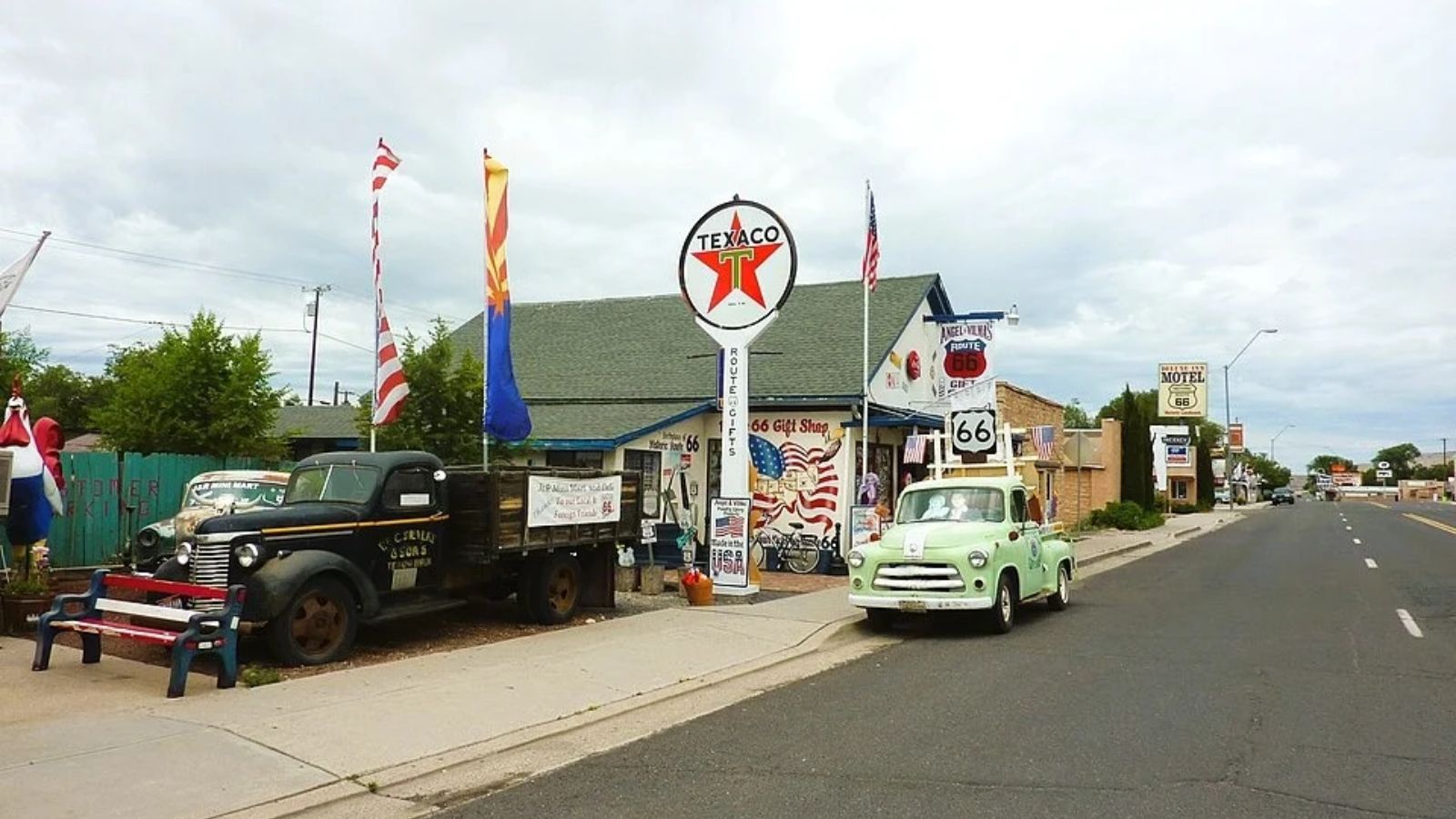
Seligman doesn’t just preserve Route 66 nostalgia; it gives it a mischievous personality. At Delgadillo’s Snow Cap Drive-In, Juan and Mary Delgadillo founded the restaurant in 1953, and vintage automobile memorabilia and playful signs turn an ordinary roadside meal into an attraction of its own.
Juan’s family built the restaurant with scrap lumber gathered during railroad work, giving the building a resourceful beginning that matches its unconventional character. Even the menu plays along, offering humorous descriptions such as “Cheeseburger with Cheese.”
Wildwood Crest, New Jersey
Forget quiet Main Streets and dusty antique shops; Wildwood Crest celebrates midcentury America’s flamboyant side. Its famous Doo Wop motel architecture brings together bright colors, dramatic rooflines, unusual swimming pools, and neon signs that seem made for summer evenings.
According to the National Park Service, the National Park Service reports that more than 200 motels were built across the Wildwoods island between 1956 and 1964. The surviving Caribbean Motel is among the area’s most recognizable examples of this exuberant resort style.
What makes Wildwood Crest different is that nostalgia isn’t confined to one landmark. Its preserved motel architecture recalls an era when even a vacation room was designed to feel like part of the entertainment.
Tucumcari, New Mexico
The motel began welcoming guests before the 1950s, but its design embodies the automobile-centered travel culture that flourished during the decade. Even its lobby preserves recognizable details from a photograph taken around 1949.
Holbrook, Arizona
Holbrook’s most unusual attraction doesn’t simply look vintage; it lets you spend the night inside a piece of roadside architecture. Wigwam Village No. 6, completed in 1950, features 15 freestanding concrete-and-steel accommodations shaped like teepees.
Chester Evert Lewis built the property, which remains family-operated and continues to welcome travelers into its distinctive rooms. The motel was added to the National Register of Historic Places in 2002, recognizing its significance as a surviving example of Route 66 novelty architecture.
Carthage, Missouri
Carthage preserves the kind of Friday-night entertainment that once brought families together without anyone leaving the car. The historic 66 Drive-In Theatre opened on September 22, 1949, as outdoor cinemas prepared for their great American boom.
The National Park Service reports that drive-ins grew from 52 nationwide in 1941 to approximately 4,500 by 1956. Carthage’s theater joined that expanding tradition, with much of its original structure surviving today.
Fairmount, Indiana
The James Dean Museum preserves personal belongings associated with his life, including clothing, photographs, artwork, schoolwork, and motorcycles. These objects give visitors a more personal connection to the actor than a movie poster ever could.
Mount Airy, North Carolina
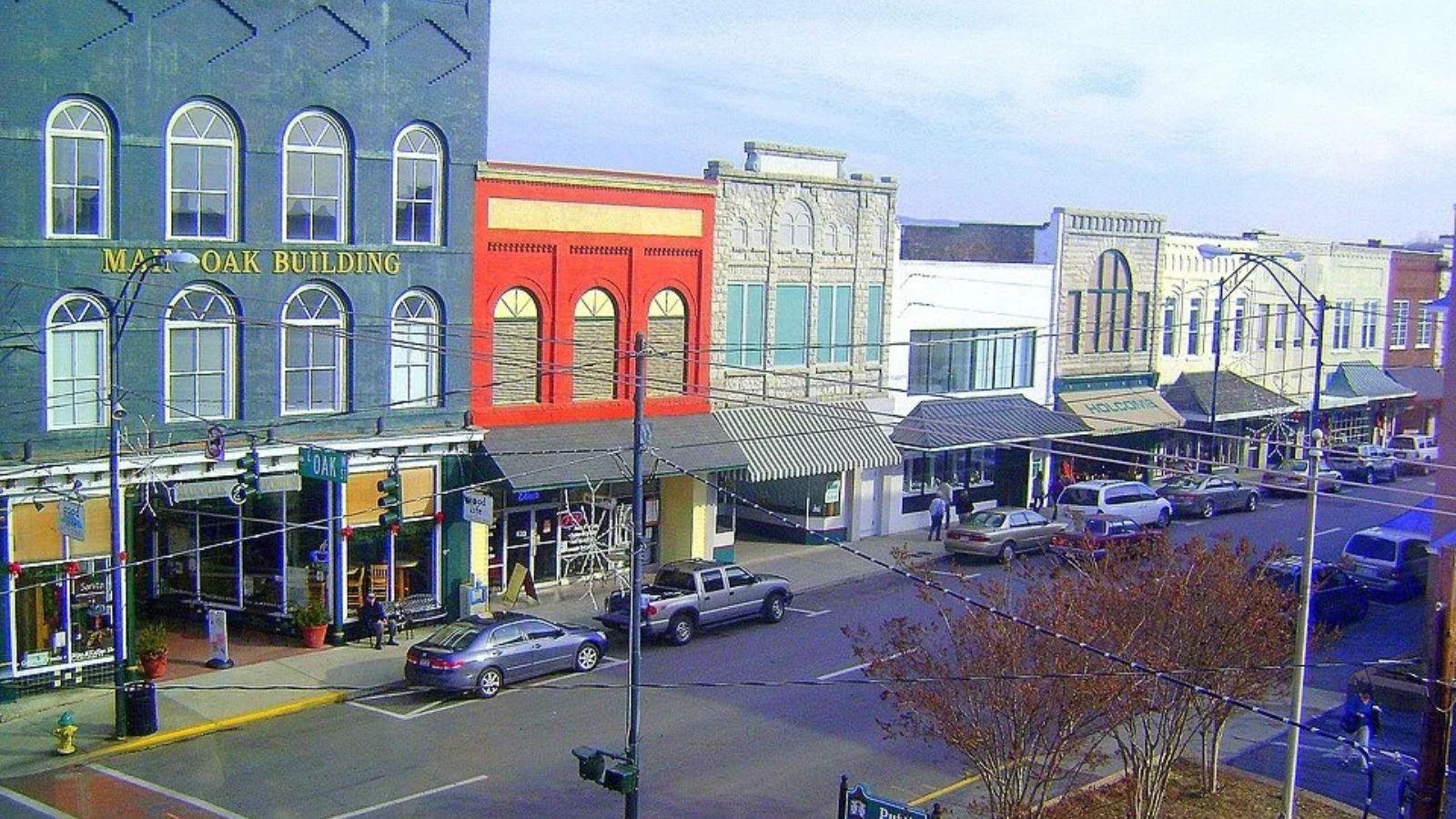
Mount Airy later helped inspire Mayberry, the setting of The Andy Griffith Show. Today, the Andy Griffith Museum and local squad-car tours celebrate that connection, while Snappy Lunch remains a tangible link to the actor’s early life.
Abilene, Kansas
Abilene offers something different from neon signs and drive-in screens: a direct connection to the 1950s American presidency. This Kansas town was the hometown of Dwight D. Eisenhower, whose years in the White House became a defining chapter of the decade.
The Eisenhower Presidential Library and Museum campus preserves his legacy, with a museum building constructed from Kansas limestone and dedicated on Veterans Day in 1954. Unlike attractions designed to recreate the past, the building itself is a surviving landmark from the era.
Stephens City, Virginia
Formerly called the Family Drive-In, the theater closed at the end of November 2025, then reopened under its new name in 2026. That year marked its 70th anniversary, giving the revival an especially meaningful connection to the property’s beginnings.
Williams, Arizona
Williams takes you back to an era when filling up the car was part of the adventure of traveling across America. Downtown, Pete’s Route 66 Gas Station Museum occupies a restored service station built in 1949, preserving the appearance and memorabilia of an earlier highway culture.
Unlike Holbrook, where you can sleep inside historic roadside architecture, Williams invites you to explore the everyday world of the American motorist.
KeyTakeaways
These towns preserve the 1950s in different ways. One remembers a Hollywood rebel, another protects a presidential legacy, and others keep neon-lit motels, imaginative roadside buildings, and beloved drive-in traditions alive.
Together, they remind us that America’s past isn’t found only in history books. Sometimes, it’s waiting beneath an old motel sign, behind a lunch counter, or along a stretch of highway where yesterday still feels wonderfully close.
Other Posts You Might Like:
If you like what you just read, then subscribe to our newsletter and follow us on social media.