


The post 10 Things Americans Do Abroad That Locals Find Rude first appeared on Crafting Your Home.
Travel exposes Americans’ manners: plenty of people believe they are polite because they follow the rules they grew up with.
Americans keep traveling abroad: the National Travel and Tourism Office reported that U.S. citizens made 8,546,659 international departures in September 2025, up 0.5% from September 2024.
As more Americans venture beyond familiar surroundings, understanding local customs becomes part of being a considerate guest. Habits that seem friendly, efficient, or perfectly normal at home can come across as intrusive, impatient, or disrespectful elsewhere.
Treating tipping as mandatory everywhere

American travelers accustomed to tipping service workers may assume that leaving extra cash is a universal expression of gratitude. In Japan, that assumption can make an ordinary transaction unnecessarily awkward because tipping is not customary in many settings.
The Japan National Tourism Organization explains that tipping is unnecessary at Western-style hotels and that traditional Japanese inns, known as ryokan, follow their own hospitality customs. A generous gesture may come from good intentions, but insisting on handing over money when it is not expected can put a worker in the uncomfortable position of having to explain the rules to a customer.
Travelers should check local guidance, read their bills carefully, and respect a business’s established practice. Gratitude can be expressed through a sincere thank-you and considerate behavior.
Making loud phone calls on public transportation
JR Kyushu Railway Company explicitly asks passengers in Japan to avoid speaking loudly on trains, set mobile phones to silent mode, and refrain from talking on them. Its guidance also asks passengers to keep their belongings from intruding into other people’s space and to avoid obstructing those boarding or leaving the train.
A tourist’s convenience may come at the expense of dozens of commuters simply trying to get to work or home. Visitors don’t have to master every Japanese social convention to recognize that a quiet train isn’t a good place for a speakerphone conversation. Send a text, use headphones for permitted audio, and save the call for an appropriate location.
Walking into French shops without greeting anyone
In a May 2025 Reuters report about experiencing Paris like a local, correspondent Michel Rose identified skipping bonjour as a cultural faux pas. He explained that shop assistants may wait for customers to return the greeting before proceeding with the interaction.
The mistake is easy to fix. Say “bonjour” when entering a shop or addressing someone, follow with “s’il vous plaît” when making a request, and offer “merci” afterward. A visitor who has learned only a few French expressions can still show that the person behind the counter deserves acknowledgment.
This is also a useful reminder for Americans who interpret reserved service as hostility. A brief greeting can establish a more respectful exchange before either person has much opportunity to misunderstand the other.
Treating bicycle lanes in the Netherlands like extra sidewalk space
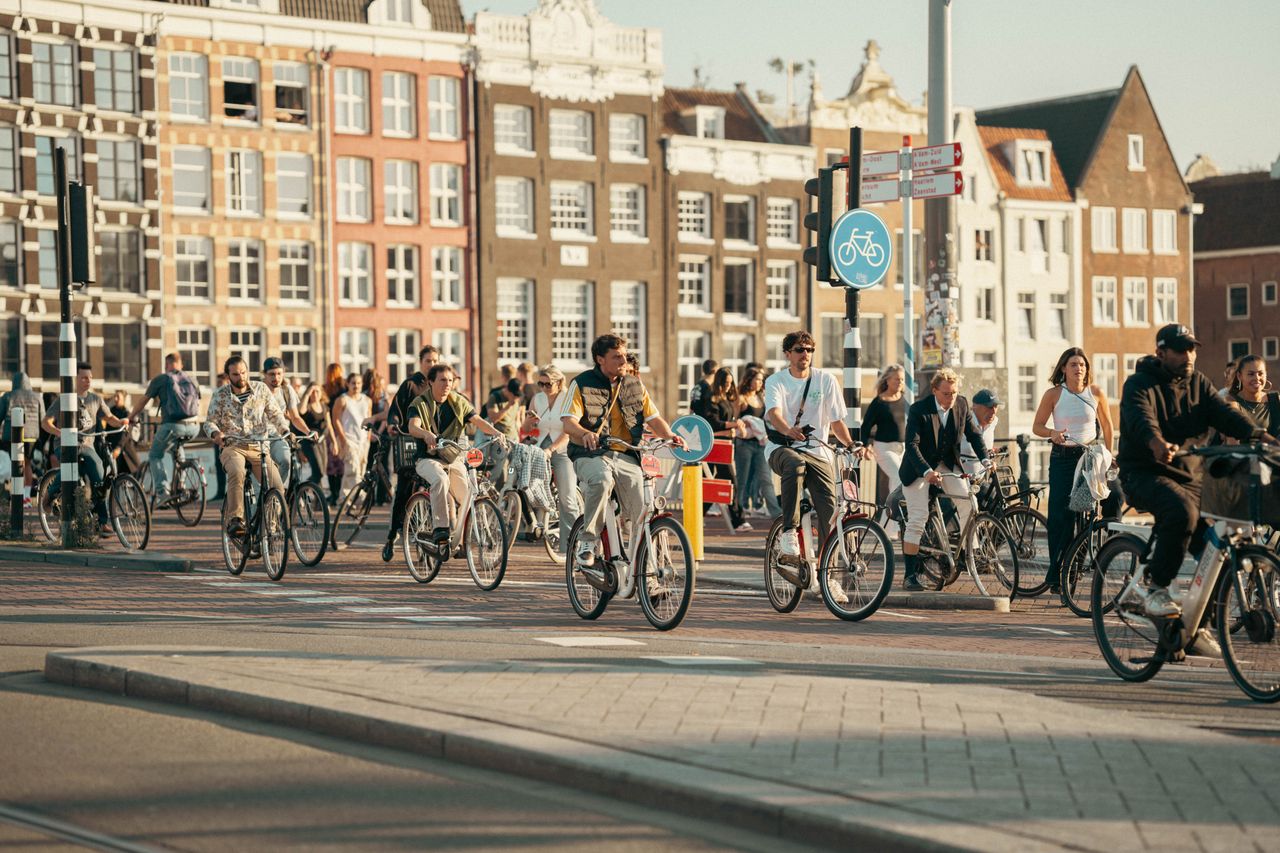
Stopping in a bicycle lane to check a map, photograph a canal, or discuss directions can seem harmless to someone who rarely encounters dedicated cycling infrastructure at home. In Dutch cities, however, that brief pause can obstruct the journey of people who cycle to work, school, or appointments.
The Dutch government reports that at least 17 million people share 22.8 million bicycles. It also describes a network of approximately 35,000 kilometers of bicycle tracks, with cycling accounting for more than one-quarter of the country’s transportation needs. Dutch traffic guidance directs pedestrians to sidewalks or footpaths when they are available.
The path is part of a transportation system, and cyclists may be moving at considerable speed.
Before stopping for a photo, look for the sidewalk, a designated crossing, or a safe place away from moving traffic. In Amsterdam and other cycling-heavy destinations, staying alert on the street is part of respecting the people who use it.
Related Post: 16 things considered normal in Europe but totally weird in America
Assuming public displays of affection are acceptable everywhere
Travelers on vacation may become more physically affectionate because they are relaxed, celebrating an anniversary, or enjoying time away from home. The problem arises when they assume the social expectations of their own community apply to every public setting abroad.
The United Arab Emirates government’s visitor guidance says public displays of affection should be minimal. Holding hands is acceptable, while kissing and hugging in public are discouraged. The same guidance urges visitors to dress modestly and warns that disruptive or offensive behavior can lead to legal trouble.
Travelers should check their destination’s rules before arriving, especially in countries with different public-conduct expectations. Respectful behavior begins with recognizing that private affection and public conduct are governed by local social conventions.
Related Post: The 5 World’s Best Gay Travel Destinations You’ll Love
Dressing for the beach when visiting religious sites
A vacation wardrobe often revolves around comfort. Shorts, sleeveless tops, and light clothing make sense in warm weather, especially after a morning of walking through crowded streets. The trouble starts when tourists carry beachwear into a place with a formal dress code.
The Vatican Museums state that appropriately dressed visitors are required at the museums, the Sistine Chapel, St. Peter’s Basilica, and the Vatican Gardens. Their published guidance prohibits sleeveless or low-cut garments, shorts above the knee, miniskirts, and hats in the covered areas.
Ignoring such requirements can result in visitors being refused entry to places they traveled thousands of miles to see. More importantly, it demonstrates a failure to consider the significance a religious space holds for the people who maintain and visit it.
Carrying a lightweight layer or choosing clothing that meets the rules is easier than arriving at the entrance and expecting an exception.
Treating Thai temples as photo studios
Thailand’s temples are visually appealing, making them attractive destinations for tourists with cameras and smartphones. Golden statues, ornate buildings, and intricate decorations can encourage visitors to focus on getting the perfect picture, sometimes at the expense of the people who are there to worship.
Thailand’s government provides specific guidance for temple visitors. It says travelers should avoid taking selfies with Buddha images, refrain from photographing people engaged in religious activities without permission, and never sit with their feet pointed toward Buddha images or monks. The guidance also warns against sitting on or climbing historic temple structures.
Respectful photography requires more than checking whether a camera is permitted. Watch for signs, avoid interrupting worshippers, and never climb on sacred or historic objects for a better angle. When a space is being used for prayer, giving people privacy is the sensible choice.
Starting a Korean meal before the eldest person
Dining manners are often learned so early that people follow them without consciously thinking about the rules. That small difference in table behavior can become surprisingly noticeable when guests and hosts come from different cultural backgrounds.
The Seoul Tourism Organization’s etiquette guide explains that respect for age and seniority remains important in Korean social life. Its dining guidance advises visitors to wait until the eldest person at the table begins eating. It also warns against leaving chopsticks or a spoon sticking upright in a bowl of rice.
A sensible approach is to watch how other diners behave and follow their lead. Waiting briefly before beginning a meal is a modest accommodation, and it signals that the traveler is paying attention to the people around the table.
Trying to negotiate every marked price in Spain
Bargaining can be part of shopping in some countries and markets, so travelers may develop the habit of asking for a discount wherever they go. Applying that approach indiscriminately can create awkward encounters, especially when a shop or service operates with fixed prices.
Spain’s official tourism website explicitly advises visitors that haggling over marked prices is not acceptable. Its practical guidance also explains that tipping is not obligatory in Spain because establishments include service charges, although tipping remains common in places such as bars, restaurants, hotels, and taxis.
If a price is displayed in a typical shop, pay the listed amount unless you have a specific reason to ask for clarification. Saving a few euros is rarely worth making a routine transaction needlessly uncomfortable.
Treating Norway’s natural spaces as disposable tourist backdrops
A scenic hiking trail can look pristine in photographs, encouraging visitors to imagine that the landscape exists for their enjoyment. Photographs rarely show the ongoing responsibility of protecting the same place for other visitors, wildlife, and the local communities that live nearby.
Visit Norway’s official visitor guidance asks travelers to dispose of waste responsibly, remain on marked trails, observe wildlife from a distance, and respect local culture. Its guidance on the Norwegian right to roam also makes clear that public access to open countryside comes with obligations, including respect for private property, cultivated land, and other people.
The right to roam is not a blanket invitation to go anywhere, leave rubbish behind, or disturb animals for a closer photograph. Access to nature depends on visitors behaving in ways that let others enjoy it and prevent unnecessary damage.
Americans exploring Norway should carry their rubbish out when appropriate, follow local signs, and keep enough distance from wildlife. A memorable outdoor trip should not leave the people who manage or live near the landscape with an avoidable cleanup problem.
Other Posts You May Like
- These Top Travel Destinations Are Now Restricting Older Boomers
- 7 Most Dangerous Travel Destinations
If you like what you just read, then subscribe to our newsletter and follow us on social media.


