10 Terrifying Instances of People Falling Into Volcanoes
Volcanoes are fascinating natural wonders that captivate explorers, adventurers, and scientists alike. However, these majestic geological formations can also pose significant risks, especially when they become the site of tragic accidents.
Over the years, there have been several chilling accounts of individuals who have fallen or even jumped into volcanoes, often with devastating consequences.
In this article, we explore 10 incidents in which people found themselves inside volcanoes, either by misfortune or by choice.
The Tragic Deaths at Solfatara Crater, Italy
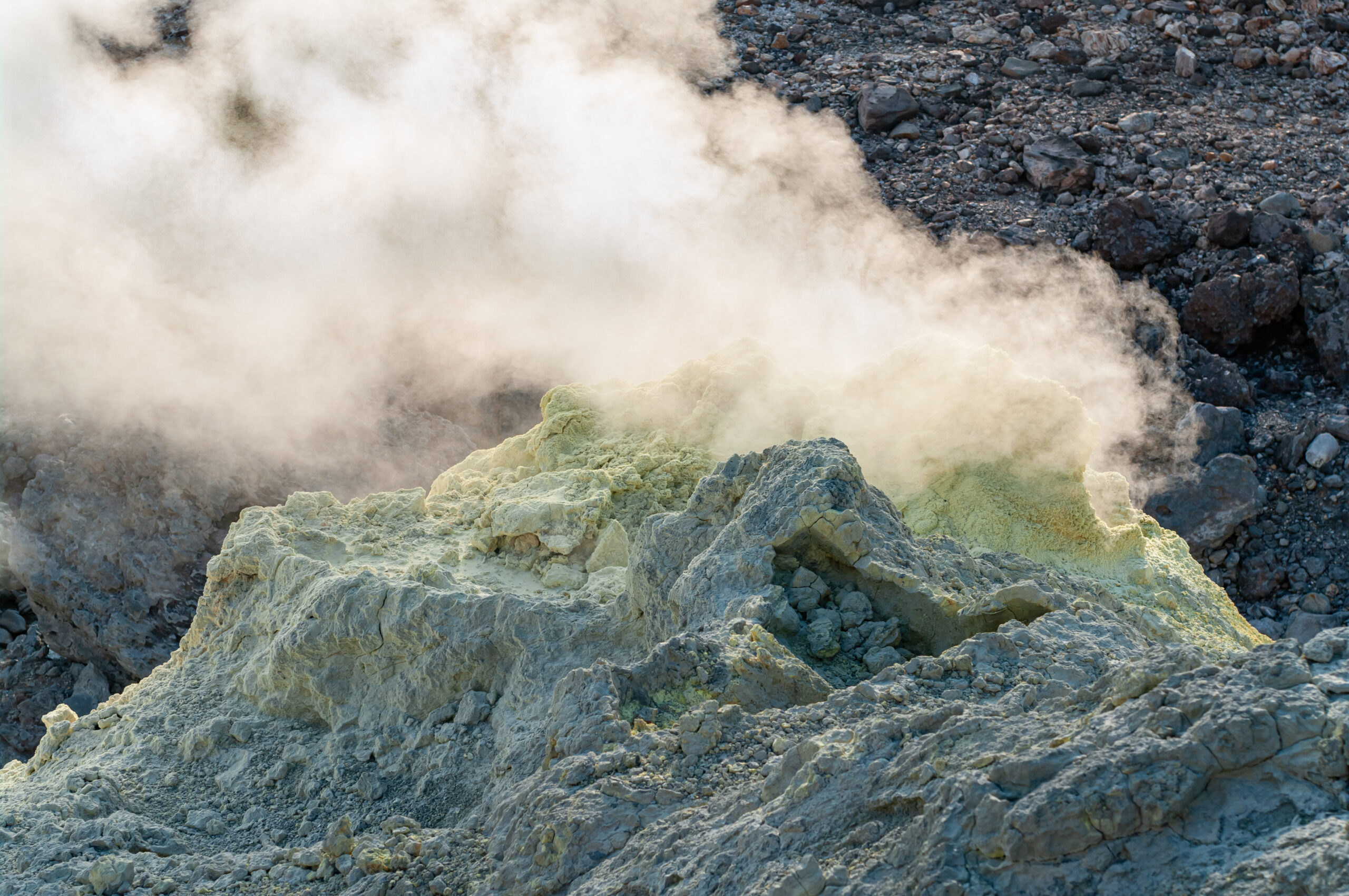
Located near Pozzuoli, Italy, the Solfatara volcanic crater is a popular tourist attraction due to its geothermal activity.
Though dormant since 1198, the area still emits dangerous sulfuric gases and boiling mud.
In 2017, a family of four visited the site, with their two young children in tow. While exploring, the 11-year-old son tragically slipped into a crevice.
In a desperate attempt to save him, the parents followed but succumbed to the toxic sulfur fumes, losing consciousness before they could escape.
The younger brother, only seven years old, narrowly avoided the tragedy, escaping to safety on his own.
Cecilia Cheng Siu-Yan’s Fatal Fall into Nyiragongo, Congo
The Nyiragongo volcano, located in Africa’s Virunga National Park, is infamous for its persistent lava lake. In 2007, Cecilia Cheng Siu-Yan, a 33-year-old woman from Hong Kong, set out to climb to the summit of this towering volcano, which rises to over 11,500 feet above sea level.
Tragically, Cheng became stuck on a ledge inside the crater before falling into the active volcano. Rescue teams later found her body after she had fallen 656 feet, likely dying from the impact. The exact circumstances of her fall remain unclear, but it is believed she fell directly into the lava lake.
Gregory Michael Ure’s Suicide by Volcano, Hawaii
In 2017, Gregory Michael Ure, who went by the name Leo Adonis, tragically ended his life by jumping into a volcano on Hawaii’s Big Island.
After hiking to the rim of Kīlauea volcano, Ure left his backpack behind, which was later found by other hikers. Inside, investigators found a suicide note, confirming that the 38-year-old had chosen the volcano as his final resting place.
Though Ure jumped into the crater, his body was not consumed by the molten lava but instead landed on the rocky rim of the volcano, where it was later found.
Kiyoko Matsumoto’s Death at Mount Mihara, Japan
Mount Mihara, an active volcano located on Izu Oshima Island in Japan, has a dark history associated with suicide. In 1933, Kiyoko Matsumoto, a young woman devastated by a forbidden love, chose to end her life by jumping into the volcano.
The volcano had become notorious as a suicide spot, with several people choosing to end their lives in its fiery depths. Kiyoko’s decision was influenced by societal pressures and by her unrequited love for another woman, a relationship deemed unacceptable in early 20th-century Japan.
The Maasai Porter’s Miraculous Survival in Ol Doinyo Lengai, Tanzania
Ol Doinyo Lengai, also known as the “Mountain of God,” is an active volcano in Tanzania famous for its unique lava, which is cooler than that of most other volcanoes.
In 2007, a Maasai porter fell into a lava-filled crevice while hiking the volcano. Surprisingly, he survived the fall, suffering severe burns but managing to escape with the help of his pack. The lava’s low temperature, around 950°F, helped reduce the severity of his injuries.
The porter’s ability to climb out of the slow-moving lava is a rare and extraordinary feat in the world of volcano accidents.
John Slemp’s Survival at Mount St. Helens, USA
In 2008, John Slemp, a 52-year-old man from Oregon, experienced a terrifying fall into Mount St. Helens, one of the most famous volcanoes in the United States. While snowmobiling with his son and a friend, Slemp hiked to the rim of the volcano.
Unfortunately, he lost his footing and fell 1,500 feet into the crater. Miraculously, he survived the fall, coming to a stop after sliding into a snowbank. Though severely injured, Slemp was rescued by helicopter and treated for his injuries, making a remarkable recovery.
George Kourounis’ Daring Descent into an Active Volcano
Canadian storm-chaser and adventurer George Kourounis is known for his extreme explorations. In one of his most daring feats, Kourounis descended 1,200 feet into an active, lava-filled volcano while strapped to a rope, with cameras recording his every move.
The journey into the volcano was an exhilarating challenge, but Kourounis’ experience took a dangerous turn when the lava’s heat melted parts of his suit and camera gear. Despite the extreme conditions, Kourounis emerged from the volcano unharmed, having survived one of the most intense adventures of his career.
A Fatal Fall at Mount Batur, Bali, Indonesia
Mount Batur in Bali, Indonesia, is a popular destination for tourists seeking to hike to the summit of an active volcano at sunrise. However, in 2010, a Swedish tourist’s morning hike turned into a tragedy when he fell into the volcano’s crater.
The man, who was hiking with friends, fell 500 feet into the crater and died instantly. The accident occurred despite the path being considered safe by authorities, making it a tragic and unexpected event.
The incident underscores the unpredictable dangers that even seemingly secure hiking routes around volcanoes can present.
A Brave Rescue on Mount Batur, Bali, Indonesia
In another incident at Mount Batur in 2018, a woman fell into the volcano’s crater while hiking. British firefighter John Conway was also visiting the volcano, and when the woman fell 131 feet, Conway quickly sprang into action.
Using his experience, Conway organized a human chain to rescue the woman. Despite the risks, the rescue was successful, and the woman was safely pulled from the depths of the volcano. Conway’s quick thinking and firefighter training played a crucial role in saving the woman’s life.
Mount Mihara’s Dark Legacy of Suicides
Mount Mihara, once the site of numerous suicides, is notorious for its “Suicide Point.” In the early 20th century, the volcano became a popular destination for those looking to end their lives.
The period between 1933 and 1935 was particularly tragic, with hundreds of individuals jumping into the volcano’s fiery depths. In an effort to stop the disturbing trend, Japanese authorities eventually installed barriers and fences to prevent easy access to the Suicide Point.
Despite these efforts, Mount Mihara’s association with death persists, leaving behind a haunting legacy.
Conclusion
While volcanoes are awe-inspiring natural features, they also present significant risks.
Whether through accidental falls, suicides, or daring stunts, the tragedies that have occurred at volcanoes are reminders of the unpredictable dangers these powerful forces of nature pose.
Understanding the risks associated with volcanoes and taking appropriate precautions can help prevent future accidents, but the dark history of these locations remains a somber testament to their dangerous allure.