The post 10 Habits That Make Your Neighbors Love You first appeared on Crafting Your Home.
Most Americans do not need a best friend next door. They need the person next door to be predictable, considerate and reasonably aware that walls, sidewalks, driveways and streets are shared spaces.
That may sound unromantic, but neighborly goodwill is often built through tiny acts of friction prevention. A Pew Research Center survey of 9,482 U.S. adults in March 2025 found that 44% trusted all or most people in their neighborhood, while 26% said they knew all or most of their neighbors.
The people who become beloved neighbors rarely make a dramatic entrance into community life. They make daily living easier for everyone around them.
Keep your noise from becoming everybody’s problem

There is a difference between enjoying your home and exporting your lifestyle into somebody else’s bedroom. Loud music, late-night gatherings, revving engines and noisy outdoor equipment can turn an otherwise ordinary property into the address everyone recognizes for the wrong reason.
Local rules differ, but municipalities clearly treat excessive residential noise as a community issue. Seattle, for example, has an ordinance that sets exterior sound limits in residential areas and specifies quiet hours and permitted times for construction and maintenance work.
The uncomfortable truth is that the person throwing the party experiences the fun. The neighbor across the fence experiences the bass.
Related Post: Americans Talk to Their Neighbors Far Less Than They Did a Decade Ago, New Survey Finds
Handle your trash like it actually belongs to you
Few things make a house look inconsiderate faster than trash sitting around for days, loose bags spilling onto the sidewalk or overflowing containers becoming everybody else’s visual problem. Nobody expects a suburban street to look untouched by ordinary life, but basic containment goes a long way.
New York City’s Department of Sanitation, for example, requires waste to be placed out during specified collection windows and says bins must be stored. That keeps sidewalks and public walkways clean and unobstructed.
The bigger neighborly principle is simple: manage your waste before someone else has to look at it, walk around it or deal with it.
Keep the sidewalk passable
A garbage bin, basketball hoop, vehicle, furniture stack or overgrown plant can seem harmless from inside the house. For somebody pushing a stroller, using a wheelchair or simply trying to walk safely, an obstruction can change the route completely.
The National Highway Traffic Safety Administration identifies blocked sidewalks as a common walkability problem and specifically asks communities to identify conditions that make walking difficult or unsafe.
A considerate homeowner pays attention to the space beyond the front door. Your property ends somewhere, but your responsibility to avoid creating unnecessary obstacles can extend to how you use shared access areas.
Related Post: 11 Things Neighbors Do That Quietly Annoy Everyone Around Them
Stop treating public parking like an extension of your driveway
The neighbor with three vehicles and two cones does not own the curb. Neither does the person who repeatedly parks in a way that squeezes everyone else into awkward spaces.
Parking laws vary across the country, but the basic restrictions show why careless parking causes real public problems. California’s driver handbook prohibits parking in front of wheelchair-accessible curb ramps, within specified distances of fire hydrants and crosswalks, and in other locations that interfere with public access or safety.
The neighbor people appreciate is the one who parks like other humans live there too.
Make your house number easy to see
A house number is easy to ignore until someone actually needs it. Drivers making deliveries, visiting relatives and emergency responders all depend on being able to identify an address without turning the street into a guessing game.
The U.S. Fire Administration specifically advises residents to make sure house numbers are visible from the road so emergency responders can quickly find the correct home.
Keeping the numbers visible costs almost nothing. Covering them with vegetation, leaving them unlit at night or choosing tiny decorative numbers creates an avoidable obstacle for everyone trying to locate the house.
Deal with the barking before the whole block learns your dog’s schedule
Dog lovers understand that barking is normal canine behavior. Neighbors also understand that hearing the same barking every morning, afternoon and evening can become maddening.
The ASPCA explains that barking can serve different functions, including territorial behavior, attention seeking and reactions to people or animals outside the home. Its guidance recommends identifying what triggers the barking and managing the dog’s exposure to those triggers, including supervising dogs in yards and teaching quieter behaviors.
The owner who says the dog is just being a dog may technically be right. The neighbor who has heard the same alarm bark for an hour has a point too.
Aim outdoor lights downward instead of into someone else’s window
Outdoor lighting can be useful for entrances, walkways and security. It can also become an intensely irritating beam pointed straight toward a bedroom, living room or neighboring yard.
Outdoor glare depends on factors including light intensity, the number of fixtures, fixture size, height, and angle.
DarkSky International recommends shielding and carefully aiming outdoor lighting. This keeps the beam where it is needed, while using the lowest necessary light level and controls such as timers or motion sensors.
Nobody wants to discover that the neighbor’s new floodlight has effectively become a second moon.
Keep the yard maintained enough that neglect spills nowhere else
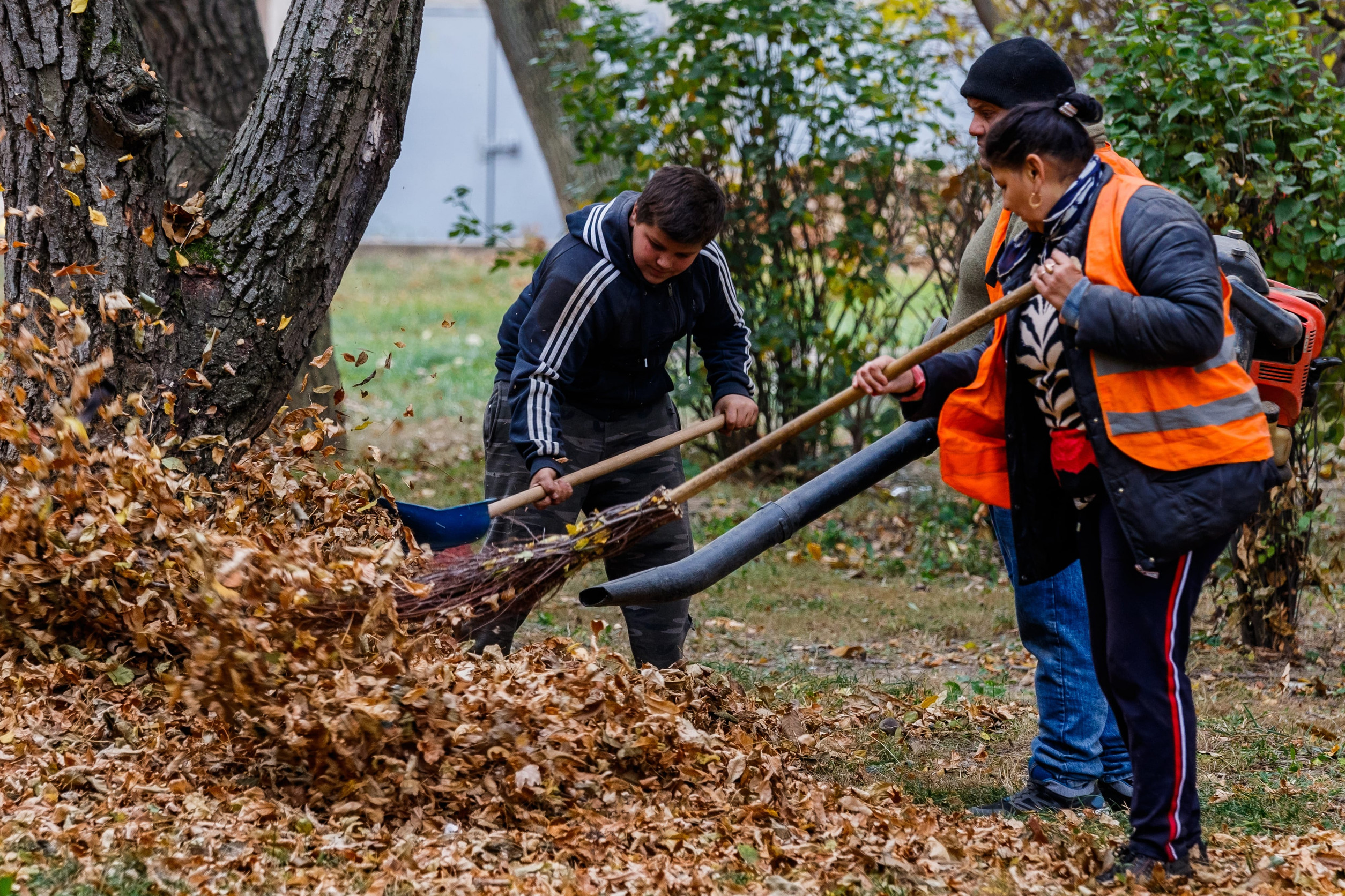
Nobody needs a magazine-cover lawn. Americans have different landscaping preferences, and a carefully designed natural garden can look very different from a conventional patch of turf.
Municipalities commonly regulate weeds or vegetation height because neglected-looking properties can become a neighborhood concern and may affect perceptions of property values.
The real courtesy is controlling what crosses the property line. Trim vegetation before it blocks a walkway, clear debris before it blows into the street, and keep outdoor spaces orderly enough that your maintenance choices don’t become somebody else’s cleanup job.
Help with small things when the opportunity is obvious
Neighborliness does not require becoming the unofficial community handyman. Sometimes it means bringing in a package during bad weather, checking on a house while someone is away or lending a tool that would otherwise require a trip to the store.
A 2024 Census Bureau and AmeriCorps analysis found that 54.2% of Americans helped or exchanged favors with neighbors between September 2022 and September 2023, including house sitting, running errands and lending tools. That was up from 51.7% in 2019.
There is something powerful about being the neighbor people can reasonably ask for a small favor without feeling like they are imposing on a stranger.
Know your neighbors without trying to manage their lives
Good neighbors usually know enough. They recognize the faces next door, say hello, understand basic household rhythms and can contact each other when something genuinely matters.
Pew’s 2025 survey found that 59% of Americans said they had a neighbor they would feel comfortable asking to keep a set of their keys for emergencies. Seventy-six percent said they would be extremely or very likely to bring in the mail or water plants for an out-of-town neighbor.
That level of trust takes familiarity, but familiarity has limits. The neighbor everyone loves is rarely the person monitoring everybody else’s comings and goings. It is the person who notices when help is appropriate and understands when privacy is the kinder choice.
Other Posts You May Like
- 8 Unwritten Rules of Being a Good Neighbor That Many People Forget
- 8 Things Neighbors Notice About Your Home in the Fall
If you like what you just read, then subscribe to our newsletter and follow us on social media.