10 Fascinating Intelligence of Plants: Unveiling Nature’s Hidden Genius

Plants have long been viewed as passive organisms, tethered to the soil, rooted in place with no ability to move, think, or communicate. However, groundbreaking research over the past few years has revealed that plants exhibit a remarkable array of intelligent behaviors that challenge our traditional understanding of life.
Contrary to the conventional view that intelligence requires a brain or nervous system, plants demonstrate complex strategies for solving problems, interacting with their environment, and even “remembering” past experiences.
In this article, we explore the 10 most compelling mysteries of plant intelligence that highlight their extraordinary capabilities, from intricate chemical communication to advanced problem-solving techniques.
These remarkable behaviors are not only reshaping the way we think about plants but may also offer solutions for a wide range of scientific and technological challenges.
The Venus Flytrap- Counting and Memory in Action
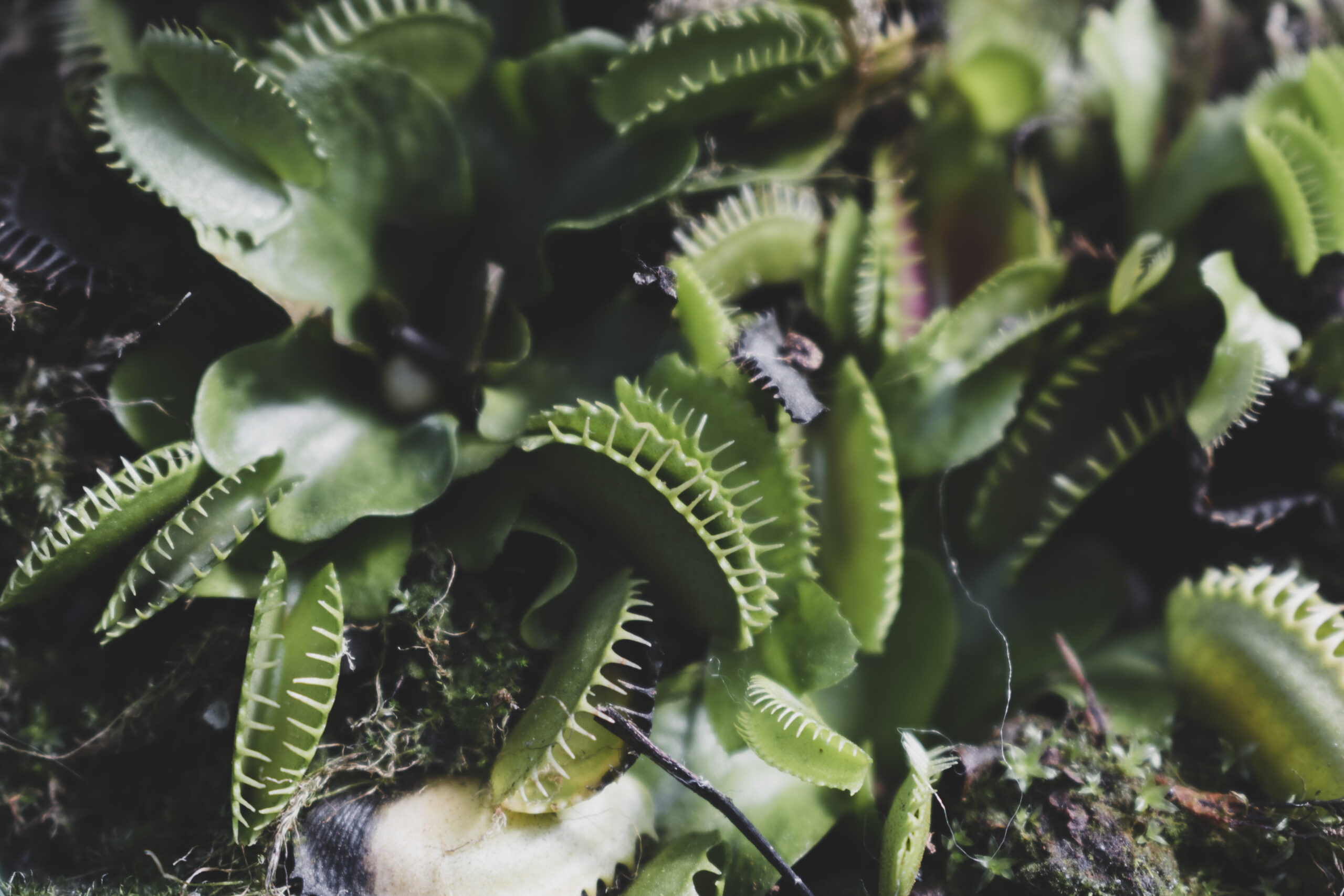
The Venus flytrap (Dionaea muscipula) is perhaps the most famous example of plant intelligence. What makes this carnivorous plant so intriguing is its ability to count and remember.
Each trap has sensitive hairs that, when touched, initiate a rapid, mechanical response. However, the plant doesn’t respond immediately to any touch. It needs two separate touches within 20 seconds to trigger the trap’s closure.
This counting mechanism helps the plant conserve energy by avoiding unnecessary trap closures, such as those triggered by raindrops or debris.
Interestingly, the Venus flytrap exhibits a form of short-term memory, as the action potential triggered by the initial touch is sustained for up to 20 seconds. If a second touch occurs before the first wave of activity has subsided, the trap snaps shut with lightning speed.
This behavior suggests that the plant can “remember” the first stimulus long enough to initiate the correct response. This sophisticated method of energy conservation and prey capture speaks to an unexpected level of intelligence in the plant kingdom.
Chemical Communication- The Goldenrod’s Defensive Strategy
Plants are not solitary entities; they communicate with each other in ways that are both complex and efficient.
A remarkable example of this is the goldenrod (Solidago altissima), which has developed a unique chemical signaling system to defend itself against herbivores.
When the plant is attacked by leaf beetle larvae, it releases volatile organic compounds (VOCs) into the air, signaling neighboring plants to prepare their defenses.
This chemical communication acts as a warning system, allowing other plants to activate defense mechanisms before they, too, are targeted by herbivores.
Goldenrod is not alone in this phenomenon. Research has shown that over 35 plant species use chemical communication to defend themselves, deter herbivores, and even attract predators of herbivores.
These VOCs are crucial not only for survival but also for maintaining the balance of ecosystems. For example, plants like goldenrod release VOCs to protect themselves and ensure their survival, demonstrating the plants’ ability to adapt to and interact with their environment in a sophisticated manner.
The Wood-Wide Web- Plants Connected by Fungal Networks
In 1997, Suzanne Simard made a groundbreaking discovery in British Columbia forests, fungal networks she dubbed the “wood-wide web” that connected the roots of trees and other plants.
These mycorrhizal networks, formed by fungi that live in symbiosis with plants, facilitate nutrient exchange, including carbon, nitrogen, and phosphorus. However, the role of these networks extends beyond nutrient sharing. They enable trees to communicate with one another, particularly during times of stress.
For instance, trees like the Douglas-fir can warn nearby plants of insect attacks, prompting those plants to produce defensive chemicals. This network of communication is not limited to trees; it extends to smaller plants, shrubs, and seedlings.
While still under study, the concept of a wood-wide web offers a new paradigm for understanding forest ecosystems, not as isolated organisms but as interconnected communities.
Thermogenesis- Warm-Blooded Plants?
While most plants rely on sunlight for warmth, some have evolved the ability to generate heat through thermogenesis. Skunk cabbage (Symplocarpus foetidus) is one of the most well-known examples of thermogenic plants.
This plant can produce heat via cellular respiration in its mitochondria, making its flowers up to 20°F warmer than the surrounding environment. This ability allows the plant to bloom early in spring, long before the snow has melted.
Thermogenesis in plants has long been viewed as an adaptation to cold climates, but it also plays a crucial role in attracting pollinators. The skunk cabbage’s distinctive odor, which resembles rotting flesh, attracts gnats and flies, helping to pollinate the plant.
The plant’s ability to regulate its internal temperature demonstrates its remarkable adaptability and resourcefulness.
Boquila Vine- Master of Mimicry
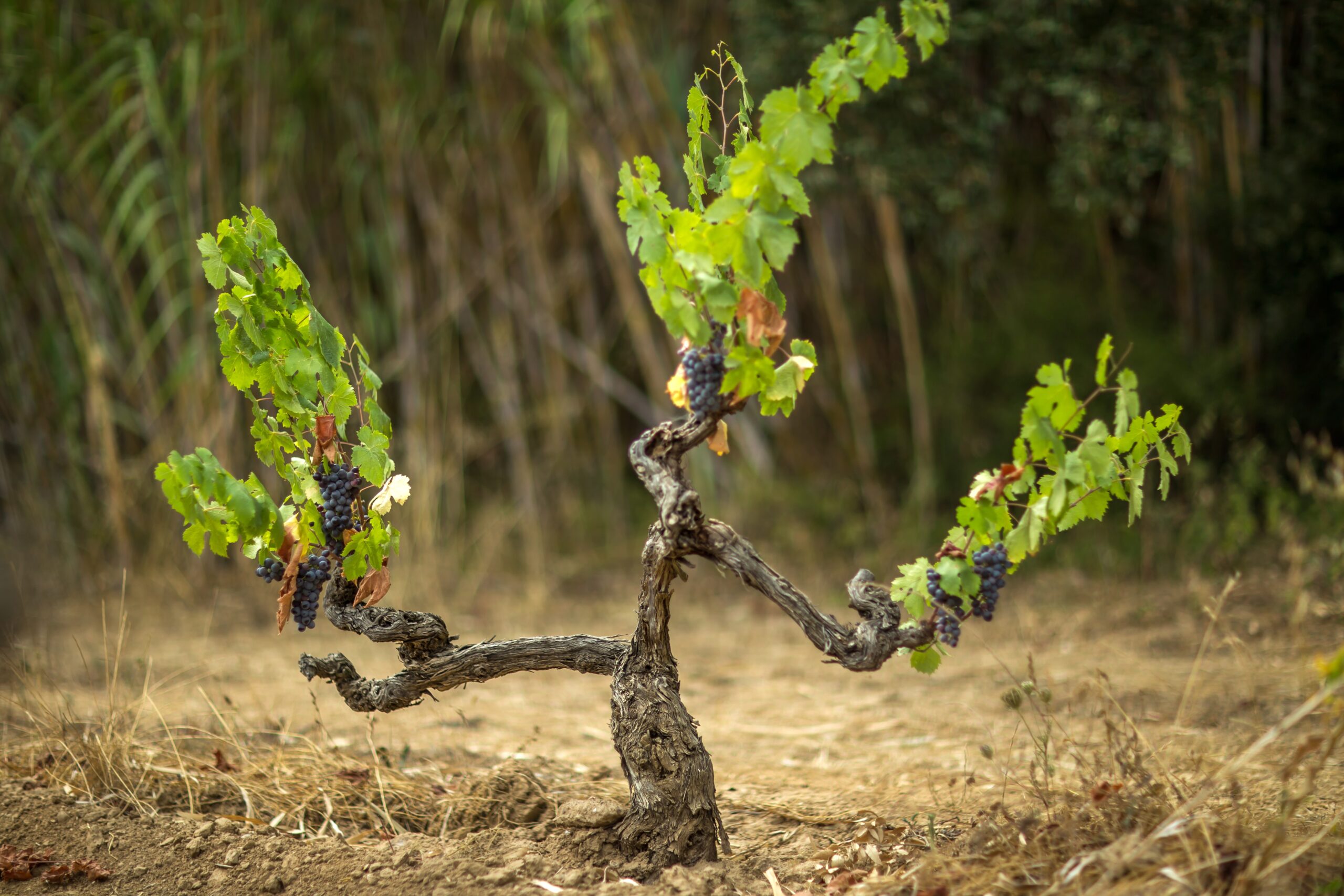
The Boquila vine (Boquila trifoliolata) is an extraordinary plant found in the rainforests of Chile.
This vine exhibits an uncanny ability to mimic the leaves of nearby plants, blending into its surroundings to avoid herbivores. What’s truly remarkable is that the Boquila vine can mimic not just plants it comes into contact with, but even plants it has never touched before.
The mechanism behind this mimicry remains a subject of debate. Some researchers propose that the vine uses chemical signals from the plants it mimics, while others suggest that it transfers genetic material.
Regardless of the exact mechanism, the Boquila vine’s ability to mimic more than 20 different species is an extraordinary example of plant intelligence in the wild.
Root Hearing- Can Plants Hear?
In 2016, researchers uncovered that plants can indeed “hear” sound, specifically, the sound of water. In experiments conducted on pea plants, roots grew toward the sound of running water, even when it was contained in an inaccessible pipe.
The plants also exhibited a preference for moist soil over white noise, suggesting that they can use sound to detect moisture at a distance.
Plantoid Robotics- Plants as Inspiration for Technology
In 2015, scientists developed the first robot inspired by plant movements. Known as the “plantoid,” this soft robot mimics the behavior of plant tendrils.
The plantoid is equipped with sensors that monitor environmental factors, including temperature, humidity, and light. By mimicking plant growth, the plantoid can adapt to its surroundings, even growing and expanding in response to environmental cues.
Photoperiod Anticipation- How Plants Measure Time
Thale cress (Arabidopsis thaliana), a small mustard plant, demonstrates a fascinating ability to anticipate the photoperiod, the length of time it is dark. This plant stores energy in its leaves during the day and consumes it at night, adjusting its energy expenditure in response to the length of the dark period.
Researchers have shown that this behavior is akin to complex arithmetic, allowing the plant to maximize its metabolism and growth.
Mimosa Pudica- The Shy Plant That Learns

Mimosa pudica, commonly known as the “sensitive plant,” exhibits one of the most striking examples of plant behavior. When touched, the plant rapidly closes its leaves in a defensive reaction.
However, experiments have shown that Mimosa pudica can “learn” not to respond to harmless stimuli, such as water droplets.
Research led by Monica Gagliano revealed that Mimosa pudica could form both short-term and long-term memories.
The Secret Language of Plants- How Plants Communicate with Each Other
Plants don’t just interact with their environment; they also communicate with their neighbors. The phenomenon of “plant language” is most evident in competition, where plants can sense the presence of nearby species and adjust their growth strategies accordingly.
For example, the Chilean pepper plant (Capsicum annuum) grows more vigorously when it senses a “friendly” plant, such as basil, nearby, but slows its growth when competing with fennel.
These subtle forms of communication, whether through chemical signals, vibrations, or electromagnetic fields, suggest that plants have a remarkable ability to adapt to their social environment.
This complex network of interactions challenges our traditional understanding of plant behavior and opens up new avenues for research in ecology and agriculture.
Conclusion
From counting and memory to chemical communication and mimicry, the intelligence of plants is a testament to the wonders of the natural world.
These behaviors, once thought to be exclusive to animals, reveal that plants are capable of far more than we ever imagined.
As research into plant intelligence continues to unfold, we may find that plants offer solutions to challenges in medicine, technology, and even environmental conservation.
In understanding plant intelligence, we are not just learning about plants…we are uncovering new frontiers in the study of life itself.