10 Fascinating and Unusual Forms of Water You Never Knew Existed
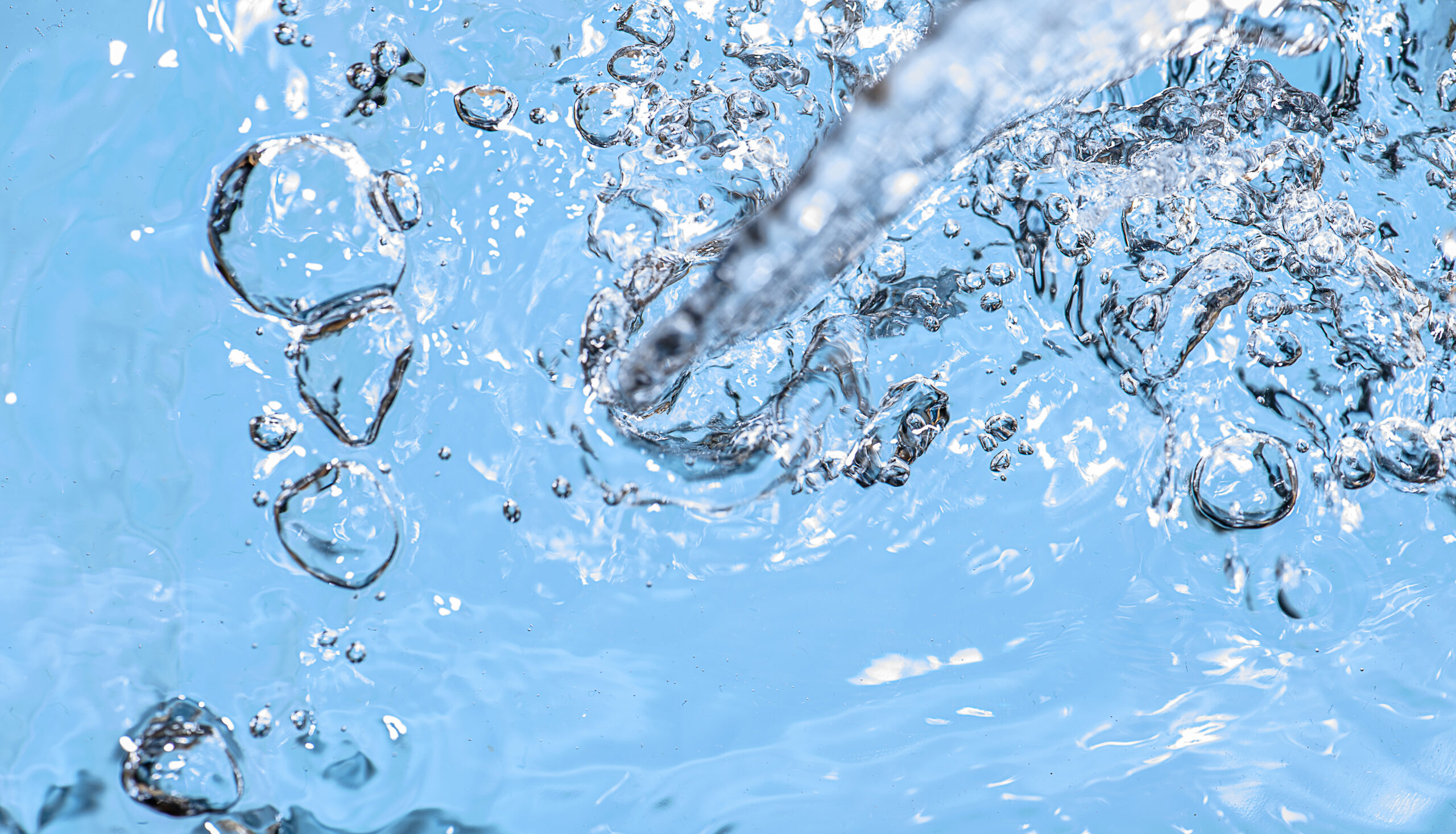
Water, the most essential compound for life on Earth, typically exists in three states: solid, liquid, and gas. However, water’s behavior can be far stranger than most of us realize.
Under extreme conditions or when combined with other elements, water can assume forms and characteristics almost beyond comprehension.
Dry Water

Dry water is one of the most perplexing substances scientists have created. Despite its name, dry water is composed of 95% water, yet it behaves like a solid.
When water and silica are mixed, a powdery substance resembling sugar forms, with individual water droplets encapsulated by silica.
Dry water was first developed in 1968, but was largely forgotten until researchers rediscovered it in 2006. This form of water has promising applications in carbon dioxide absorption, as it can absorb up to 3 times as much CO2 as liquid water.
Furthermore, dry water may be used to transport hazardous chemicals, as its solid-like consistency provides a safe, stable medium.
Ice-VII
At first glance, ice may seem to be synonymous with cold, but the existence of Ice-VII challenges this notion. Unlike the regular ice we are familiar with, Ice-VII forms under extreme pressure and temperature, making it a “hot” form of ice.
While typical ice (Ice-Ih) forms at low temperatures, Ice-VII forms at temperatures above 1000 Kelvin (727 °C or 1341 °F) under intense pressure, such as that found deep within the Earth’s mantle.
In this high-pressure environment, the oxygen atoms in water rearrange into a cubic structure, forming a form of ice that is stable only under these extreme conditions.
Supercritical Water
When water reaches extremely high temperatures and pressures, it can enter a supercritical state, where it is neither a liquid nor a gas but possesses properties of both.
Supercritical water forms at 374 °C (705 °F) and 220 bars of pressure, a point at which water can pass through solids like a gas, yet still dissolve substances like a liquid.
In this state, water behaves as a powerful solvent and is used in several industrial applications, including waste treatment and chemical reactions.
Plasma Water
In extreme environments, such as on the planet Gliese 1214 b, water can exist as a plasma. Plasma is a state of matter in which the electrons are stripped from atoms, leaving behind positively charged ions.
Unlike gases, which consist of neutral atoms or molecules, plasma is electrically charged.
On Gliese 1214 b, a planet 70 times farther from its star than Earth is from the Sun, temperatures can soar to 282 °C (540 °F)—the extreme heat and pressure cause water to transform into plasma.
Triple Point of Water
The triple point of water is a fascinating phenomenon in which solid, liquid, and gaseous water coexist in thermodynamic equilibrium.
For this to occur, water must be at a precise temperature of 273.16 Kelvin (0.01 °C or 32.02 °F) and under a pressure of 611.66 pascals (0.006 atm).
Under these unique conditions, water can coexist in its three classic states, and small changes in pressure or temperature can cause it to transition between phases.
Superionic Ice
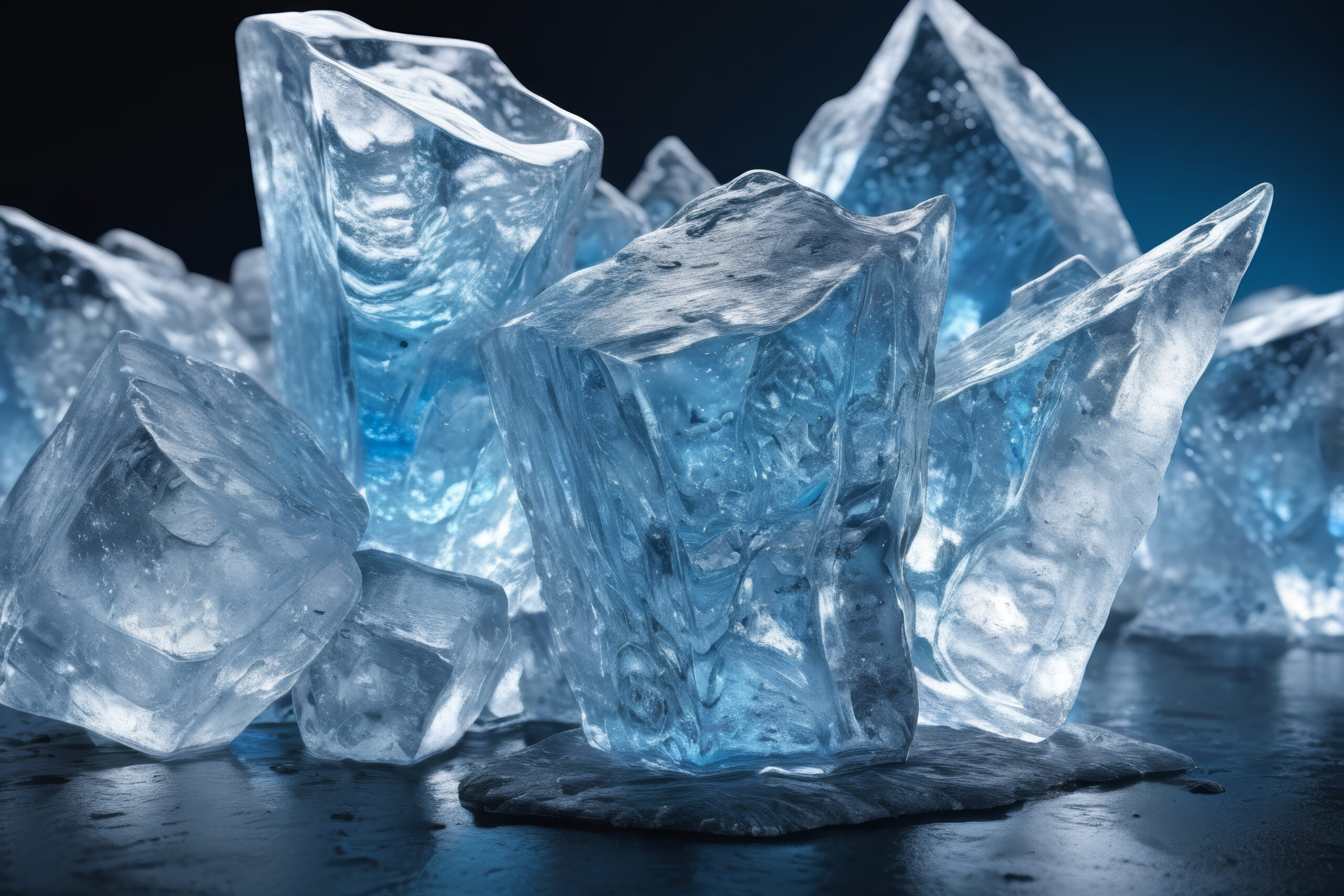
Superionic ice, or Ice-XVIII, is a rare form of ice that forms under extremely high temperatures and pressures. Under these conditions, the oxygen atoms form a solid lattice, while the hydrogen atoms move freely, behaving like a liquid.
This phenomenon causes superionic ice to behave like a metal, conducting electricity rather than being an insulator like typical ice.
Superionic ice was predicted in 1988 but was only confirmed in 2019 after an experiment using powerful lasers to create shock waves.
Aeroice
Aeroice is an ultralight version of ice, first developed in 2017 in a Japanese laboratory. Unlike other forms of ice, which form under high pressure, aeroice forms under negative pressure.
This version of ice has an extraordinarily low density and is thought to play a role in the behavior of water in nanostructures, such as nanotubes or nanopores.
Amorphous Ice
Amorphous ice forms when water is rapidly cooled so that its molecules do not have time to form an ordered crystal lattice. This gives it a disordered structure, which resembles glass rather than typical crystalline ice.
Though amorphous ice is rare on Earth, it is believed to be the most common form of water in the universe, particularly in interstellar space.
Amorphous ice does not behave like normal ice; instead, it is a type of “supercooled” liquid, with extremely slow molecular movement.
Quantum Water
In 2016, researchers at the Oak Ridge National Laboratory created a quantum state of water. By compressing water between hexagonal beryl crystals, the researchers subjected it to intense pressure, causing the atoms to misalign.
In this state, water molecules exhibit behavior consistent with quantum mechanics, allowing them to “tunnel” through atomic-scale barriers.
Burning Ice

Burning ice is a form of ice that contains methane gas trapped within its crystal lattice. When heated, methane is released and can ignite.
This fascinating substance naturally forms at the bottom of oceans, in permafrost, and even in oil and gas pipelines, where it can sometimes cause dangerous blockages.
Burning ice could be a clean energy source, as methane is a potent fuel. However, it is difficult to extract, and bringing it to the surface can make it unstable.
Additionally, the release of methane from melting ice could exacerbate global climate change, adding another layer of complexity to this remarkable substance.
Conclusion
Water, in its many forms and states, is more mysterious and diverse than we often realize. From the hot, metallic Ice-VII to the quantum behavior of water molecules, these fascinating states challenge our understanding of the most essential compound on Earth.
The study of these unique forms of water continues to provide new insights into the physical world and may lead to revolutionary advancements in science and technology.