


The post 10 Famous People Who Grandparents Raised and the Family Stories Behind Their Childhoods first appeared on Crafting Your Home.
Behind some of the world’s most recognizable names are childhoods that unfolded far from the usual family script.
For these ten accomplished people, grandparents were not simply beloved relatives who appeared at holidays or family gatherings. They were caregivers, protectors, teachers, and, in some cases, the people who provided the most stable home during formative years.
Their stories are different. Grandparents raised some for much of their childhood. Others lived with grandparents during a crucial period before returning to a parent. In Simone Biles’ case, her grandparents eventually became her adoptive parents.
These stories are connected by the extraordinary role family plays when children and grandparents take on unexpected responsibilities together.
Related: 9 Lessons From People Who’ve Been Grandparents for 30 Years
Oprah Winfrey: A grandmother who saw possibility early

Long before Oprah Winfrey became one of the world’s most influential media figures, she was a child growing up in rural Mississippi.
The Academy of Motion Picture Arts and Sciences records that Winfrey lived with her grandmother, who raised her on a small farm. Her grandmother encouraged her intellectual development; Winfrey could read at age 3 and began reciting poems and Bible verses in church. At age 9, Winfrey went to live with her mother in Milwaukee.
Her grandmother was a major caregiver early in her life, but not her only caregiver.
Still, those early years left an unmistakable imprint on the young girl who would eventually build a media empire.
Related: 8 Things Grandparents Say That Quietly Undermine Parents
Willie Nelson: Music began at home
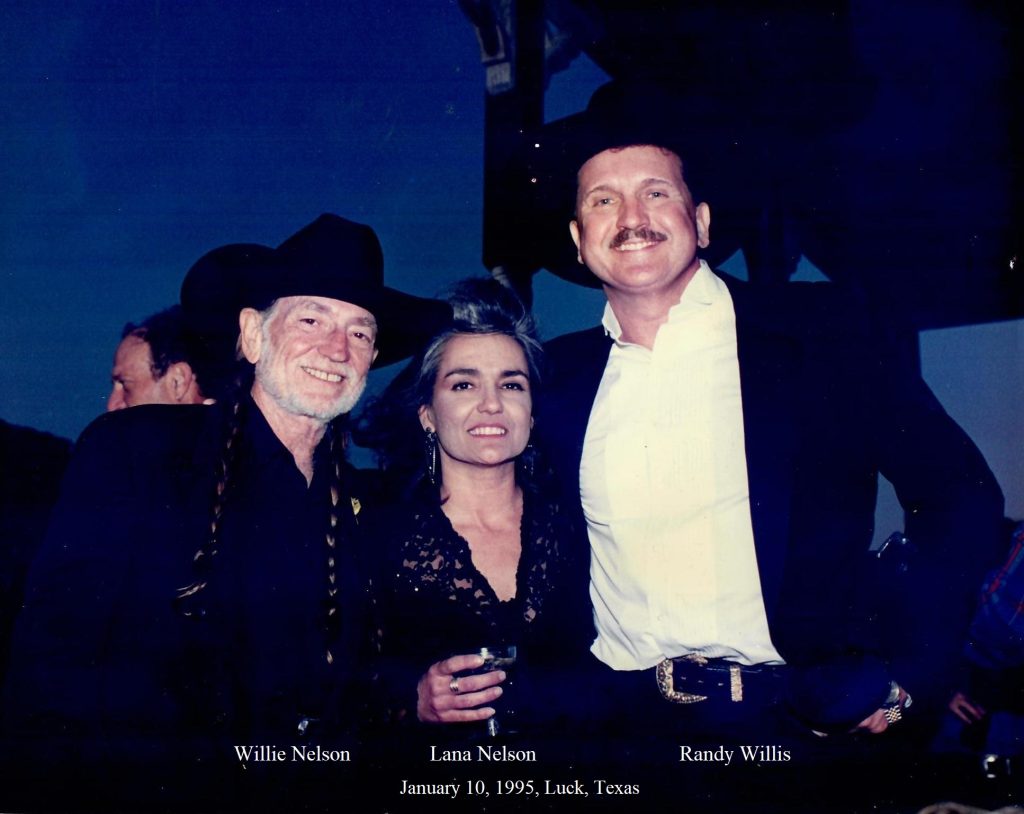
Willie Nelson’s story is one of the clearest examples of grandparents shaping a future artist.
PBS’s American Masters records that Nelson was raised by his grandparents in Abbott, Texas. Nelson himself has spoken about the role they played in his childhood. His grandfather was a blacksmith, and his grandmother worked in school lunchrooms to support the family. Both grandparents were also deeply involved in music.
His musical education began remarkably early. PBS’s biography notes that his grandparents encouraged music, and Nelson began writing songs as a child. His grandfather gave him his first guitar.
For Nelson, music was not simply discovered later in life.
It was part of the household he grew up in.
Jamie Foxx: Grandparents who became his parents

Jamie Foxx was taken in by his maternal grandparents, Mark and Estelle Talley, when he was an infant after his parents separated.
Generations United, in a profile based on Foxx’s own recollections, says his grandparents played a major role in his upbringing and describes them as his “adopted parents.” Foxx credited them with filling the emotional and spiritual gaps in his childhood and recalled his grandmother’s encouragement of both his academic and artistic abilities.
His grandmother also encouraged his musical development, enrolling him in piano lessons when he was young.
Foxx later became an Oscar-winning actor and successful musician, achievements he attributed to encouragement at home.
Barack Obama: The grandmother who helped raise a future president
Barack Obama’s childhood did not fit the simple definition of being raised exclusively by grandparents.
The U.S. Administration for Community Living’s federal report on grandfamilies states that Obama was raised by his grandmother from age 10. The report also quotes Obama’s own reflection on his grandmother’s sacrifices for him.
His mother remained an important part of his life, but his maternal grandparents, particularly his grandmother, played a significant caregiving role during his childhood in Hawaii.
This distinction matters because family stories are often oversimplified.
Obama’s story was about his extended family stepping in to help raise him, not just a grandmother replacing a parent.
Simone Biles: From foster care to an Olympic family
Simone Biles’ childhood story is particularly powerful because her grandparents eventually became her parents in every legal and practical sense.
After Biles and her siblings entered foster care, her maternal grandfather Ron Biles and his wife, Nellie, took her and her sister Adria into their home. CBS reports that Ron and Nellie eventually adopted the girls.
Biles has spoken publicly about the experience and has referred to Ron and Nellie as her parents.
The U.S. Administration for Community Living also lists Biles among notable people raised by kin and grandparent caregivers.
Her childhood therefore illustrates something important about grandparent caregiving: sometimes the distinction between “grandparent” and “parent” eventually disappears in everyday family life.
Carol Burnett: A grandmother, a movie theater and a dream
Carol Burnett has spoken openly about being raised by her grandmother during the 1940s and 1950s.
In an interview with Diane Rehm, Burnett described growing up with her grandmother, whom she called “Nanny.” She recalled their limited financial circumstances and the weekly movie outings that became an important part of her childhood.
Those memories show how modest experiences can become treasured.
Burnett did not describe an affluent childhood. She described a childhood in which she and her grandmother saved pennies and went to second-run movies.
Years later, she became one of America’s most celebrated comedians and performers.
She grew up in humble circumstances.
The imagination was not.
50 Cent: Losing his mother and being raised by grandparents

Curtis “50 Cent” Jackson experienced a major rupture in childhood when his mother died when he was 8.
Sky News reported that Jackson subsequently went on to be raised by his grandparents. He has spoken about growing up in a large family with limited money and about the influence of his mother’s friends and relatives during those years.
His story is another reminder that grandparent caregiving often develops from circumstances rather than choice.
A family loses a parent. A household changes. A grandparent steps forward.
And a child continues.
Langston Hughes: A grandmother who opened the door to literature
Before Langston Hughes became one of the defining writers of the Harlem Renaissance, he spent much of his childhood in Lawrence, Kansas, with his maternal grandmother.
The National Park Service says Hughes’ parents divorced shortly after his birth, his mother traveled for work, and Hughes spent most of his childhood being raised by his grandmother. She gave him stories and books that opened the world of literature to him.
After her death, Hughes returned to his mother.
Those early years were formative.
His grandmother did not merely provide a roof over his head. According to the National Park Service, she introduced him to books and stories that became a refuge during childhood.
A future literary giant first encountered that world at his grandmother’s side.
Maya Angelou: A childhood shaped by two generations of family
Maya Angelou spent much of her childhood with her grandmother in Arkansas.
In a 2013 NPR interview, Angelou explained that she had been sent away with her brother to be raised by their grandmother and that she later returned to live with her mother as a young teenager.
Angelou spoke about her grandmother with deep affection and described the complicated journey of eventually rebuilding her relationship with her mother.
Her story defies the idea that a grandparent “replaced” a parent.
Instead, it shows how childhood can stretch across generations and how love can survive complicated family circumstances.
Vanna White: A documented grandparent-care story with fewer details
Vanna White is another celebrity whom the U.S. Administration for Community Living identifies among notable people raised by kin and grandparent caregivers.
But this is a case where responsible reporting requires restraint.
The federal report establishes her inclusion, but the sources reviewed do not provide enough reliable detail to reconstruct her childhood with the same confidence available for Nelson, Hughes, Biles, Burnett, Angelou, Foxx, Winfrey, or the others.
That distinction is worth preserving in a published article.
Adding unverifiable details does not make a story stronger.
What these stories really tell us
It is tempting to look for a formula in these ten stories.
Grandparents raised them. They became successful. Therefore, one caused the other.
The evidence does not support this.
These people achieved extraordinary things for vastly different reasons, and their childhood circumstances varied considerably. Some lived with grandparents temporarily; they raised others for much of childhood; hers ultimately adopted Biles.
Grandparents played meaningful caregiving roles in all these stories.
For Willie Nelson, that home was filled with music. For Langston Hughes, his grandmother helped open the door to literature. For Jamie Foxx, his grandparents provided encouragement and stability. For Simone Biles, grandparents became parents. For Carol Burnett, a grandmother and a handful of pennies could turn an ordinary movie night into a cherished memory.
These stories also put a human face on a much larger reality.
The U.S. Administration for Community Living describes grandfamilies and kinship families as a longstanding part of American life and identifies numerous prominent people who were raised in such arrangements.
Each statistic about grandparents raising children represents a home, a child, and a decision to step forward.
Sometimes that decision changes the course of a family.
Sometimes, the person raised in that home grows up to change the world.
Tighten the opening for news readers. Add source notes to every profile.
Other Posts You May Like
9 Things Adult Children Wish Parents Knew Before Moving Closer to Them
7 Everyday Gestures That Tell a Man He’s Appreciated
8 Texts You Should Never Send an Ex
If you like what you just read, then subscribe to our newsletter and follow us on social media.


