10 Effective Toy Storage Solutions Every Parent Needs

Toys are a sign of a lively home, but when they spread across every surface, the space starts feeling crowded, noisy, and stressful. The good news: toy storage doesn’t need to be complicated. A simple system built around broad categories, easy access, and quick daily resets can keep rooms tidy without turning cleanup into a constant battle.
Open Bins That Make Cleanup Effortless
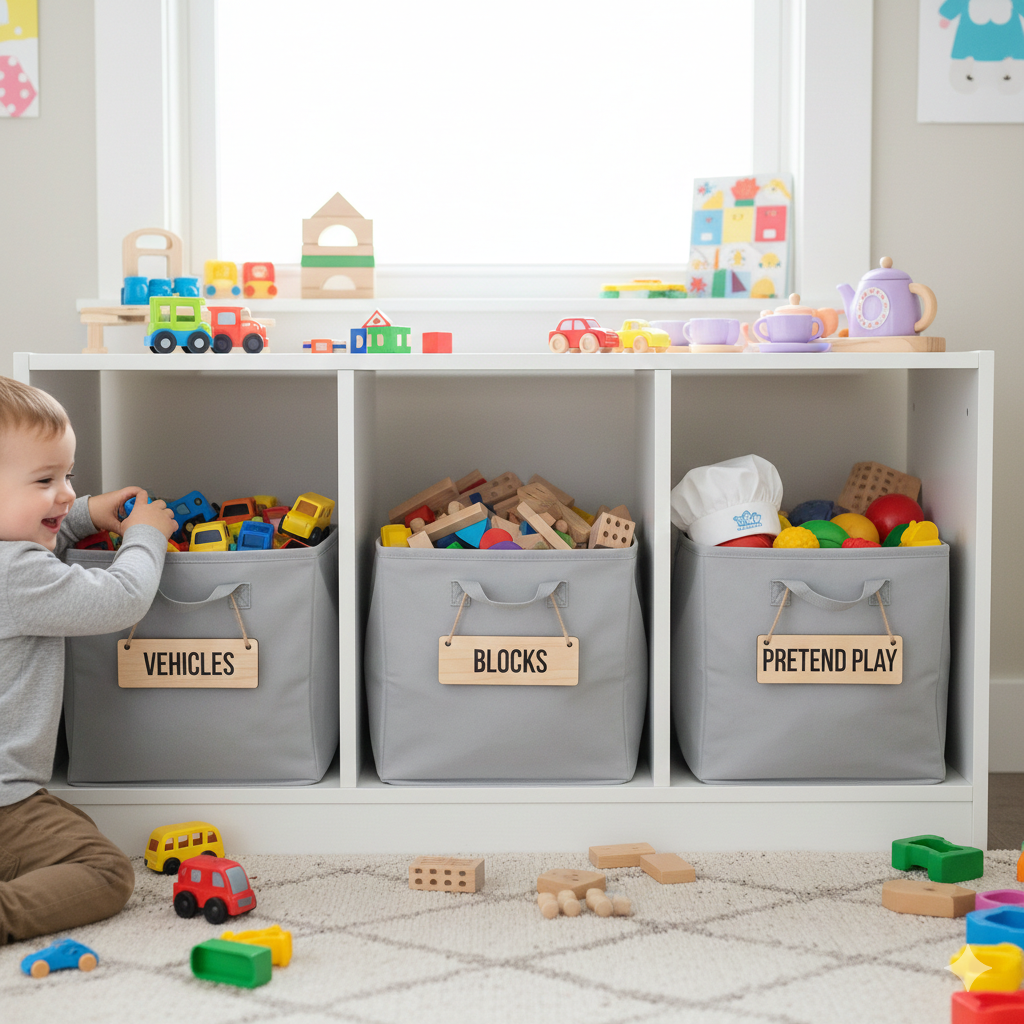
Open bins are one of the most reliable toy storage solutions because they match how children actually clean: drop items in, move on. Lids, clasps, and overly detailed sorting slow the process and often lead to abandoned cleanup. With open bins, toys can be returned quickly, even by toddlers, because there’s no “perfect alignment” required.
To keep this simple and effective, broad categories work best. A bin labeled “Vehicles” prevents endless sorting by type. “Blocks” keeps all building items together. “Pretend Play” covers kitchen toys, play food, and costumes. The goal is speed, not a museum-level catalog. When categories are simple, children can participate without feeling overwhelmed, and the home stays easier to reset.
Bin size matters more than most people think. Oversized bins invite dumping and digging, which creates mess. Medium bins keep categories contained and make it easier to find items without scattering everything onto the floor. When the bin starts overflowing, it’s a clear signal to rotate toys, donate unused items, or split the category into two bins.
A Single “Catch-All” Basket for Fast Daily Reset
Even with a solid toy system, some days call for speed: guests arriving, dinner cooking, a sudden need for floor space. A catch-all basket makes fast resets possible. It’s a large, attractive basket placed where toys naturally accumulate, near the sofa, coffee table, or doorway. Instead of sorting everything immediately, toys get scooped into one container and the room looks calm again.
This basket works best when treated as a temporary staging area, not permanent storage. A simple rule keeps it from turning into a black hole: empty it once a day. In the evening or before bedtime, toys are returned to their proper bins. That one daily habit keeps the basket useful instead of chaotic.
Under-Bed Storage That Saves Space Without Sacrificing Access
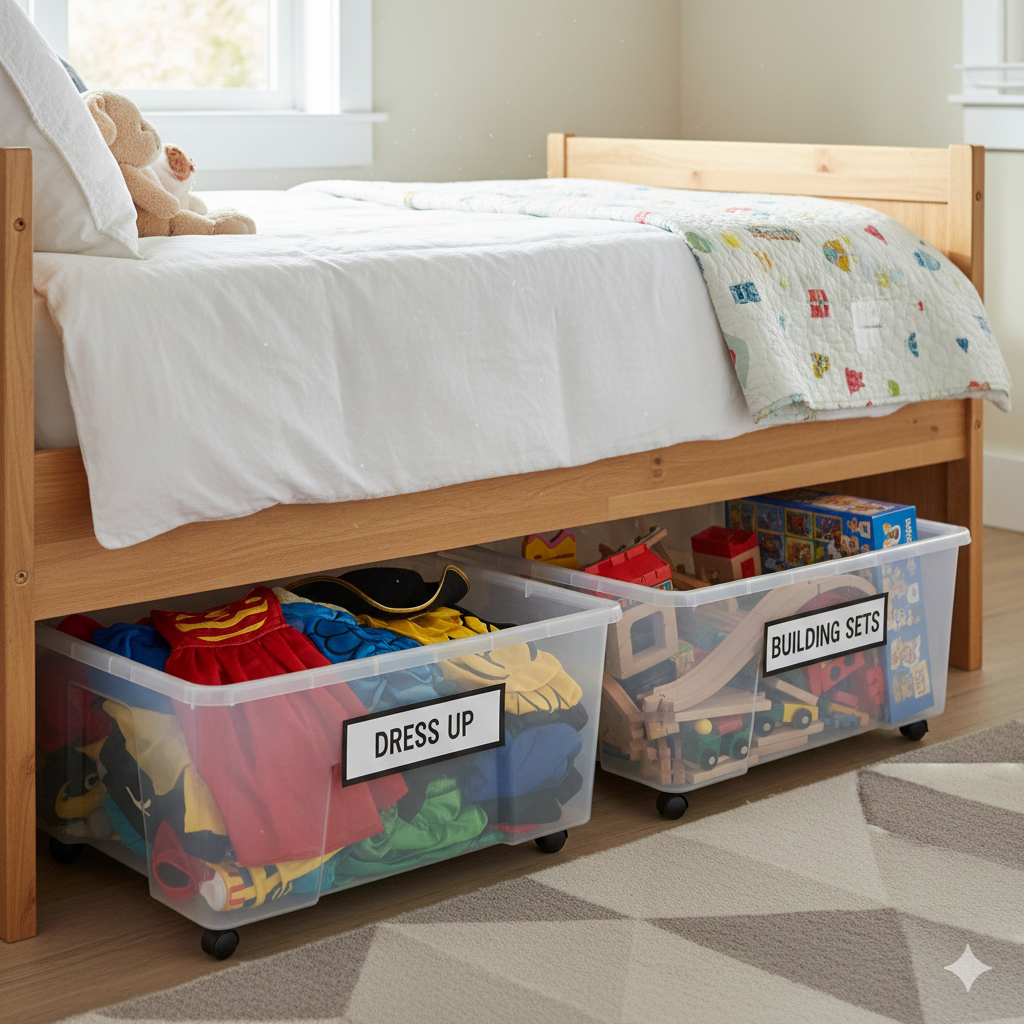
Under-bed storage is a high-impact solution for homes without a dedicated playroom. Low-profile rolling bins or drawers slide out easily and keep toys out of sight. This space is ideal for train sets, large building kits, puzzles, and dress-up items, categories that tend to create mess fast when left loose.
The best use of under-bed storage is for toys that are not needed daily. Daily favourites should stay accessible in open bins or shelves. Under-bed storage works best for weekly-use items, seasonal toys, or “big sets” that are fun but not constant.
Labels should be placed on the front edge of bins, not on top. When bins are tucked under a bed, top labels are hard to see. Front labels help children find what they want quickly without pulling everything out.
A Simple Shelf-and-Basket System That Looks Good Anywhere
A shelf-and-basket system is one of the easiest ways to blend toy storage into living rooms, hallways, and multipurpose spaces. The shelf provides structure, and the baskets hide visual clutter. Together, they create a calm look even when toys are inside.
Lower shelves should hold toy baskets so children can access and return items independently. Upper shelves can hold books, plants, or decor, creating balance so the whole unit doesn’t look like a toy station. This approach keeps the home feeling cohesive rather than divided into “adult space” and “kid space.”
Basket depth should stay moderate. Deep baskets encourage digging, which leads to dumping and mess. Medium-depth baskets allow children to see and grab items without emptying everything.
Hanging Door Organisers for Small Toys and Accessories
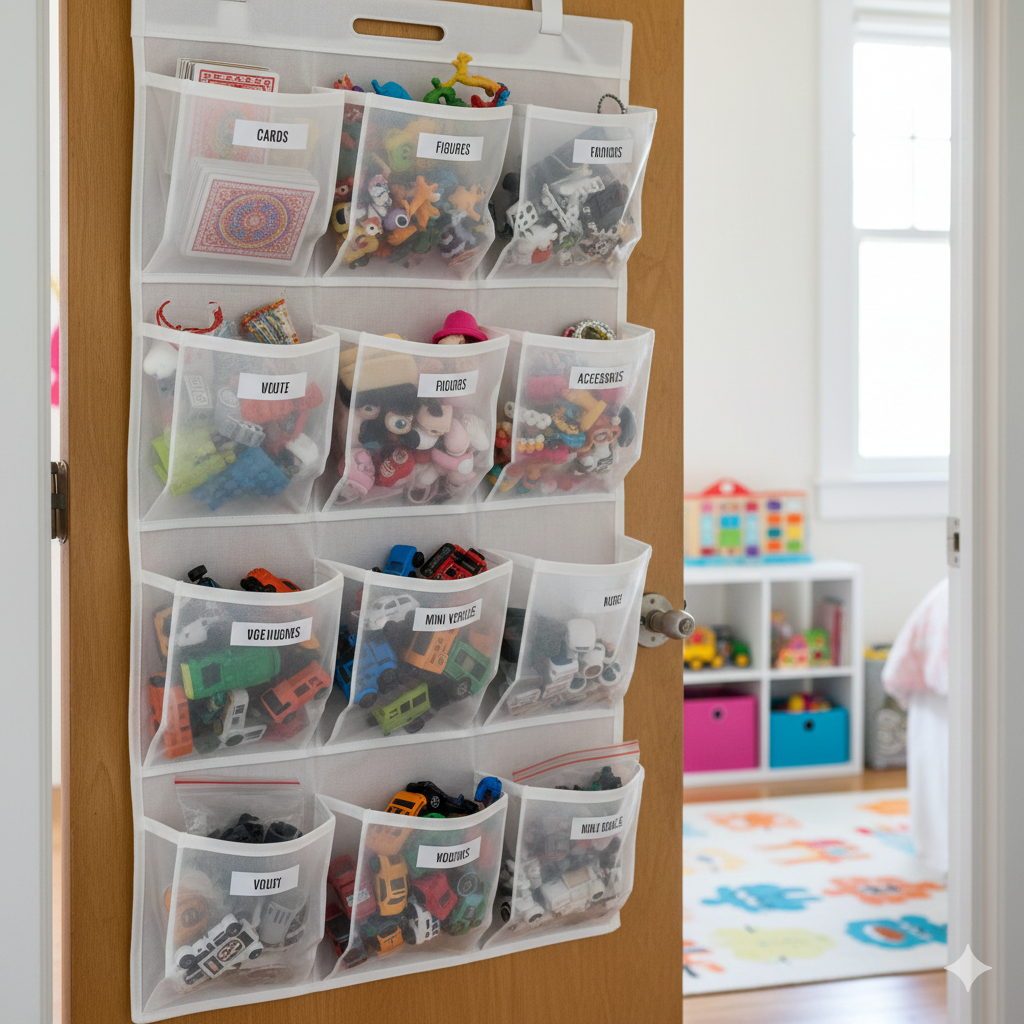
Small toys are often the biggest clutter problem: figurines, doll accessories, card games, small vehicles, and random pieces. Hanging door organisers provide pockets for each category, keeping everything visible, separated, and easy to return.
Visibility matters. When children can see what they have, they’re more likely to play with it and put it back. This also prevents the “one big bin of tiny parts” problem that leads to lost pieces and unusable sets.
Keep labels short and categories broad. “Cards,” “Figures,” “Accessories,” “Mini Vehicles” are enough. Overly detailed sorting creates friction. For very small parts, store items in zip pouches first, then place the pouch in a pocket to prevent pieces from slipping out.
Toy Rotation Using One Storage Bin to Reduce Clutter
Toy rotation is one of the easiest ways to maintain order in any home. The method is simple: keep one bin for “resting toys” and swap items in and out every week or two. With fewer toys available, fewer toys end up on the floor—cleanup becomes faster and the space feels calmer.
Rotation doesn’t need to be dramatic. Swap one or two categories at a time, puzzles this week, building sets next week. Keep the rotation bin out of sight (a closet or higher shelf works well) and use clear labels so the process stays easy.
Clear Zip Bags for Puzzles, Games, and Sets with Many Pieces
Puzzles, board games, and building kits often become useless when pieces disappear. Clear zip bags keep sets contained, visible, and easy to grab. Each bag becomes a “mini kit,” preventing parts from scattering into other bins.
Labels can be as simple as the set name written with a marker. For complex sets, a quick note like “includes instructions” or “missing 1 piece” prevents confusion later. Bags can then be stored upright inside a larger bin, like files, so everything is visible at once.
A Play Mat That Turns into a Storage Sack
Building toys are fun and messy. A drawstring play mat keeps pieces contained during play, then transforms into a storage sack with a quick pull. This prevents toys from migrating into corners, under furniture, and into painful “step-on” situations.
This solution works well for LEGO-style bricks, magnetic tiles, small figurines, and train tracks. The defined boundary keeps pieces in one place and makes play feel organised without restricting creativity.
Wall Hooks and a Costume Rail for Dress-Up Gear
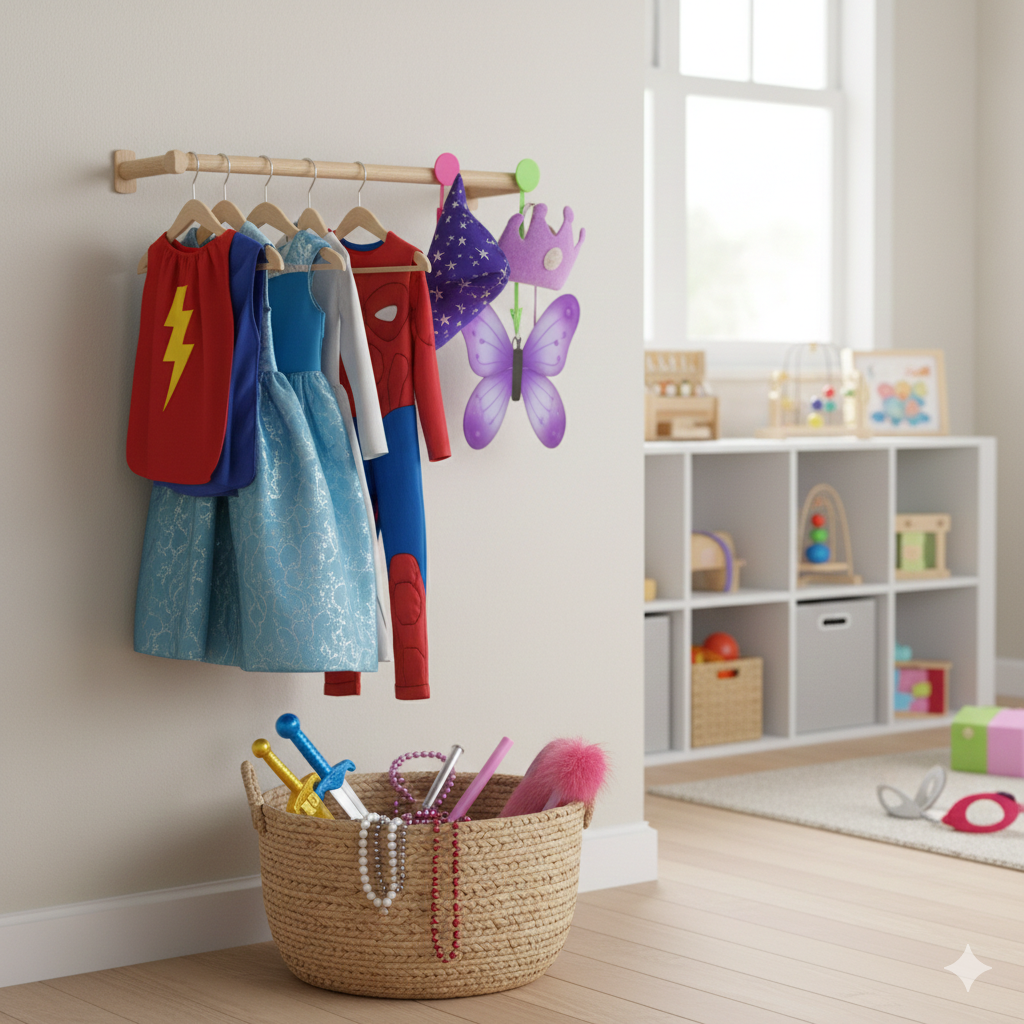
Costumes, capes, bags, and pretend-play outfits often end up scattered because folding is tedious. Wall hooks or a simple rail makes storage easy: hang it up and it’s done. Hanging is faster than folding, and children are more likely to use hooks than drawers.
A small setup is enough: three to six hooks at child height, plus a basket underneath for accessories like crowns, masks, and wands. This keeps the whole dress-up category together and prevents it from spreading into unrelated bins.
A Safe Toy Chest for Soft Toys and Larger Items
A toy chest can be a simple solution for stuffed animals, larger soft toys, and bulkier play items. It works best for categories that don’t require careful sorting. However, safety matters. Guidance on toy box safety often highlights risks from heavy lids and latching designs, so chest-style storage should avoid trapping hazards and use safer lid mechanisms.
Toy chests should never be packed too tightly. Overfilled chests encourage dumping, which creates a bigger mess than the chest solves. Moderate fill levels keep access easy and reduce chaos.
Conclusion
Toy storage works best when it supports real behaviour, not ideal behaviour. Children play quickly, move toys across rooms, and change interests often. A storage system that demands perfect sorting or multiple steps will break under normal life. The most effective approach is simple: broad categories, accessible containers, and a routine that makes resetting the space predictable.
These ten toy storage solutions are designed for that reality. Open bins handle daily toys without fuss. A catch-all basket makes fast resets possible. Under-bed storage and toy rotation reduce visual clutter without reducing fun. Shelves with baskets help toys blend into shared spaces.
Door organisers and clear bags keep small parts from disappearing. A drawstring play mat makes building toys manageable. Hooks turn dress-up cleanup into a single step. And a toy chest can still be useful when chosen thoughtfully and used for the right category.